Political debates, once viewed as essential democratic forums where voters could evaluate candidates outside partisan echo chambers, are increasingly being abandoned by campaigns across the United States. In the current electoral cycle, 18 of 35 Senate races and 12 of 36 gubernatorial contests did not feature a debate between major party candidates. This marks a sharp departure from previous cycles, particularly in competitive toss-up contests where debates were once a guaranteed fixture.
Strategists and political analysts point to the digital media landscape and the constant threat of viral gaffes as the primary drivers behind this retreat. Democratic strategist and contributor Chuck Rocha captured the modern calculus bluntly: “You may not win a race during a debate, but you can certainly lose one. People are super cautious these days.” Rocha noted that stepping onto a debate stage without complete control over messaging can cause catastrophic damage in closely contested races, where a single misspoken phrase quickly becomes fodder for opposing attack ads.
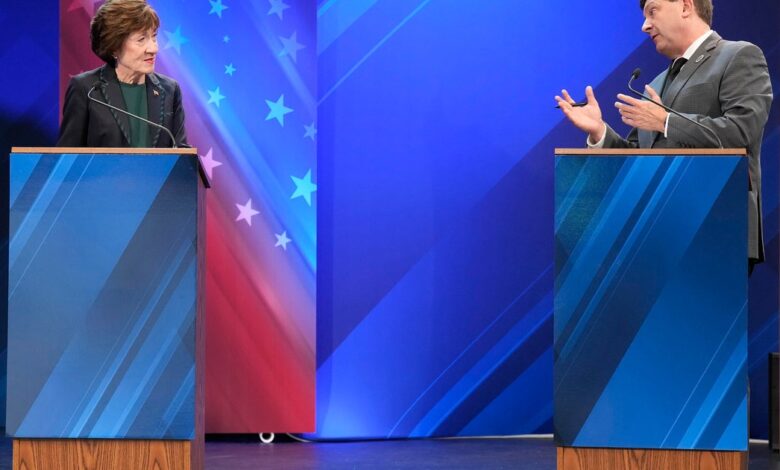
This high-risk dynamic was vividly illustrated during an Oct. 15 Maine Senate debate, when Democratic nominee Troy Jackson told five-term incumbent Republican Sen. Susan Collins to “shut up” after she claimed a protester was “obviously one of Troy’s supporters.” Jackson declined to apologize for the unprompted remark, which immediately found its way into Republican attack ads as Maine shapes up as a critical battleground for Senate control.
Similar hostility and viral confrontations defined the debates that did take place. In Michigan, Democratic Senate candidate Abdul El-Sayed and Republican nominee Mike Rogers traded bitter accusations, with Rogers calling his opponent a “sock puppet” and later alleging ties to extremist groups. In Alaska, Republican Sen. Dan Sullivan accused Democratic nominee Mary Peltola of “character fraud” and pre-written answers, prompting a sharp exchange before moderators restored order.
Republican strategist Terry Sullivan described the narrow margin for error that governs modern debate strategy. “Ninety-five percent of what happens in debates does not matter,” Sullivan said. “You’re banking on not making the 5% mistake and trying to force the other guy to make the 5% mistake.”
In races where debates were avoided altogether, candidates offered various rationales. In Ohio, Democratic gubernatorial candidate Amy Acton declined to debate Republican nominee Vivek Ramaswamy, arguing that civil dialogue is impossible with a “chronic liar.” In Alabama, Sen. Tommy Tuberville, running for governor, claimed there was nothing to debate against former Sen. Doug Jones because voters already know where both parties stand. Meanwhile, Arizona Democratic Gov. Katie Hobbs bypassed a debate with Republican Rep. Andy Biggs, asserting that direct interactions with voters are more effective than participating in a stage designed for political soundbites and theater.
In Texas, which is tracking toward becoming the most expensive Senate race in history, Democratic candidate James Talarico repeatedly urged Republican opponent Ken Paxton to debate, offering to step into “the lion’s den” on before ultimately hosting a solo CNN town hall. Rocha suggested Paxton avoided a face-to-face showdown to sidestep intense questioning regarding past controversies and negative personal headlines.
Kathryn Cramer Brownell, a history professor at Purdue University who specializes in the relationship between media and politics, noted that the modern media ecosystem has severely eroded the traditional value of debates. While debates historically allowed citizens to escape filtered partisan media, Brownell observes that today’s environment reduces complex exchanges into brief, highly partisan clips circulated across social networks.
“How do you generate more of that broad viewing experience in the age of social media?” Brownell asked, highlighting the unresolved tension at the heart of modern campaigning.