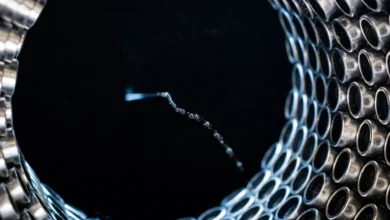
Researchers at the Swiss Federal Institute of Technology have developed innovative techniques to transform loose sand into solid building materials using bacteria, aiming to reduce the heavy energy consumption and carbon emissions associated with conventional cement production.
Traditional Portland cement manufacturing requires heating raw materials to high temperatures, generating substantial greenhouse gases. To bypass this energy-intensive process, the research team led by Karen Antorveza Paez turned to a bacterium named Sporosarcina pasteurii. Under appropriate conditions, this microorganism promotes the formation of calcium carbonate, a mineral found naturally in limestone, chalk, and seashells. When these microscopic crystals precipitate between sand grains, they act as a natural mineral binder, fusing the loose particles into a solid structure.
This biochemical process is known as microbially induced calcite precipitation, or MICP. While previous applications of MICP have largely focused on soil stabilization, foundation reinforcement, and concrete crack repair, the Swiss team explored its potential to directly fabricate standalone architectural components.
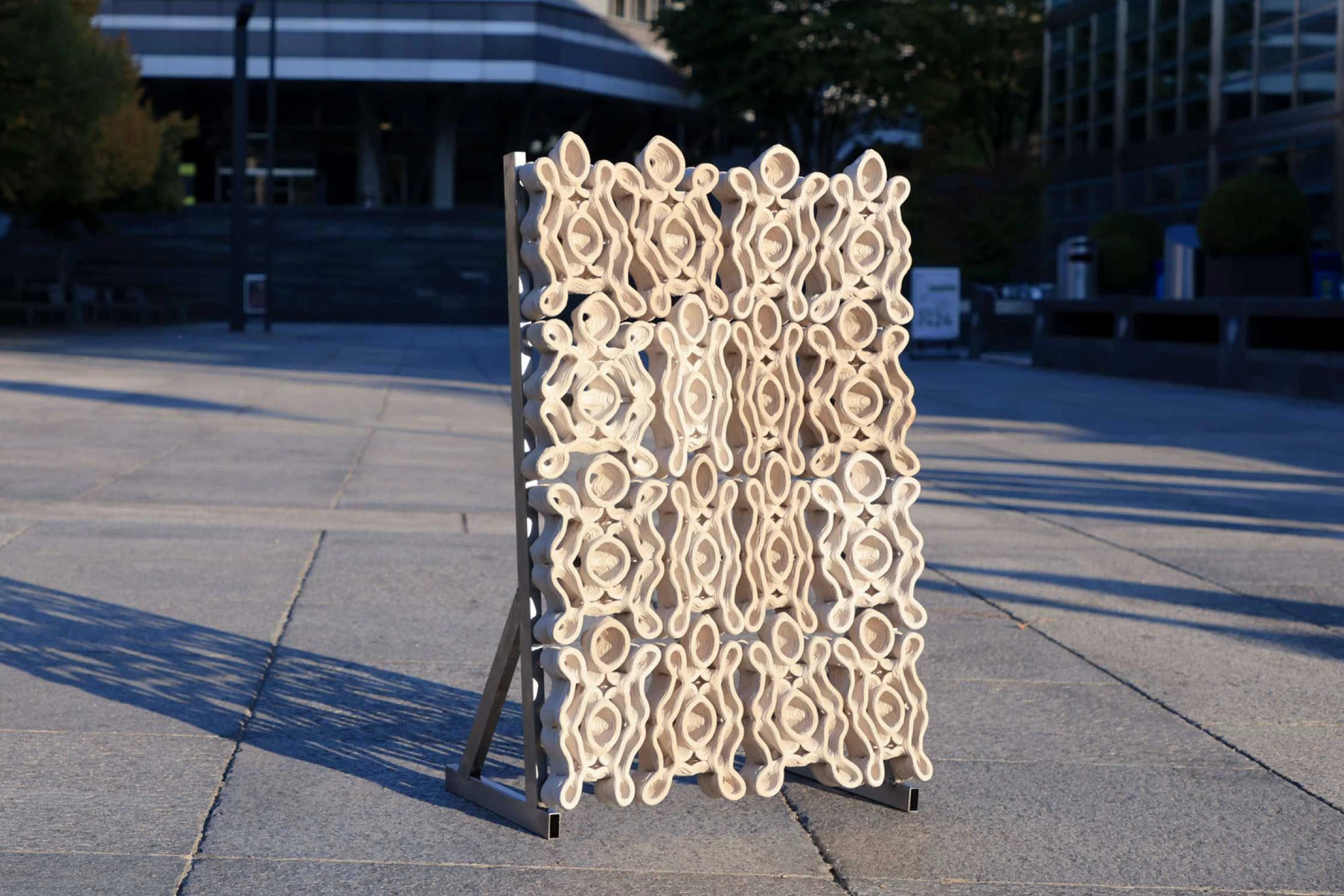
Investigators devised two distinct manufacturing methods. The first approach combines bio-cementation with three-dimensional printing. Researchers formulated a specialized bio-ink containing water, sand, living bacteria, and chemical agents. This gel-like mixture can be shaped into complex geometric designs using printing equipment. After printing, the components must be immersed in a solution containing urea and calcium chloride for approximately three days, allowing the bacteria to drive mineral generation. The parts are then dried at room temperature for about two days, during which the bacteria cease activity, leaving behind a solid structure.
The team compared the workflow to baking a cake, noting that while traditional baking relies on heat, this technique utilizes bacterial activity at room temperature. The entire fabrication process, from printing to complete curing, takes up to five days without requiring high-temperature kilns.
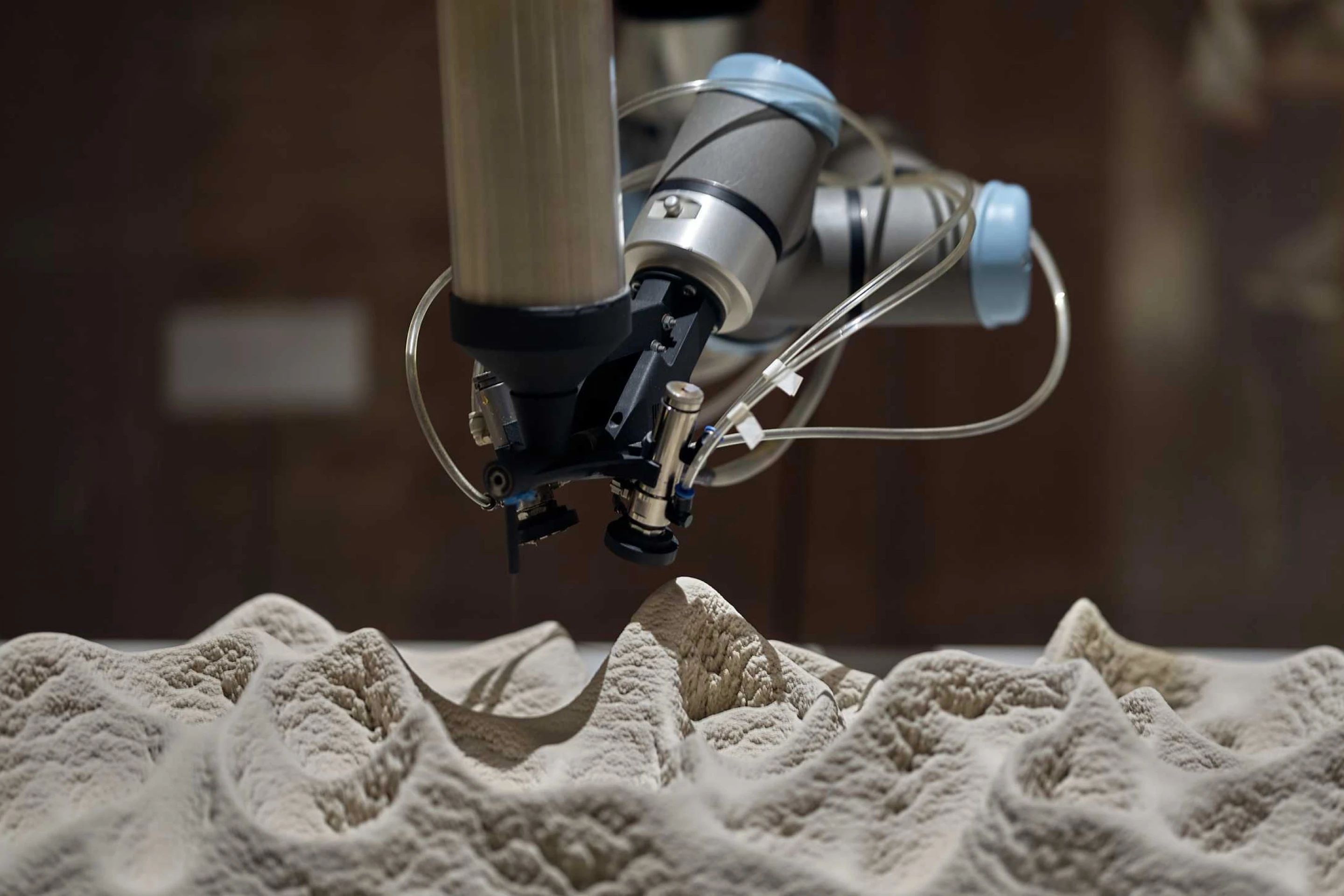
The second method employs robotic spraying technology. A mechanical arm applies sand, bacteria, and mineralizing agents sequentially onto a target surface, building multi-layered structures through repeated passes. The research team has operated this automated system continuously for six months, demonstrating its potential to reduce reliance on manual labor.
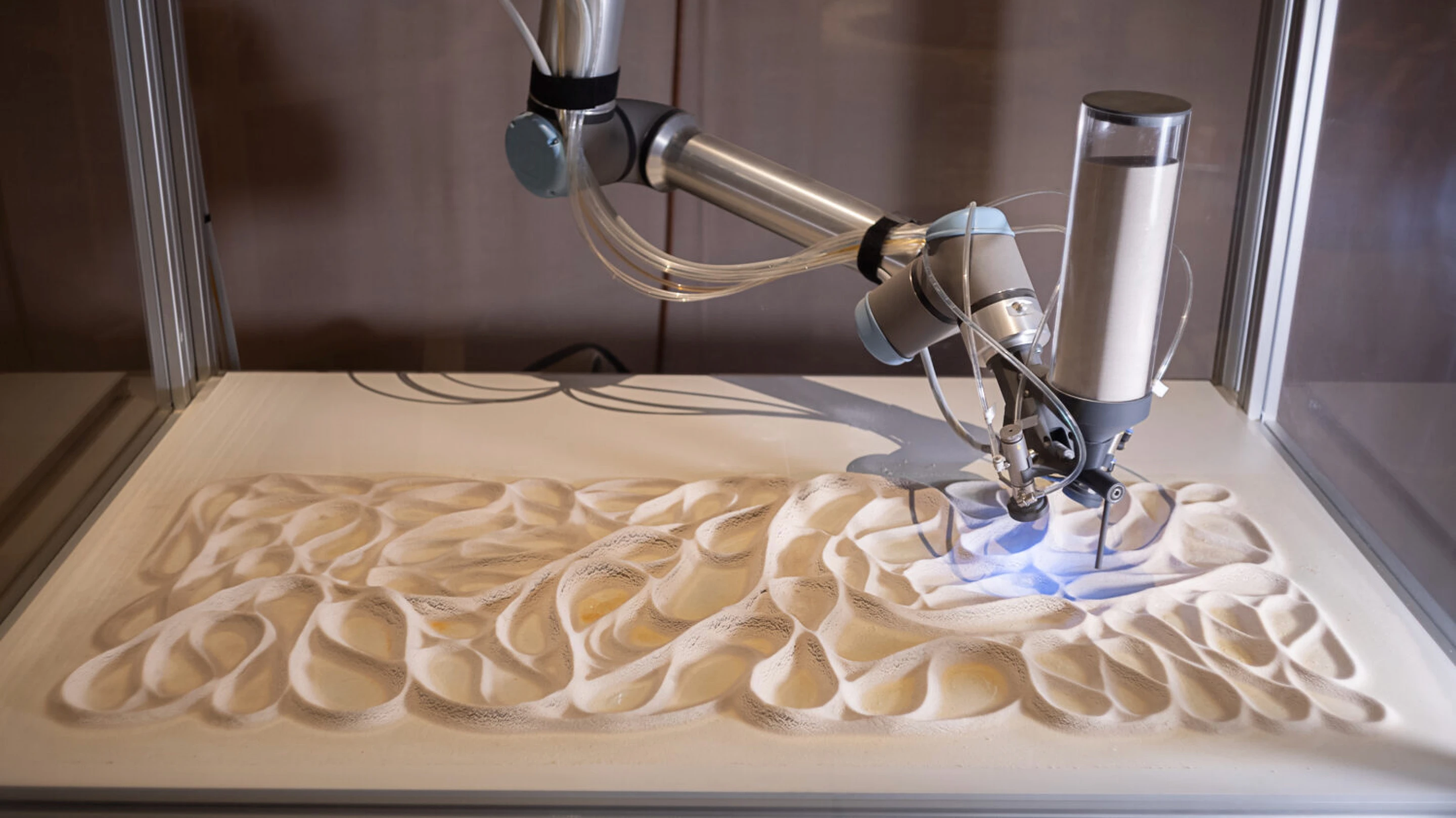
The two techniques cater to different applications. Three-dimensional printing suits complex architectural components, while robotic spraying is better adapted for building layered surfaces. The team has already produced facade elements and envisions future uses in sun-shading devices and partition walls.
Despite these advancements, significant hurdles remain before commercial viability can be achieved. A primary concern involves chemical byproducts generated during production. The mineralization solution used in the 3D printing process produces ammonium compounds, which require safe neutralization or recycling methods to prevent environmental harm.
Material strength also presents a critical challenge. Researchers currently classify the bio-cement as comparable to mortar rather than load-bearing concrete, limiting its immediate utility to non-structural applications such as brick bonding, joint filling, surface finishes, and decorative elements. Further testing is required to verify mechanical performance, long-term durability, and stability across various environmental conditions, as sand grain size and packing arrangements directly influence the final material properties.
While widespread replacement of traditional concrete remains distant, the research demonstrates a viable alternative pathway for manufacturing non-load-bearing architectural components with a reduced carbon footprint.