Long before digital networks and artificial intelligence transformed the flow of information, the expansion of the American press faced a stubborn obstacle not of education, but of sheer engineering. In the era surrounding the nation’s founding, printing a newspaper required workers to painstakingly arrange individual metal letters by hand and pull manual cranks to produce single pages. Circulation was strictly limited by both hand-set typesetting and the physical reach of horse-drawn distribution, keeping average U.S. newspaper circulation around 4,000 copies at the turn of the eighteenth century. Although railroads and steam engines eventually solved distribution puzzles by the Civil War, printing itself remained an arduous bottleneck. As a contemporary newspaper lamented in 1869, the country possessed steamboats and electric telegraphs yet lacked the mechanical means to satisfy a voracious public demand for reading matter.
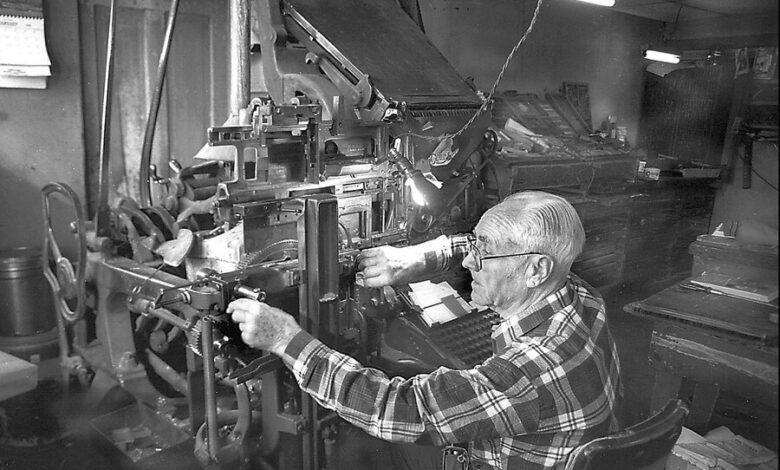
That technological logjam finally broke near the close of the nineteenth century with the invention of the Linotype. Designed by German-American clockmaker Ottmar Mergenthaler, the device revolutionized print shops by casting an entire line of text as a single solid metal slug. Instead of requiring up to 100 compositors to lay out individual letters, a small team of operators could supply enough type for a daily, multi-page newspaper. While observers marvelled at the mechanical apparatus—with one German newspaper vividly describing its continuous chewing movements for brass matrices—the machine fundamentally reshaped human communication by birthing mass media.
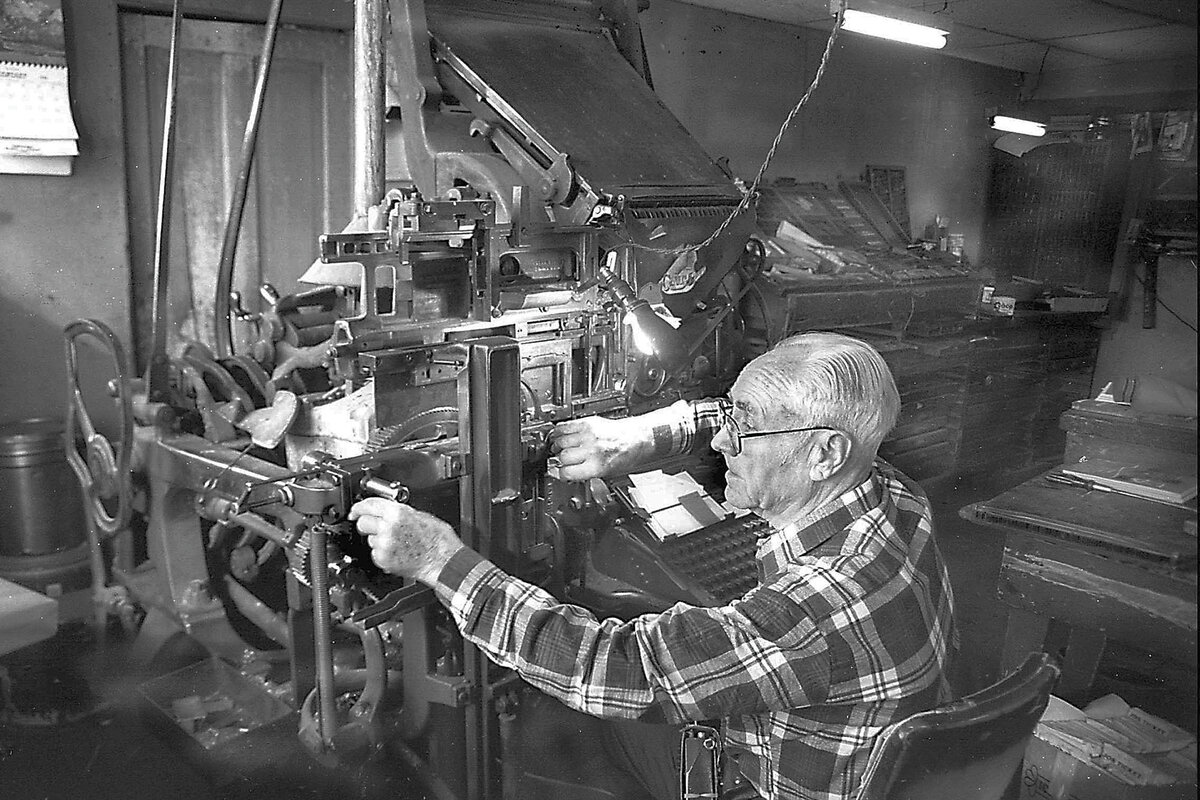
Examining this historical shift in his book “Hot Type: The Magnificent Machine That Gave Birth to Mass Media and Drove Mark Twain Mad,” journalism professor emeritus Jeff Jarvis notes that widespread daily newspapers truly began at the dawn of the last century before later facing competition from radio, television, the internet, and modern artificial intelligence. Jarvis argues that the Linotype offers valuable perspective on contemporary tech revolutions. Much like modern artificial intelligence, the nineteenth-century invention was a non-human machine that prompted observers to ascribe human traits to it. Because the Linotype could not think on its own, Mergenthaler had to anticipate and control every mechanical sequence in what amounted to an algorithm executed in steel.
Yet the path to mass circulation was fraught with financial turbulence. Jarvis points out that economic stability has historically eluded media operators, observing that when scale first arrived in the publishing industry, nobody could figure out a reliable business model as advertisers resisted paying for increased reach. Even literary icons experienced the volatility of the era’s technological transitions. Mark Twain, who invested heavily in a rival automated typesetting device known as the Paige Compositor, briefly celebrated immense projected wealth before the Linotype rendered his investment obsolete. Following the failure of the competing machine, Twain was forced to declare bankruptcy in 1894 and embark on international lecture tours to settle his debts, spending his later years dogged by financial strain.

Despite such commercial casualties, the triumph of hot-type printing ultimately fulfilled Thomas Jefferson’s vision of circulating vital public information across the entire populace. Publications embraced the technology for decades, with historical archives showing widespread adoption across major metropolitan dailies and specialized journals alike. As subsequent decades ushered in computerized typesetting, digital page layouts, and internet distribution, media organizations continually confronted fresh business disruptions. Today, as contemporary publishers grapple with licensing disputes and the rapid rise of artificial intelligence, Jarvis suggests that understanding these earlier cycles of disruption reveals that informational revolutions have always required societies to navigate profound and uncertain economic terrain.