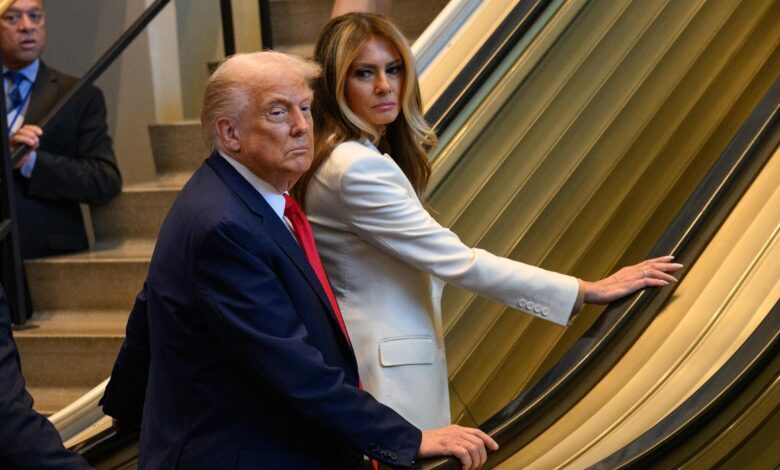
First Lady Melania Trump has helped broker a limited humanitarian ceasefire in the frontline Ukrainian city of Oleshky, a rare diplomatic breakthrough as Washington navigates a complex and shifting approach to the ongoing war between Russia and Ukraine.
The localized pause, scheduled to run through the weekend, allows food and vital humanitarian aid to enter the heavily damaged, Russian-occupied city while facilitating a civilian evacuation. While the agreement is restricted to a single municipality, it represents a tangible sign that both Kyiv and Moscow retain potential willingness to engage in negotiations.
National security reporting indicates that the First Lady has maintained a consistent focus throughout the conflict on returning Ukrainian children who were taken to Russia. Skeptics, however, note that both warring governments have strong incentives to amplify her involvement for distinct political purposes. For Moscow, praising the Trump family’s diplomatic influence encourages favorable treatment from the White House, while critics suggest such pauses can also give occupying forces an opportunity to regroup.

The Oleshky agreement unfolds against a backdrop of broader, fluctuating U.S. diplomatic efforts. President Donald Trump has swung between offering military support, such as promised air defense missiles over the summer, and excoriating Ukrainian President Volodymyr Zelenskyy over successful strikes on Russian energy infrastructure. An announced energy ceasefire collapsed almost instantly earlier in October, and efforts to organize trilateral talks involving the U.S., Ukraine, and Russia face persistent hurdles, with Russian President Vladimir Putin demanding territorial concessions.
Complicating the diplomatic landscape further, the administration recently rolled back economic sanctions, including moving away from the bipartisan Graham bill that targeted countries purchasing Russian energy. President Trump defended the sanctions waiver by pointing to the release of American prisoner Stephen Hubbard, the Oleshky ceasefire, and a bilateral diesel deal aimed at importing Russian fuel to help lower domestic energy costs ahead of midterms. However, energy analysts and market data indicate that the volume of potential Russian diesel imports remains too small to significantly impact national prices, pointing instead to broader geopolitical factors such as the conflict involving Iran.
Despite concerns among allies that Washington might abandon Kyiv in pursuit of a grand bargain with Moscow, observers note that underlying U.S. support continues in less visible ways. Intelligence sharing with Ukraine reportedly remains robust—in some aspects surpassing previous administration levels—and the U.S. continues to facilitate weapons provisions through European intermediaries. Administration officials maintain that this dual-track approach is designed to compel both sides toward eventual peace talks, even as the administration’s overarching promise of a rapid diplomatic resolution remains unfulfilled nearly two years into the term.