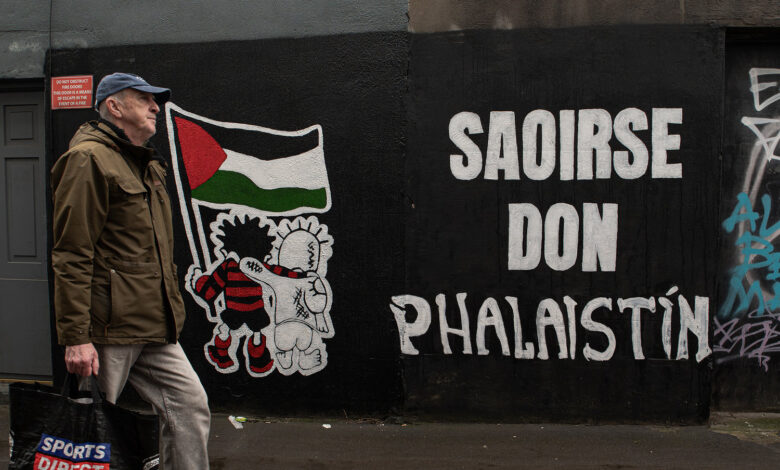
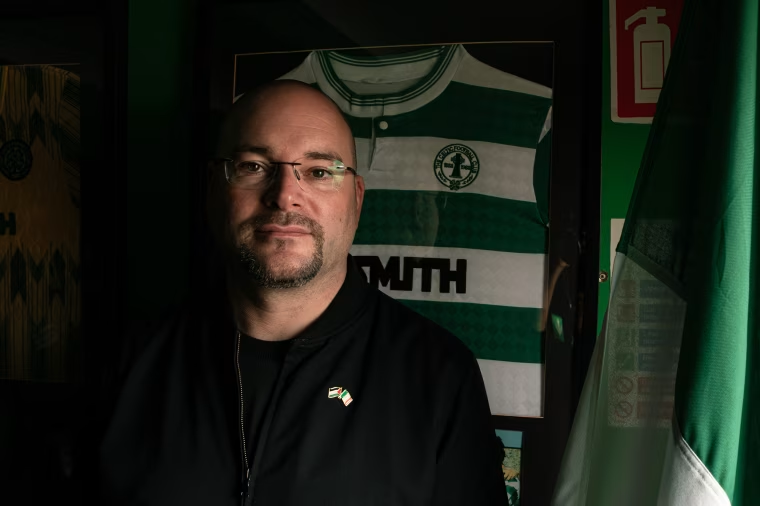
In the historic heart of Dublin, the bustling pub Peadar Browns serves pints beneath a wall adorned with a re-creation of Handala, the classic cartoon symbol of the Palestinian struggle, alongside the Gaelic slogan “Saoirse don Phalaistín,” or “Freedom for Palestine.” Inside, patrons mingle while wearing shirts emblazoned with the logo of GAA Palestine, which organizes games for children in the West Bank, and the Bank of Palestine. Aidan Brown, who co-owns the pub with his wife Muyu Li, said the venue has naturally evolved into a hub for pro-Palestinian sentiment.
“The Irish people and the people of this pub have always stood firm with the people of Palestine,” Brown said, reflecting on the devastation witnessed in Gaza since the Oct. 7, 2023, Hamas-led attacks. That sentiment extends far beyond a single neighborhood pub. Across Dublin’s city center, pro-Palestinian flags, murals, signs, and graffiti reflect a widespread solidarity stemming from historical parallels many in Ireland draw with their own experiences of British colonial rule, land confiscations, partition, and the struggle for self-determination.
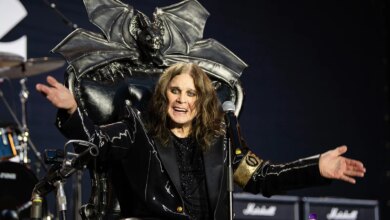
Against this backdrop, American rapper Macklemore, a Washington State native whose legal name is Ben Haggerty, chose Dublin to launch his sold-out “Free Palestine Tour,” with ticket proceeds dedicated to organizations supporting Palestinians. Addressing a roaring crowd at his opening show, Macklemore praised the local populace. “It has been beautiful to watch the Irish people come together these last three years,” he told concertgoers. “I have been so proud to watch overseas, to watch how you guys have stepped up.”
Ireland’s historical memory runs deep. For centuries, what is now the Republic of Ireland was under complete British control, marked by a devastating famine and restrictions on language and land. The 1921 partition divided the island, leaving Northern Ireland in the United Kingdom, and graffiti calling for unity remains visible in Dublin. Because Britain also held the Palestinian Mandate prior to Israel’s creation in 1948, many Irish citizens perceive strong parallels between the Israeli-Palestinian conflict and Northern Ireland’s historical struggles.
“Colonial rule and the experience all of that comes with gives us this almost predisposed sense of solidarity with other oppressed colonized people,” explained Brendan Ciarán Browne, an associate professor at Trinity College Dublin’s School of Religion.
The Oct. 7 attacks, which resulted in about 1,200 deaths in Israel and 251 hostages taken according to tallies from the time, drew swift condemnation from Irish leaders. Then-Taoiseach Leo Varadkar called the attacks appalling while urging proportionality. Since then, the death toll in Gaza has surpassed 74,000, according to the Palestinian Health Ministry, amid widespread destruction. Israel has faced accusations of genocide at the International Court of Justice in a case brought by South Africa, alongside findings from a U.N. commission of inquiry led by Nobel Peace Prize winner Navanethem Pillay. Both Israel and the United States have vehemently rejected those allegations, with Israeli officials condemning the U.N. findings as false and scandalous.

In recent years, the Irish government has taken notable diplomatic steps. In 2024, Ireland joined Spain and Norway in formally recognizing the state of Palestine, infuriating Israeli officials, who argued the move would encourage terrorism and instability. The following year, Ireland intervened in the genocide case against Israel at the Hague. Last month, during a visit by foreign officials, Irish President Catherine Connolly emphasized the nation’s unique perspective on conflict resolution, stating that “the normalization of war and genocide can never be accepted.”
Public activism has matched official policy. Local groups recently launched a “Stop the Game” campaign demanding boycotts of soccer matches against Israel in the Nations League. High-profile Irish cultural figures have also voiced strong support, including actors Liam Cunningham, who spoke at Macklemore’s concert, and Nicola Coughlan, alongside the hip-hop group Kneecap. Author Sally Rooney made headlines by announcing she was withdrawing her books from sale in the United Kingdom over her support for Palestine Action, prompting a surge in domestic sales at independent bookstores like Books Upstairs, which donated thousands of euros in proceeds to Medical Aid for Palestinians.

Not all reaction has been positive, however. Aidan Brown noted that complaints about the mural outside his pub prompted a city council review. On the international stage, Israel closed its embassy in Dublin following Ireland’s 2024 recognition of Palestinian statehood, citing extreme anti-Israel policies. Meanwhile, Ireland’s Chief Rabbi, Yoni Wieder, warned of a worrying increase in hostility toward the country’s Jewish community of approximately 2,700 people. He noted that support for Palestine has occasionally become so intertwined with Irish identity that sympathizing with Israel feels ostracizing, leading to 143 reported antisemitic incidents in the six months leading to January 2026. Wieder emphasized that the local Jewish community remains vibrant despite these challenges.
Some local activists argue that the Irish government has not gone far enough, noting that Ireland remains one of the world’s leading importers of Israeli goods. Betty Purcell, a 70-year-old retired radio and television producer who volunteers for the Ireland Palestine Solidarity Campaign, traveled to the West Bank in 2014 to witness conditions firsthand and now dedicates her retirement to the cause. A 2024 poll conducted by the Irish Anti-Apartheid Campaign for Palestine indicated that 71% of respondents believed Palestinians live under a system of apartheid, with 62% favoring EU sanctions against Israel.

For Palestinian business owners in Dublin, the local reception offers a rare sense of mutual understanding. Ahmed Salah, who opened a restaurant named after his hometown of Bethlehem alongside his brothers in 2020, said the Irish grasp the situation intuitively. Adnan Shabab, a native of Gaza who owns the restaurant Shaku Maku where Macklemore dined ahead of his performance, echoed that sentiment. “The Irish people understand the struggle,” Shabab said. “The yearning for independence, sovereignty, statehood.”