U.S. Justice Department Files Election Challenges in Alaska and California Amid Claims of Meritless Litigation

The U.S. Department of Justice is moving forward with a series of pre-election legal challenges in Alaska and California, representing a significant and controversial shift in how the department interacts with state-level voting processes. These actions, which include a request for an injunction against specific results and attempts to block mail-in ballots, have drawn sharp criticism from legal experts who argue the cases lack substantive legal merit and are being driven by executive branch influence rather than established law.
In Alaska, the department filed a lawsuit last week seeking an injunction against the state’s election results, but notably, the request applies only in the event that the Republican candidate loses. The core of the complaint involves a unique situation in the race for the U.S. Senate, where two candidates named Dan Sullivan are appearing on the ballot. One is the Republican incumbent, while the other is a challenger with no affiliation to the incumbent’s campaign.
The Department of Justice has argued that the presence of two candidates with the same name is “totally confusing,” an argument that has been amplified by President Donald Trump on social media. However, legal observers point out that there is no law prohibiting two candidates with the same name from seeking the same office, nor is there any evidence of an error in how the ballots were formed. Furthermore, analysts suggest that even if a court were inclined to intervene, there is no viable legal mechanism to determine which votes were cast for which candidate based solely on a name similarity that was public knowledge before the election began.
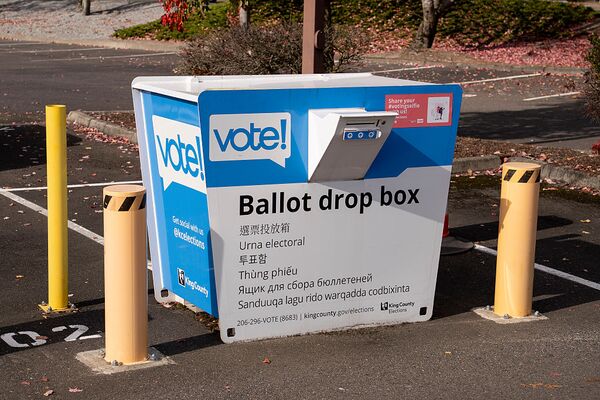
Simultaneously, the department is pursuing a case in California that targets mail-in voting. The DOJ has filed a pre-election request with a federal district court to block state officials from counting approximately 20,000 mail-in votes that have not yet been cast. The department took the unusual step of asking a court of appeals to weigh in on the matter before the district court could even hold a scheduled hearing, a move that typically suggests a high degree of urgency or a perceived lack of cooperation from lower courts.
During a recent hearing, a panel of appellate judges expressed significant skepticism regarding the government’s position. The department reportedly struggled to provide evidence that the 20,000 individuals targeted were non-citizens or that they had even received ballots. This lack of foundational evidence led the panel to question the validity of the request, highlighting a gap between the department’s public allegations and its evidentiary standing in court.
These maneuvers are being viewed as part of a broader, decade-long strategy to use the judiciary to influence election outcomes or, at the very least, to seed doubt regarding the legitimacy of those outcomes. This pattern was first established during the 2016 election cycle when allegations were made that the process was “absolutely rigged” weeks before the first votes were cast. In October 2016, public claims of “large scale voter fraud” became a staple of the political narrative, serving to align the executive with voters who felt disenfranchised while providing a hedge against potential electoral defeat.
Legal historians note that while election-related litigation is common, the current approach differs significantly from previous high-profile cases like Bush v. Gore in 2000. In that instance, there were no allegations of fraud; rather, the dispute centered on the methodology of a state-court-ordered recount after the initial tally was completed. In the current cases in Alaska and California, the litigation is being initiated before the elections are finalized and, in some instances, before votes are even cast, often based on theoretical concerns rather than documented irregularities.
The cost of this regularized practice of alleging fraud without evidence is a measurable weakening of public trust in the democratic process. However, the consistent rejection of these cases by various levels of the judiciary suggests that the courts remain a robust safeguard against efforts to subvert electoral results. While the department’s filings in Alaska and California may serve political objectives, their lack of legal success indicates that the third branch of government continues to demand a high threshold of proof before intervening in the democratic will of the voters.