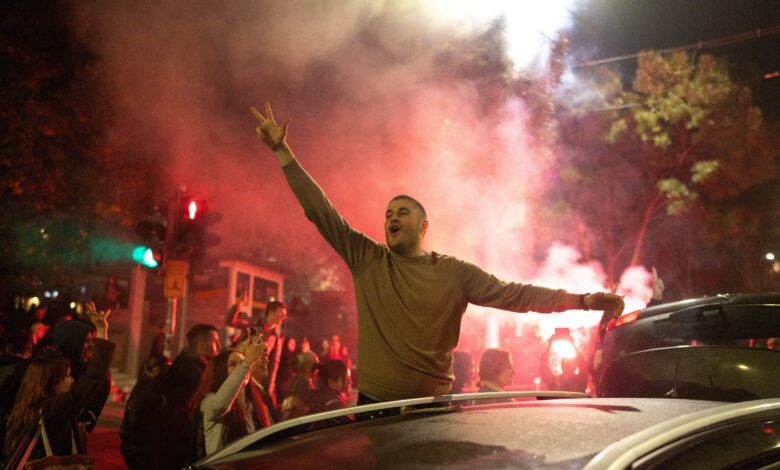
Serbia entered a new political era on Monday following a historic landslide election that unseated longtime leader Aleksandar Vucic. The victory by a student-backed protest movement triggered nationwide celebrations across Belgrade and other major cities, marking the end of more than a decade of dominance by Vucic and his Serbian Progressive Party (SNS).
With nearly 99% of the votes counted, the State Election Commission confirmed that the electoral list “Student List – Students Win” secured a commanding 52.7% of the vote. In contrast, the SNS-led alliance, which has controlled the Balkan nation’s political landscape since 2014, garnered just 39.2%. The result grants the student-backed coalition 139 seats in the 250-seat parliament, an absolute majority that allows them to govern without the need for a major coalition partner. The SNS alliance will hold 97 seats, with the remaining positions filled by minority parties.
The shift in power follows two years of persistent, largely peaceful anti-government protests. While public frustration with the populist government had been simmering for years, the movement gained unstoppable momentum following a tragedy in the city of Novi Sad. The collapse of a train station canopy, which resulted in the deaths of 16 people, became a focal point for allegations of systemic corruption and negligence. The subsequent “Student List” movement was born directly from the outcry over those deaths, positioning itself as a clean-hands alternative to the established political elite.
Vucic, who has served as both prime minister and president during his 12-year tenure, conceded defeat late Sunday night. The loss is being viewed by regional analysts as a profound shift for the country of 6 million people, echoing the recent electoral defeat of Viktor Orban in Hungary. It also serves as a potential blueprint for other student-led movements across Europe that have recently emerged to demand better education standards and economic prospects.
Despite the clear electoral mandate, the “Student List” faces immediate questions regarding its ability to transition from a protest movement to a governing body. The list includes a diverse array of candidates—including university professors, actors, and farmers—but it has operated without a singular, defined leader. This has left the public and political observers uncertain about who will be appointed as the next prime minister or who will fill key cabinet roles.
Prominent figures within the movement include cardiologist Ilija Srdanovic, who headed the candidate list, and former central bank governor Dejan Soskic. Radomir Sajcic, a professor at Belgrade University, has also emerged as a leading voice for the group. The movement’s platform is built primarily on a domestic agenda of rooting out graft and implementing comprehensive reforms to the national schooling system.
Public reaction on Monday was a mixture of jubilation and cautious skepticism. In Belgrade, university administrator Marijana Radovanovic Pajovic expressed disbelief at the results, noting that Vucic’s pressure on the public had felt inescapable for years. Others, such as insurance worker Svetlana Karagkozidou, said they hoped the victory would move Serbia toward becoming a “normal community” free from the corruption they believe has permeated daily life.
However, the suddenness of the political vacuum has caused some anxiety. Civil worker Senka Radakovic noted that the lack of clear leadership figures at the top of the ticket made her uneasy about who exactly would be running the country. For his part, Vucic and the SNS leadership have consistently denied all allegations of corruption or political repression throughout their time in office. As the final votes are certified, the focus now shifts to the “Student List” and its ability to organize a functional government from a coalition of activists and academics.