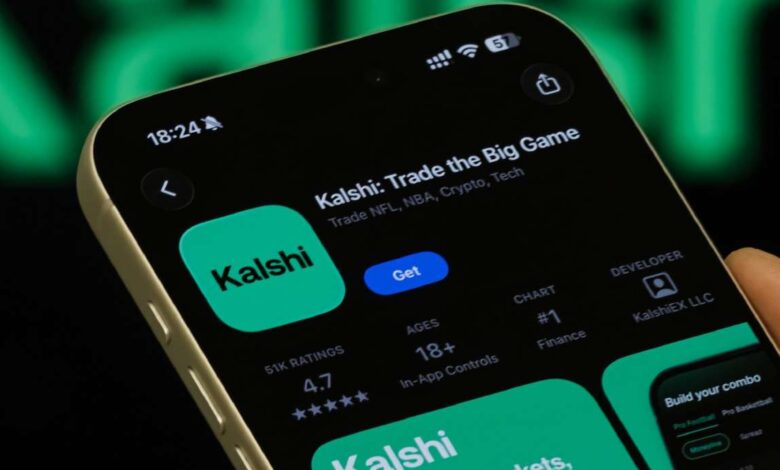
A high-stakes legal battle between federal regulators and the State of Utah has erupted over the operation of online prediction markets, centering on the platform Kalshi. The conflict spans both state and federal courts, pitting Utah’s strict anti-gambling statutes against federal oversight of commodity derivatives.
The dispute intensified after the Utah Attorney General’s Office filed criminal charges on Wednesday against KalshiEx, LLC, along with co-founder and CEO Tarek Mansour and co-founder and COO Luana Lopes Lara. The state filed criminal information charging the corporate entity with a pattern of unlawful activity as a second-degree felony, alongside 12 counts of third-degree felony online gambling promotion and a class A misdemeanor of general gambling promotion.
According to the state’s criminal charges, the case stems from an investigation initiated on Sept. 13 by Agent Scott Eggerman, who created an undercover account on the platform. The filings allege that Kalshi permitted Eggerman to place wagers on 12 different sports games—including football and hockey contests in Utah—despite his repeatedly confirming his location within the state. The attorney general’s office noted that despite recent court decisions upholding Utah’s gambling laws following an earlier lawsuit filed by Kalshi in February, the defendants continued offering online gambling to state residents.
This criminal action follows a civil complaint filed in the 3rd District Court by Utah Attorney General Derek Brown, which sought to halt Kalshi’s operations in the state and secure compensation for alleged harm to citizens. The civil suit argued that the event contracts offered by the platform are indistinguishable from traditional sports betting and violate state prohibitions on fringe gambling.
In swift response, the federal government and the Commodity Futures Trading Commission filed a federal complaint on Monday, arguing that Utah lacks the legal authority to ban derivatives markets governed by federal law. The federal suit asserts that the event contracts targeted by Utah qualify as swaps under the federal Commodity Exchange Act and that Kalshi operates as an approved designated contract market regulated exclusively by the commission.
The federal complaint explains that Congress established the Commodity Exchange Act to manage national futures markets and prevent conflicts with state laws, granting the federal commission exclusive jurisdiction. According to the federal filing, this regulatory scheme expressly and impliedly preempts state gambling laws as applied to event contracts, and Utah’s enforcement efforts directly intrude on federal oversight.
The federal lawsuit highlights that commission regulations require designated contract markets to provide impartial access to all eligible participants nationwide, meaning Utah’s enforcement would improperly force platforms to block state residents. The filing also notes that Utah is not the first state to challenge federal jurisdiction over swaps, pointing to similar federal actions against Arizona, Connecticut, Illinois, Kentucky, Minnesota, New Mexico, New York, Rhode Island, and Wisconsin. In those instances, federal courts issued temporary restraining orders and preliminary injunctions to bar states from enforcing local gambling laws against federally regulated exchanges.
The federal government’s complaint asks the court to dismiss the state attorney general’s lawsuit, enforce the commission’s exclusive jurisdiction, and declare that Utah’s anti-gambling laws hold no authority over federally regulated prediction markets.