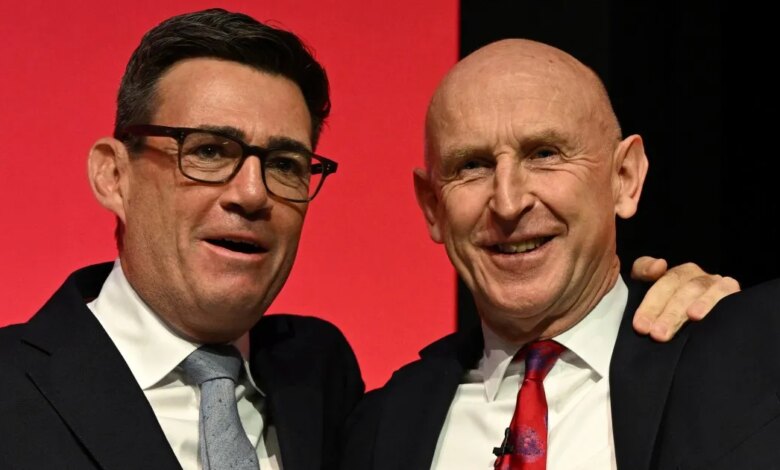
British Chancellor John Healey is scheduled to present the nation’s autumn budget in parliament on Wednesday at 12.30 GMT, marking the government’s initial tax and spending blueprint under Prime Minister Andy Burnham’s leadership. The financial package arrives against a backdrop of high inflation, rising government borrowing, and an ongoing cost-of-living crisis that has placed severe pressures on households nationwide.
Total United Kingdom borrowing surpassed the 3 trillion pound ($3.99 trillion) threshold for the first time in September, driven in part by fallout from the conflict involving Iran and the closure of the Strait of Hormuz, which pushed Brent crude futures to $115.90 a barrel. The nation currently allocates 100 billion pounds ($133bn) annually strictly toward servicing that debt. In the financial year through September, borrowing remained below the previous year’s totals but exceeded official forecasts from the Office for Budget Responsibility.
Despite these fiscal constraints, Chancellor Healey has stated that the upcoming budget will shift money and authority away from Westminster and into local communities across Britain. In a speech preceding the address, Healey emphasized that he and Prime Minister Burnham operate in close alignment regarding fiscal rules, aiming to balance public books while maintaining a buffer against economic uncertainty, controlling borrowing to lower inflation, and alleviating long-term pressures on public finances.
Defense spending stands as a primary priority for the administration. Prime Minister Burnham announced that Healey will outline a fully funded plan to finance previously established military commitments. Announced in June and backed by 298 billion pounds ($396bn) in investment, the defense plan aims to transition the armed forces toward warfighting readiness and enhanced European security. According to reports, Healey intends to close a 4.7-billion-pound ($6.2bn) funding gap inherited from the previous leadership by utilizing cuts to other departmental budgets. The strategy incorporates NATO’s benchmarks of dedicating 3 percent of gross domestic product to defense by 2030 and 3.5 percent by 2035, up from the current level of approximately 2.6 percent.
The budget is also expected to introduce new revenue measures targeting major financial institutions and online retail marketplaces such as Amazon, Temu, and eBay, alongside increased funding for mayoralties and local authorities. Proposals include modifying a 2030 bank surcharge rate to generate roughly 2 billion pounds ($2.6bn), capitalizing on the collective 15 billion pound ($19.9bn) profits recorded by the country’s four largest banks during the first six months of the year. Additionally, the Treasury is reportedly weighing crackdowns on foreign sellers evading value-added tax on online platforms, a measure projected to raise up to 1 billion pounds ($1.3bn) to help finance business rate reductions for high street retailers.
For day-to-day operations and public investment, Healey is anticipated to allocate about 1.42 trillion pounds ($1.8 trillion) this year, alongside the 100 billion pounds designated for debt interest. Analysts note that the administration is likely to lean toward targeted assistance rather than broad tax changes. Measures already previewed include ending the carer’s allowance limit, removing import tariffs on select food items like chocolate and beans, introducing a new personal income tax allowance to protect pensioners, and injecting an additional 1 billion pounds into a 39-billion-pound decade-long strategy for social and affordable housing in England.
Energy expenses remain a critical concern for consumers, with household bills projected to approach 2,000 pounds ($2,655) annually in January after energy consultancy Cornwall Insight forecasted a 16 percent increase in the government price cap. The anticipated rise stems from ongoing gas and oil market pressures linked to the Middle East conflict. To mitigate these impacts, reports indicate the chancellor may announce household relief measures, including the potential elimination of energy supply standing charges.