The Federal Reserve kept interest rates steady on Wednesday, maintaining the benchmark range of 3.75 percent to 4 percent as officials weighed persistent price pressures against ongoing economic growth. Policymakers voted 10-2 to hold rates at the level reached in September, when the central bank enacted its first borrowing cost increase since 2023.
The decision drew two notable dissents. Fed Governor Lisa D. Cook cast her first-ever vote against the central bank’s monetary policy settings, advocating for a quarter-point rate increase. She was joined by Beth M. Hammack, president of the Federal Reserve Bank of Cleveland, who has dissented multiple times this year. Ms. Cook’s opposition marks the first time a Fed board governor has voted against a policy decision since Kevin M. Warsh took over as chairman in May.
In an accompanying policy statement, the central bank described inflation as elevated and signaled that further action remains necessary. “The accumulation of more information will help the committee determine the policy stance appropriate to ensure a timely return of inflation to the committee’s 2 percent goal,” the statement read. The message mirrored comments from leadership ahead of the October meeting, where several officials indicated openness to another rate increase later in the year while emphasizing a lack of urgency for back-to-back hikes.
The meeting convened just days before midterm elections that will determine congressional control and shape the remainder of President Trump’s term. Affordability has emerged as a central concern for voters after nearly six years of inflation overshooting the central bank’s target.
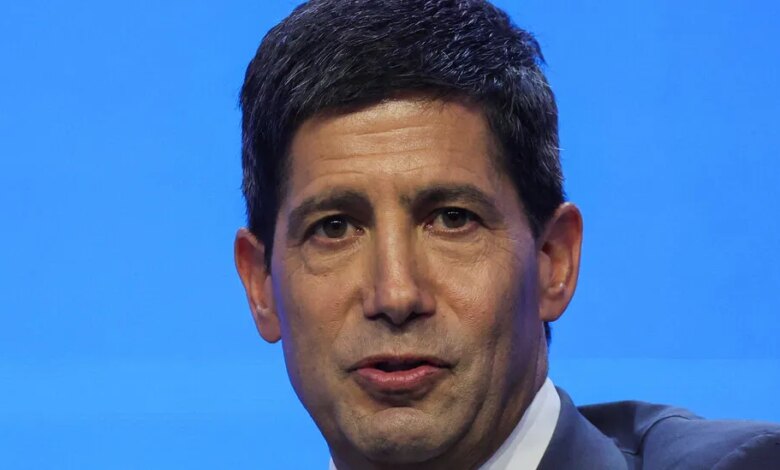
Addressing reporters, Mr. Warsh asserted that political pressures did not influence the decision. He defended the central bank’s approach, emphasizing that officials have the flexibility to await more data before the next gathering in December. He pointed to stable public confidence in the Fed’s 2 percent target and the absence of clear economic overheating.
“Is the economy running too hot? Is the economy too strong? That isn’t the judgment of most of my colleagues,” Mr. Warsh said, noting that tighter financial conditions and higher government borrowing costs are subduing growth where appropriate.
U.S. government borrowing costs have climbed significantly, increasing expenses for mortgages, consumer loans, and corporate financing. Companies heavily invested in artificial intelligence have faced particular pressure due to debt-financed expansion plans, triggering a sell-off in technology stocks. On Wednesday, the short-dated two-year Treasury yield dropped to 4.72 percent, while the 10-year Treasury yield rose to approximately 5.02 percent, driven by higher break-even inflation expectations.
While stopping short of calling financial conditions tight, Mr. Warsh observed that market participants are becoming more discerning in capital allocations. “It tells me the policy is working, and I think we can do that and make the economy more durable, have it last longer, and still achieve stable prices,” he said.
The chairman faced defensive questioning as incoming inflation data shows broadening price pressures. Early price shocks stemming from presidential tariffs were later compounded by the U.S.-Israel conflict with Iran, driving energy costs higher and threatening broader goods and services. Although the economy has grown solidly—fueled by an investment boom in artificial intelligence infrastructure—computer chip prices have surged, and wage gains have failed to keep pace with inflation.
Asked about the technology sector, Mr. Warsh disputed the notion that artificial intelligence is immune to higher interest rates, citing recent market corrections. He also highlighted expected productivity gains from the technology, maintaining that higher economic growth does not inherently equate to inflationary pressure.
Beyond monetary policy, Ms. Cook’s dissent unfolds amid a broader political backdrop. She remains locked in a legal battle with President Trump, who has urged lower rates and sought to pressure the Fed. Following Supreme Court rulings earlier this year, the White House launched an investigation into Ms. Cook, summoning her for an in-person hearing regarding unproven allegations of mortgage fraud prior to her tenure. Mr. Warsh stated that the central bank would not participate in those proceedings.
Mr. Warsh also announced a structural change to the central bank’s meeting schedule. Beginning in 2027, the Fed will hold seven rate-setting meetings and one dedicated session on broad monetary policy strategy. In 2028, the schedule will shift to six rate meetings and two strategy sessions, replacing the decades-long practice of eight annual rate-setting meetings.