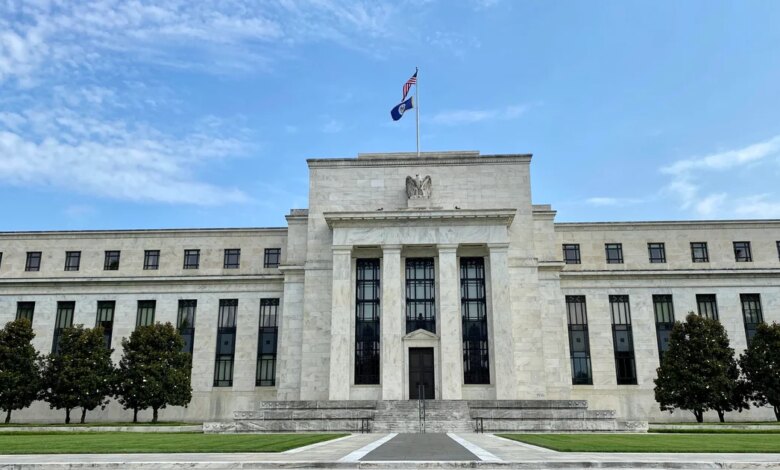
The Federal Reserve left interest rates unchanged on Wednesday, maintaining the federal funds rate at a target range of 3.75% to 4% following a previous hike intended to cool rising price pressures.
In an official statement, the central bank noted that economic activity is expanding at a strong pace while conceding that inflation remains elevated. Officials stated that gathering additional information will help the Federal Open Market Committee determine the appropriate policy stance needed to guide inflation back toward its 2% objective in a timely manner. Wall Street had widely anticipated the decision to stand pat, resulting in a muted reaction across major stock indexes, which finished the session essentially flat.
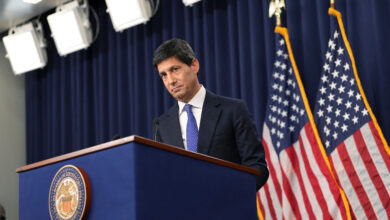
During a post-meeting press conference, Fed Chairman Kevin Warsh pointed to positive economic indicators, including robust consumer spending, strong capital expenditures, and healthy overall growth. However, Warsh emphasized that inflation remains uncomfortably high and acknowledged that the central bank has not yet succeeded in fully reining it in. He noted that while employment conditions remain positive, Americans continue dealing with inflation running above the committee’s objective for close to six years.
The rate decision was not unanimous. Ten members of the FOMC voted to keep the benchmark rate steady, while two members—Fed Board Governor Lisa Cook and Cleveland Federal Reserve Bank President Beth Hammack—dissented in favor of a 0.25 percentage point rate increase. Warsh described the deliberations as a serious and sober discussion that ultimately yielded the correct policy choice for the current economic environment.
Stubborn consumer prices continue to complicate the central bank’s task, fueled in part by elevated global energy costs stemming from the conflict involving Iran. Last month, the Consumer Price Index rose at a 3.7% annual rate, while core inflation—which excludes volatile food and energy components—increased by 2.6% from a year ago. Both metrics came in above economists’ expectations.
While the pause offers temporary relief for consumers, analysts suggest further tightening may lie ahead. Michael Pearce, chief U.S. economist at Oxford Economics, pointed to the two hawkish dissents and policy language as indicators that the central bank will likely hike rates in December. Samuel Tombs of Pantheon Macroeconomics added that financial markets are pricing in an additional 0.75 percentage points of tightening over the coming year.
When questioned about potential actions at the upcoming Dec. 8-9 meeting, Warsh declined to telegraph policy moves. Financial experts advised that borrowers should remain cautious, noting that holiday debt could become more expensive to pay off if policymakers resume raising rates before the end of the year.
Alongside the rate decision, Warsh announced upcoming structural changes to the Fed’s meeting schedule. While the central bank will continue holding eight meetings per year, beginning in 2027 one meeting will be dedicated exclusively to monetary policy strategy without rate votes or policy statements. By 2028, Warsh expects that number to expand to two strategic meetings and six rate-setting sessions. The adjustment reflects Warsh’s broader push to limit forward guidance and preserve institutional flexibility.