Los Angeles City Council Unanimously Approves 20-Year Phaseout of Urban Oil Drilling

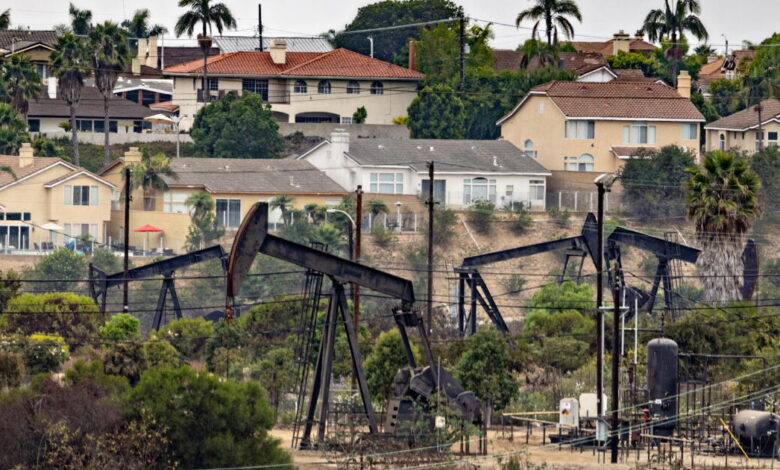
The Los Angeles City Council has unanimously approved a sweeping ordinance to halt new oil and gas drilling and phase out existing production across city limits over the next 20 years. The action makes Los Angeles the largest city in the United States to eliminate active oil wells within its borders, pending the expected signature of Mayor Karen Bass, whose office indicated she intends to sign the measure as soon as possible.
The newly approved ordinance applies to approximately 600 active wells and 1,200 idle wells, prohibiting idle infrastructure from being brought back into production. Under the legislation, all existing oil and gas operations are categorized as “nonconforming use,” stripping them of compliance with current zoning laws and restricting them strictly to routine servicing and maintenance during the 20-year wind-down period. Re-drilling, deepening, or expanding current wells is expressly forbidden.
This vote revives a landmark municipal ban originally enacted in 2022 that was subsequently overturned following a legal challenge by area petroleum producers. Industry plaintiffs successfully argued at the time that state law superseded local jurisdiction over petroleum operations, leading an L.A. County Superior Court judge to strike down the ordinance in 2024. However, the legal framework shifted significantly when California Governor Gavin Newsom signed Assembly Bill 3233, legislation specifically authorizing local governments to regulate oil and gas extraction within their communities.
While oil wells are distributed across nearly all parts of Los Angeles, the vast majority of active and idle operations are concentrated in the Harbor District near the Port of Los Angeles, as well as in west-Central L.A. and Inglewood. City data indicates that roughly two-thirds of active municipal wells are operated by just three entities: Warren Resources, E&B Natural Resources Management Corp., and Tidelands Oil Production Co. Warren Resources previously spearheaded the lawsuit against the city’s initial 2002 attempt at a ban.
Representatives for Warren Resources did not respond to requests for comment regarding the latest vote. However, in a formal letter submitted to the city last December, the company contended that the ordinance constitutes an unlawful taking of private property, violates vested rights held by business operators and royalty owners, and rests upon inadequate environmental review. The firm also argued that Assembly Bill 3233 itself is unlawful and fails to supersede federal and state authority governing petroleum extraction. Furthermore, Warren Resources maintained that there is a deficiency of empirical evidence linking city oil operations to widespread negative health outcomes, asserting that its facilities do not emit significant quantities of air pollutants or endanger public safety.
Conversely, academic studies and community advocates point to documented health risks, noting that urban oil wells can emit carcinogens linked to respiratory ailments, headaches, and throat irritation. Local residents and environmental justice organizers, including Wilmington resident Ashley Hernandez of Communities for a Better Environment, reported severe neighborhood health impacts ranging from asthma and heart disease to cancer, alongside daily nuisances such as foul odors and black soot settling on window sills. Hernandez and other advocates from the STAND-L.A. coalition emphasized that the city’s remaining wells are predominantly located in communities of color, framing the ongoing extraction as environmental racism.
Proponents of the measure on the City Council emphasized the city’s broader environmental commitments. Councilmember Traci Park noted during the meeting that Los Angeles has already pledged to achieve 100% clean electricity by 2035 while scaling up investments in wind and solar energy. Councilmember Katy Yaroslavsky, who helped steer the reinstatement effort, acknowledged that the ordinance will likely encounter fresh legal challenges but asserted that the legislative record substantiating the policy is stronger and more urgent than ever.
The ban aligns directly with the municipal Climate Action Plan released by Mayor Bass in April, which calls for phasing out urban extraction alongside measures to clean up former drill sites so the land can be repurposed for parks, housing, and other public benefits. Wendy Miranda of Esperanza Community Housing suggested the decision sets a precedent for how other municipalities can dismantle fossil fuel infrastructure with public health prioritized.