U.S. Measles Surge and Federal Data Dispute Threaten Nation’s Long-Held Disease Elimination Status

By nearly every statistical measure, the measles situation in the United States has moved beyond a localized concern to a full-scale public health emergency. Federal data reveals that cases surged by 8% last week alone, with 330 new infections reported. This weekly spike has already pushed the national total past the cumulative count for 2024, a year in which the Centers for Disease Control and Prevention (CDC) recorded 285 cases.
As of October 15, there have been 4,410 confirmed measles cases nationwide, a figure that is nearly double the total reported for all of 2025. Large-scale outbreaks have been identified in Texas and South Carolina, but Pennsylvania has emerged as the most severely affected region. The state has reported more than 1,300 cases and 250 hospitalizations so far this year. However, public health experts warn that these figures likely underrepresent the true scale of the crisis due to widespread underreporting, suggesting the actual number of infections could be as high as 6,000.
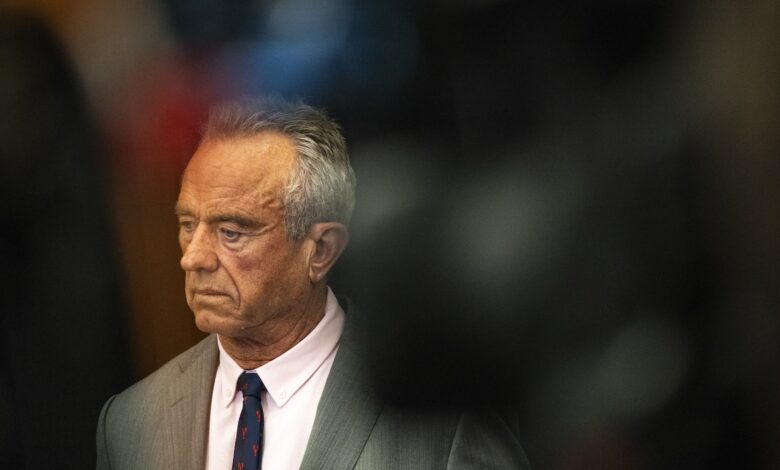
Noel Brewer, a professor of public health at the University of North Carolina who previously served on a key vaccine advisory panel, noted that the current reporting period has seen more measles cases than the last quarter-century combined. This surge comes amid a significant overhaul of federal health committees led by Health and Human Services (HHS) Secretary Robert F. Kennedy Jr., a central figure in the “Make America Healthy Again” (MAHA) movement.
A fierce dispute has erupted between state health officials and federal leadership regarding the transparency of the CDC’s data. Pennsylvania’s Health Secretary, Debra Bogen, has twice formally challenged CDC Director Erica Schwartz, who took over the agency in August. Bogen sent a letter last week demanding to know why the CDC’s national dashboard listed only three deaths while Pennsylvania alone has confirmed five measles-related fatalities, with a sixth under investigation.
Bogen’s correspondence explicitly accused the federal agency of obscuring the seriousness of the disease by failing to acknowledge these deaths. Sources familiar with the matter indicate that earlier this fall, Kennedy requested the removal of two measles deaths from the CDC dashboard, a request that was reportedly implemented without objection. While those figures were eventually restored to the tally, they now appear with an asterisk noting the numbers are subject to change.
Pennsylvania Governor Josh Shapiro has publicly criticized the federal response, arguing that the administration has actively sowed doubt regarding vaccine safety. Kennedy has denied these allegations, characterizing the outbreak as a global phenomenon rather than a domestic policy failure. He has claimed that the current administration has been more effective at controlling the virus than any other nation, despite the fact that U.S. vaccination rates continue to decline. While it is true that countries such as Bangladesh, Indonesia, and India are facing massive surges—with Bangladesh recording 65,000 infections in the last year—critics point out that the U.S. is uniquely positioned with the resources to prevent such a crisis.
The medical stakes of the resurgence are high. Measles is an exceptionally contagious viral disease known for its characteristic rash, but it can lead to severe complications including pneumonia, blindness, and brain swelling. It also possesses the ability to “erase” the immune system’s memory, leaving patients vulnerable to secondary infections for months or years. Historically, about one to three out of every 1,000 infected individuals die from the disease, with children being the most vulnerable. Conversely, vaccines have proven highly effective; the World Health Organization (WHO) estimates that measles vaccinations prevented approximately 59 million deaths globally between 2000 and 2024.
Despite this track record, Kennedy has been hesitant to promote traditional vaccination, instead highlighting unproven remedies such as vitamin A and cod liver oil. Research published in June in the JAMA Network suggests this advice may be contributing to other health issues, noting an increase in calls to poison control centers related to vitamin A exposure.
The crisis has placed the United States on the verge of a significant international downgrade. In 2000, the U.S. achieved “measles elimination” status, a designation given when a country maintains 12 consecutive months without continuous virus transmission. The Pan American Health Organization, a branch of the WHO, is expected to meet in November to review this status. Experts anticipate the U.S. will follow Canada, which saw its elimination status revoked last year.
The MAHA movement, which serves as the political backbone for Kennedy’s health agenda, remains active in the current midterm election cycle. MAHA-aligned political action committees have spent nearly $2 million backing candidates, including $1.65 million for Iowa gubernatorial candidate Zach Lahn. Kennedy himself has been actively stumping for candidates, occasionally utilizing military aircraft for travel.
Public trust in these health initiatives appears to be wavering. Recent polling suggests only one in four people trust health information originating from Kennedy. While some lawmakers have signaled intentions to investigate or impeach the health secretary if congressional majorities shift, policy experts suggest the challenge to public health infrastructure is systemic. Even with potential leadership changes, vaccines face long-term legislative and regulatory threats at both the state and federal levels that could persist through 2029 and beyond.