
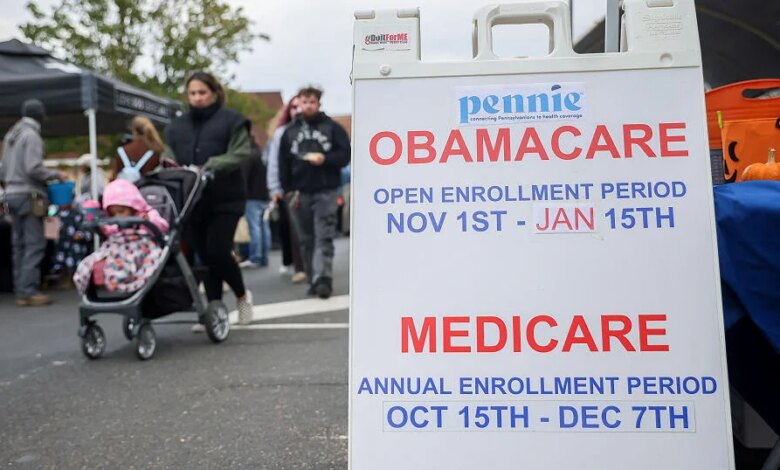
Consumers purchasing Affordable Care Act health insurance are encountering significant operational and financial shifts as open enrollment gets underway. The upcoming coverage cycle brings increased identity verification requirements, new limits on broker participation in the federal marketplace, tighter subsidy restrictions for certain immigrants, and continued double-digit premium increases.
Open enrollment officially starts November 1 in most states, though Idaho, Connecticut, and Massachusetts begin earlier, and several states have permitted window shopping to review premium rates. Federal officials anticipate a continued decline in overall enrollment, largely resulting from the expiration of enhanced subsidies at the end of 2025. While policy experts note that the subsidy phaseout caused millions of enrollees to drop or lose coverage earlier this year, the administration has pointed to falling enrollment as evidence of successful anti-fraud measures, including an August cancellation of policies covering 760,000 enrollees suspected of improper sign-ups.
To combat fraudulent activity, the Centers for Medicare & Medicaid Services has implemented stricter controls for consumers using agents or brokers through the federal marketplace, which serves 29 states. These rules do not apply to state-based exchanges, which operate under independent guidelines. All consumers using an agent on the federal exchange must now obtain a one-time confirmation code or link via text message, email, or an automated phone call to authorize the broker. Returning consumers with outdated contact information must update their details online or through the marketplace before proceeding.
Additionally, applicants and policyholders classified as high-risk must complete identity verification through approved third-party services such as Experian before authorizing an agent. CMS defines high-risk individuals as first-time applicants, existing policyholders changing states, consumers working with a new broker, or those with monthly premium payments of $30 or less. Industry professionals note that low-cost plans are frequently targeted by rogue agents who make unauthorized switches to collect commissions, sometimes paying the minimal monthly fee themselves.
Insurance brokers face additional disruption under a September federal rule establishing a moratorium on new agents entering the ACA market. Agents who were not registered with the federal marketplace in 2026 are barred from assisting with 2027 enrollments until February at the earliest, past the conclusion of the open enrollment window. Regulators instituted the moratorium after finding a disproportionate number of compliance concerns originated among newly registered agents, alongside the removal of hundreds of non-compliant brokers this year.
Industry groups have challenged the directive in court. The National Association of Benefits and Insurance Professionals filed a lawsuit against the administration on October 15, arguing the policy unfairly penalizes 19,000 agents seeking to sell ACA plans. Health Agents for America filed a separate suit on October 21 seeking a temporary restraining order. Brokerage owners report that the restrictions create staffing shortages for small agencies that typically hire seasonal help toward the end of the year, potentially driving clients toward larger call centers.
Financial pressures also persist as consumers shop for coverage. While average premium increases of 15% are slightly lower than last year’s 26% spike, they follow the permanent expiration of enhanced subsidies that previously lowered costs for most participants. Subsidies remain income-based and are unavailable to households earning more than four times the federal poverty rate. During the current enrollment period, that threshold stands at $63,840 for a single person, $86,560 for a couple, and $109,280 for a family of three.
Policy analysts advise consumers to actively compare options rather than allowing plans to automatically renew, noting that carriers such as Cigna have scaled back coverage areas. Out-of-pocket maximum caps are also rising for 2027, increasing by 13% to $12,000 for individuals and $24,000 for family plans, before accounting for lower limits available to lower-income households.
Separately, provisions from the One Big Beautiful Bill Act remove subsidy eligibility for many lawfully present immigrants, including temporary H-1B visa holders, refugees, asylees, temporary protected status holders, and individuals with pending green-card applications. Eligibility is restricted primarily to permanent green-card holders, certain Cuban and Haitian immigrants, and citizens of Micronesia, the Marshall Islands, and Palau.


