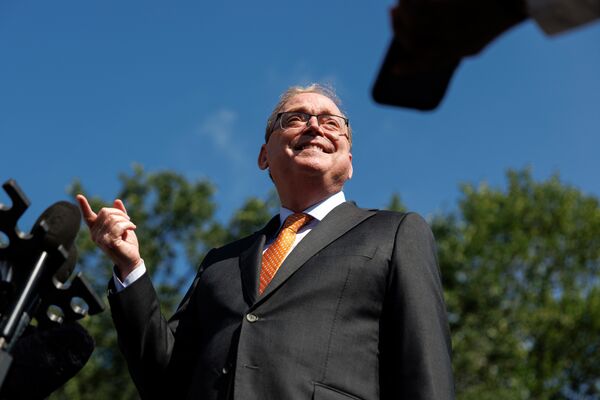
Top White House economic adviser Kevin Hassett stated that trade negotiations between the United States and Canada have intensified and are nearing a resolution. Speaking on a television broadcast on Sunday, Hassett noted that the discussions have gathered considerable momentum.
“I think it’s very close to finally having a deal on that,” said Hassett, who serves as the director of the White House National Economic Council. He added that Commerce Secretary Howard Lutnick has been engaged in continuous discussions with his Canadian counterparts throughout the week.
The diplomatic engagement follows remarks made on Wednesday by Canadian Prime Minister Mark Carney, who indicated that he had spoken with U.S. President Donald Trump regarding the trade discussions. Carney stated that he remains prepared to negotiate when the United States is ready, provided the resulting agreement serves Canadian interests.
According to a U.S. official who spoke on condition of anonymity to discuss sensitive diplomatic matters, discussions between Lutnick and Dominic LeBlanc, the Canadian minister responsible for the negotiations, have accelerated in recent weeks and remain ongoing. The official cautioned, however, that the ultimate prospects for an agreement remain uncertain because Washington believes Ottawa has not yet offered sufficient concessions. The official emphasized that the president will only endorse an agreement that benefits the United States.
The recent diplomatic push coincides with domestic political developments, including the Trump administration’s decision to modify Canadian tariffs to assist businesses in Maine. Senator Susan Collins announced on Friday that the United States will remove 50% tariffs on Canadian plywood, bleached paper, cartons, and specialized agricultural machinery, a move she argued would support her state’s rural and coastal economy. The adjustment followed the collapse of broader tariff negotiations in August, which had prompted both nations to implement retaliatory trade measures.
LeBlanc stated on Friday that Canadian authorities were reviewing the latest U.S. tariff actions. While assessing the steps, Canada remains prepared to work constructively toward a mutually beneficial trading relationship that safeguards national interests, according to the Canadian minister.

Hassett highlighted the administration’s focus on regional domestic priorities during his Sunday appearance, noting that assisting Maine and Alaska fisheries has been a paramount focus for the National Economic Council. The administration recently unveiled an “America First Seafood Strategy” on Friday, following the creation of the U.S. Department of Agriculture’s first-ever Office of Seafood in April.
The tariff modifications have drawn political scrutiny ahead of the November 3 midterm elections. Collins, a Republican facing a competitive reelection campaign, has emphasized her role in securing tariff relief for Maine industries. Conversely, her Democratic challenger, Troy Jackson, criticized the timing in a social media post on Friday, contending that the senator acted only because her seat is at risk.
Previous tariff adjustments have similarly targeted specific regional concerns. Last month, President Trump exempted road salt and other products from duties following a request from Collins, coinciding with the announcement of retaliatory duties after earlier bilateral talks had stalled. In response, Canada also adjusted its own retaliatory duties to exclude seafood products.