The United States and Israel are increasingly signaling an imminent return to military strikes against Iran, while Tehran vows to expand its retaliation. This push toward renewed major hostilities follows months of relative stalemate in the eight-month-old conflict, raising questions about what lessons were learned from previous destructive rounds of warfare.
Beginning in February, the U.S. and Israel followed a 12-day bombardment of Iran in June 2025 with an unrelenting 40-day joint air campaign. That operation killed top leaders and commanders and decimated military capacity, yet the two rounds failed to topple the government or achieve other stated strategic objectives. Iran’s nuclear stockpile of highly enriched uranium remains intact beneath rubble, and Tehran has reportedly reconstituted much of its missile and drone arsenal, which has delivered precise strikes across the Gulf region.
Sanam Vakil, an Iran expert and head of the Middle East and North Africa program at Chatham House in London, said that while the U.S. and Israel might have expanded target lists, little else is likely to change. She noted that going back for a third round to do more damage without bringing the ruling system to its knees or forcing submission defies conventional logic.
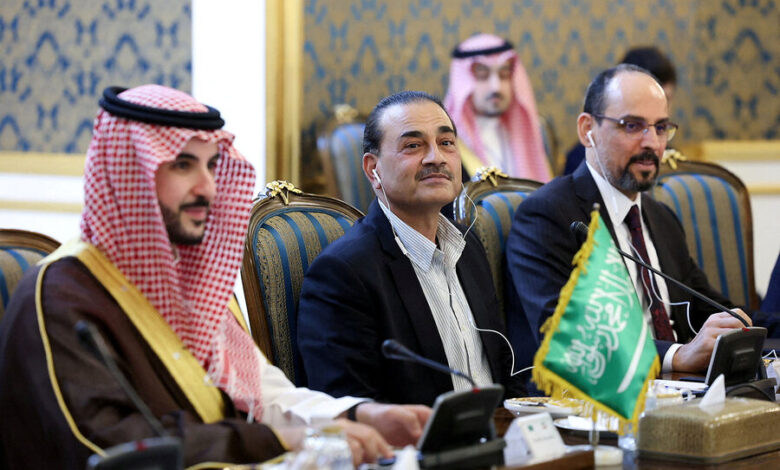
The surge in war rhetoric and preparations—including the ordered exodus of all nonessential U.S. diplomats and their families from the Middle East—prompted senior officials from the Mecca Defense Alliance countries, comprising Saudi Arabia, Turkey, and Pakistan, to visit Tehran on Monday to defuse tensions.
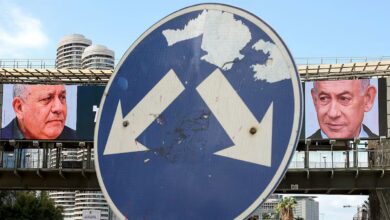
In Israel, Prime Minister Benjamin Netanyahu is fighting for reelection in a tightly contested vote on Tuesday and has spoken of the need to complete the mission against Iran. Last Wednesday, Mr. Netanyahu stated he ordered the Israel Defense Forces and the Mossad intelligence agency to topple the regime in Iran as the only way to remove the threat. Over the weekend, a clash erupted between the prime minister and Israel’s military chief of staff, Lt. Gen. Eyal Zamir, over the general’s opposition to an unspecified preelection action that could lead to a flare-up with Iran, according to a military source speaking to Israel’s Channel 12 news.
In the United States, multiple leaked reports have detailed fresh Pentagon plans and preparations for a major escalation aimed at delivering a knock-out blow against Iran. U.S. President Donald Trump, whose Republican Party faces November 3 midterm elections amid surging fuel prices caused by the war, frequently suggests he will renew U.S. strikes, asking during a interview whether he should make a deal or finish them off. On Friday, he mentioned he might launch another operation similar to the February campaign dubbed Epic Fury.
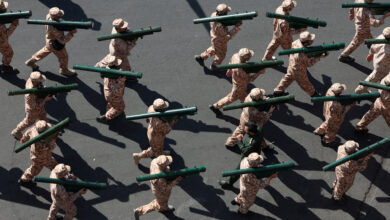
Iranian officials responded with their own warnings, stating that valuable U.S. and Gulf assets, such as underwater internet cables, regional data centers, and artificial intelligence facilities, will be targeted if Iran is attacked again. Ebrahim Azizi, the hard-line head of Iran’s parliamentary security committee, posted a map of Israel over the weekend showing strategic sites ranging from desalination plants to the Dimona nuclear reactor, warning that a single miscalculation could render Israel uninhabitable in under an hour.
Mohsen Rezaei, Iran’s top security official and head of the Supreme National Security Council, outlined targets in a broader plan if strikes resume. In a written interview last week, Mr. Rezaei stated that action against Iran carries a cost and that while diplomacy is preferred, Iran possesses the tools needed to keep responding if war continues. Iranian state-run television has highlighted nightly pro-regime rallies where chants indicate public preparedness for a new round of conflict.
Dr. Vakil noted that the U.S. and Israel may believe there are further nuclear targets to address, mentioning a deeply buried facility under Pickaxe Mountain named by Mr. Trump. Targets may also seek to foment an uprising by worsening an economy ground down by sanctions and tapping into residual anger over the brutal quashing of anti-regime street protests in January, which left at least 7,000 people dead.
Israeli analysts have also questioned the utility of returning to war. Danny Citrinowicz of the Institute for National Security Studies in Tel Aviv and a former head of the Iran branch of Israel Defense Intelligence wrote on social media that the U.S. and Israel learned the wrong lessons from previous campaigns. He emphasized that Iran will not surrender and that military superiority does not automatically translate into strategic success, adding that Washington and Jerusalem must clarify what another campaign can achieve and what the exit strategy entails.
As Iranians brace for resumed strikes, a display of gallows humor appeared in Tajrish Square, where the Tehran Beautification Organization erected a billboard installation featuring an actor dressed as Mr. Trump peering from behind prison cell bars. Dr. Vakil noted that Iran has consistently surprised opponents by resisting, preparing for conflicts, and deploying unexpected capabilities, indicating that further escalation will likely bring additional surprises.