Record-Breaking Tides and El Niño Flooding Inundate Newport Beach and Southern California Coast

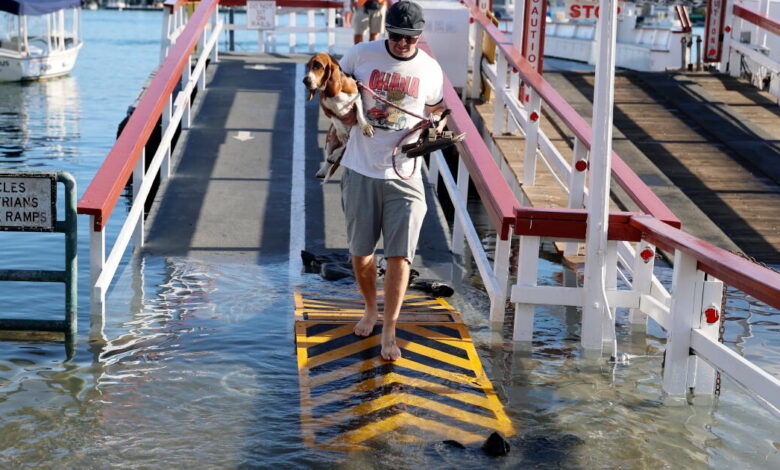
Record-breaking high tides surged over sea walls and flooded city streets, homes, and businesses across Newport Beach this week, testing the resilience of coastal communities throughout Southern California. The historic inundation forced the temporary suspension of the Balboa Island Ferry, which has shuttled vehicles and passengers between Balboa Island and the Balboa Peninsula for more than a century.
Bill Sharp, a resident who has witnessed six decades of weather patterns on the Balboa Peninsula, noted that the extraordinary water levels caught long-term residents off guard. Tuesday’s high tide reached a staggering 8.4 feet in Newport Beach, marking the highest level the city has ever recorded and surpassing expectations that initially predicted a 6.7-foot rise. The tide also broke an all-time record in San Pedro, which had set a new high the previous day, while the National Weather Service recorded a preliminary high tide of 8.19 feet at 9:48 a.m. in Redondo Beach, sending water rushing onto the International Boardwalk and Marine Stadium in Long Beach.
Scientists attribute the extreme water levels to a convergence of factors. A full moon on Monday coincided with warmer-than-normal ocean temperatures driven by human-caused climate change, an El Niño-fueled Kelvin wave carrying warm water up the coast from the equatorial Pacific, and a separate months-old marine heat wave. According to scientific estimates, the marine heat wave alone has elevated sea levels by 1.25 to 1.8 feet beyond normal astronomical movements.
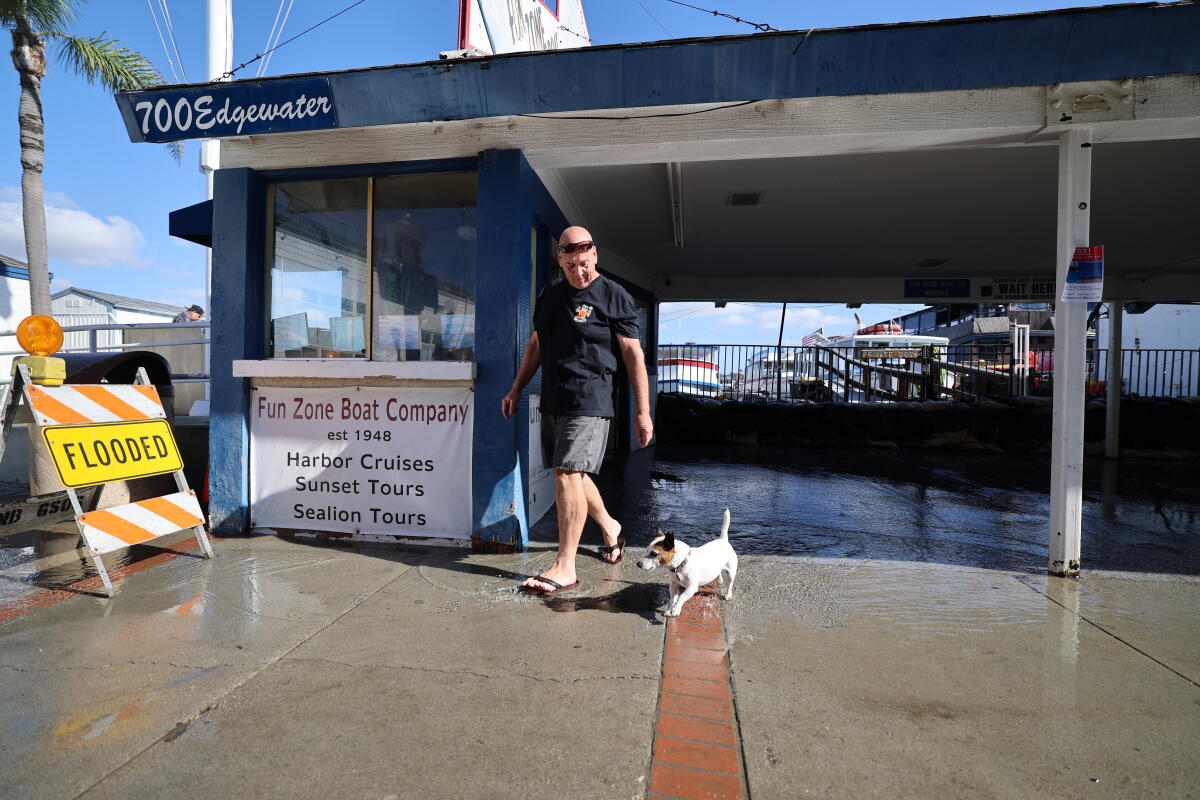
The unique geography of the Balboa Peninsula, pinched between the beach on one side and the bay on the other, leaves the area exceptionally vulnerable during El Niño seasons. While residents in past years occasionally swapped cars for canoes and paddleboards, the current event prompted a war footing involving black sandbags, water pumps, sand berms, and temporary drainage canals.
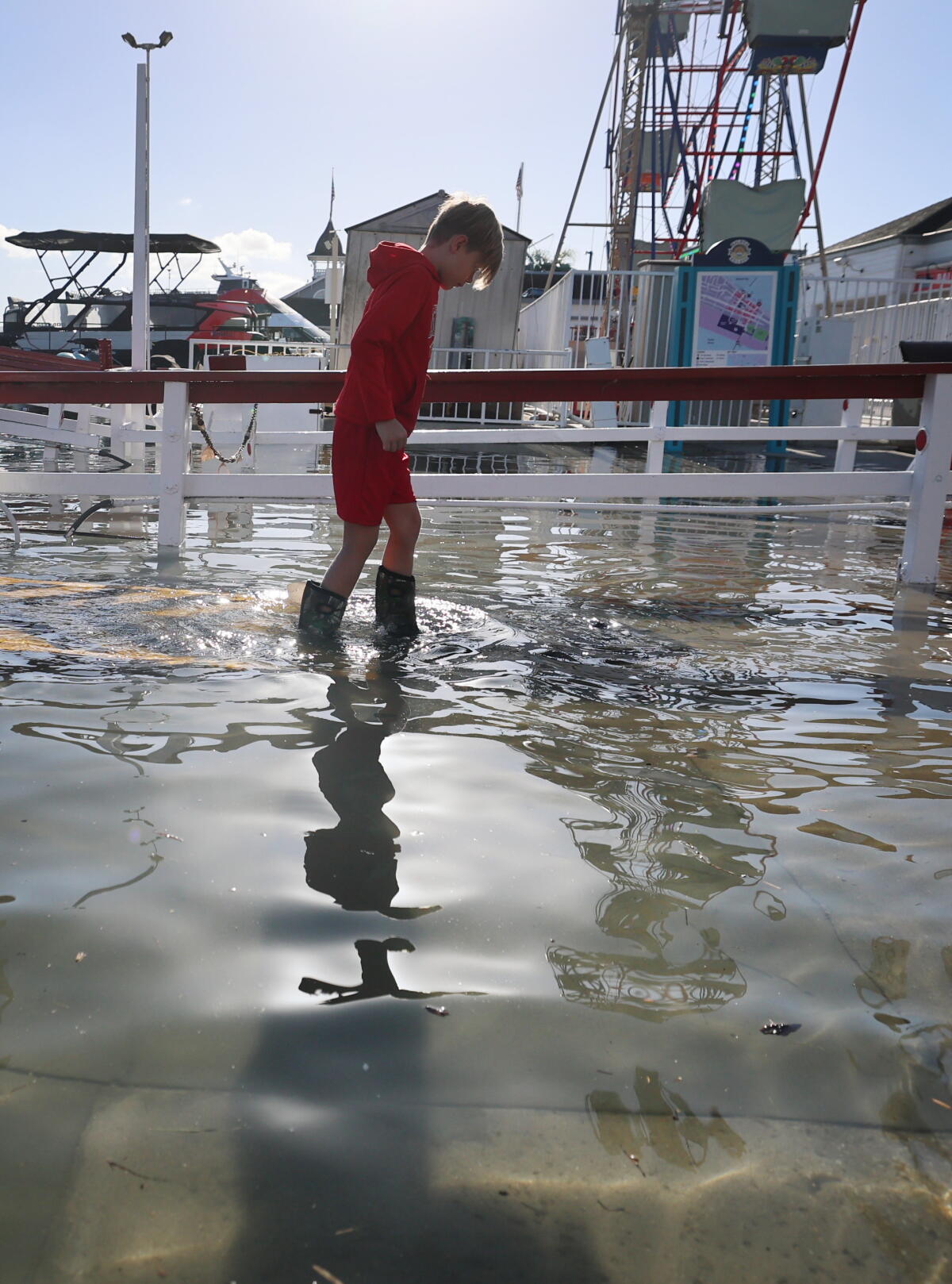
Henk Wiessner, president of the Fun Zone Boat Co., watched as water poured out of his company’s one-room office onto the feet of employees and his 12-year-old Jack Russell terrier, Butters. Wiessner noted that the rising water blocked access to his dock, threatening not just daily convenience but his commercial livelihood. Across the peninsula, business owners and residents utilized sandbags to slow the flow of water so that dozens of municipal pump trucks could manage the overflow.
City officials emphasized that municipal preparations have largely performed as intended. Newport Beach Councilmember Joe Stapleton stated that where breaches or failures occurred, they were generally confined to commercial or private residential property where adequate defensive walls were lacking. The city deployed utilities personnel, including Utilities Director Mark Vukojevic, and volunteers to knock on doors and urge residents to shore up vulnerable spots using city-provided sandbags or wood.
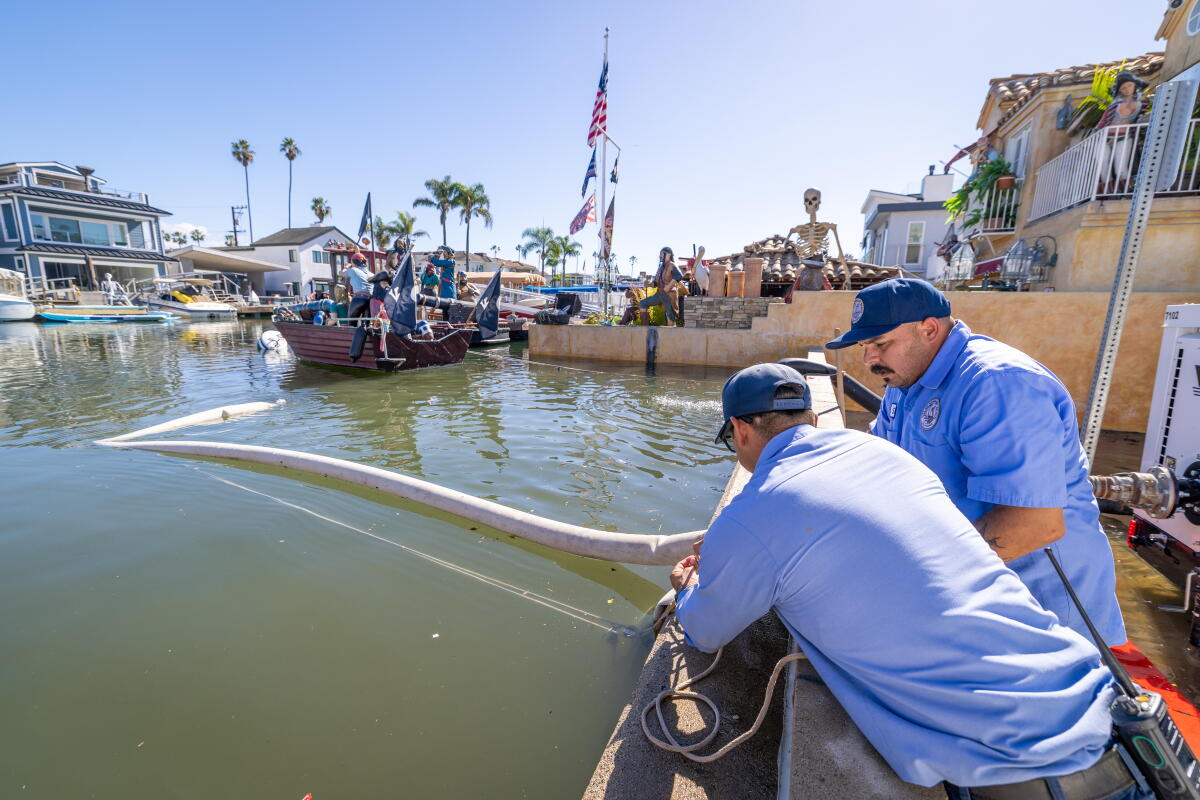
Vukojevic inspected several properties, including a landmark local residence near 35th Street and Marcus Avenue known as the “Pirate House,” where municipal workers pumped out accumulated water. While most properties held firm, adjacent locations that failed to construct adequate barriers experienced significant overtopping from back porches into public streets, illustrating what officials described as a widespread underestimation of extreme high tides.
Other coastal communities, including Redondo Beach and Huntington Beach, also faced severe flooding, and local officials warn that conditions could deteriorate further as El Niño reaches its peak over the winter months. Additional high-tide events are anticipated around the Thanksgiving, Christmas, and Martin Luther King Jr. Day holidays. Meteorologists and city leaders caution that if a strong winter storm coincides with these peak tides, coastal areas could experience even more destructive inundations.
Despite the recurring threats to infrastructure and historic bulkheads built in the early to mid-1900s, residents remain rooted. Peninsula veterans like 37-year resident Tim Hogan and longtime neighbor Bill Sharp acknowledged the rising risks but confirmed that community members are preparing their defenses rather than packing up to leave.