In the bustling borderlands of the Rio Grande Valley, mechanical bull salesman Jesus Robles surveyed the quiet storefront of his business and pointed to a vote he now deeply regrets. In 2024, Robles cast his ballot for Donald Trump, hoping a Republican administration would deliver the economic spark his enterprise needed to expand. Instead, he says, shifting trade policies and soaring freight expenses have battered his bottom line.
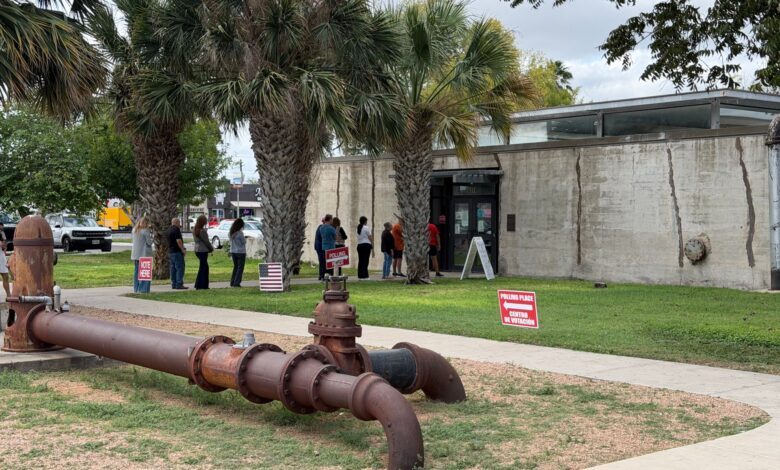
“I have lost tonnes of business due to our president right now,” Robles said on the final day of early voting in Alamo, Texas, roughly 50 kilometers from the US-Mexico border. Pointing to doubled shipping expenses and clients disrupted by immigration sweeps, he added, “We focus on other countries. We focus on taxes. But at the end of the day, I don’t feel none of these governments really help us, the people.”

Robles’s political about-face illustrates a broader fluidity in the Rio Grande Valley, a predominantly Latino region historically anchored by the Democratic Party. Trump’s 2024 gains—when he carried 14 of the 18 counties stretching along the US-Mexico border—convinced Republicans that a permanent red shift was underway in South Texas. Heading into the current election cycle, the GOP has targeted at least two Democratic-held congressional seats belonging to Representatives Vicente Gonzalez and Henry Cuellar, while attempting to protect Republican Representative Monica de la Cruz.
At the same time, Democrats are counting on Trump’s low approval ratings among Latinos, who make up roughly 40 percent of the state’s population, to mount a statewide breakthrough. Democratic Senate candidate James Talarico is challenging Republican Attorney General Ken Paxton, while Democratic gubernatorial hopeful Gina Hinojosa is seeking to unseat incumbent Governor Greg Abbott.

According to Alvaro Corral, an assistant professor of politics at the University of Texas Rio Grande Valley, the region has grown increasingly disconnected from both major national parties. While older iterations of the Democratic platform successfully blended traditional New Deal economic populism with social conservatism and law-and-order priorities, many local residents later gravitated toward Trump’s religious-tinted economic message. But that support has frayed under the weight of aggressive domestic deportations and stubborn pocketbook strains.
That tension was evident at the Alamo polling station, where 40-year-old Natalie, an education worker who withheld her surname due to professional concerns, winced while recalling her 2024 vote for Trump. Witnessing her students grapple with family separations from mass deportations, combined with the rising cost of diesel amid ongoing conflicts in the Middle East, led her to change course. “I just want people with empathy,” she said.

For many residents, the primary drivers remain foundational economic hurdles. Gabriel Ruiz, a 24-year-old voter in the valley, pointed to soaring housing costs—with typical homes now commanding between $400,000 and $500,000—as a unifying stressor that forces voters to look beyond party labels.
Michael Mireles, civil engagement director at La Union Del Pueblo Entero (LUPE), a local Latino voter turnout organization, argued that the 2024 shift toward Republicans was partly fueled by inadequate Democratic outreach. Only about 40 percent of registered voters cast ballots that year, a symptom of parties failing to engage marginalized populations.

The region’s underlying socioeconomic indicators remain stark. Poverty in the Rio Grande Valley hovers around 21 percent, representing the highest rate in Texas and double the national average, a figure virtually unchanged over the past decade. Furthermore, approximately 37 percent of residents lacked health insurance as of 2023.
The valley also contains the state’s highest concentration of colonias, informal settlements dating back to the 1950s that are typically unincorporated and frequently lack basic municipal infrastructure, though the vast majority of their residents are US citizens. In the Erling colonia in Donna, Texas, 36-year-old Angeles Arguelles explained that she recently could not afford medication for her sick children. Her husband works two jobs as a dishwasher, the household carries no insurance, and Arguelles—despite being a US citizen—has never voted.

“It just feels corrupt,” she said. “I just keep to myself and my family.”
Yet engagement is shifting in other unincorporated pockets. At a nearby colonia in Edinburg, restaurant worker Mario Hernandez said he backed an all-Democratic ticket this cycle, driven largely by anxiety over neighbors lacking healthcare access.

“A lot of elderly can’t survive on their income,” Hernandez said. “Most of us live paycheck to paycheck here.”