Jon Husted entered the national spotlight following his appointment as Ohio’s junior U.S. senator in 2025, taking the seat vacated when JD Vance assumed the vice presidency. Yet the veteran Buckeye State politician quickly confronted a severe political hurdle: widespread voter anonymity. An August Emerson College poll revealed that nearly four in 10 Ohio voters remained unsure or had never heard of the Republican incumbent, contrasting sharply with his Democratic opponent, former Sen. Sherrod Brown, whom only 14% viewed with similar unfamiliarity. Another survey by Bowling Green State University even found that one in four voters mistakenly identified Brown as the current incumbent.
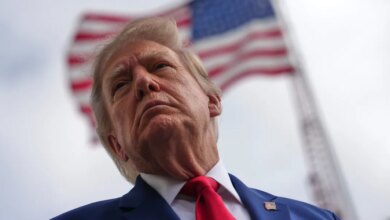
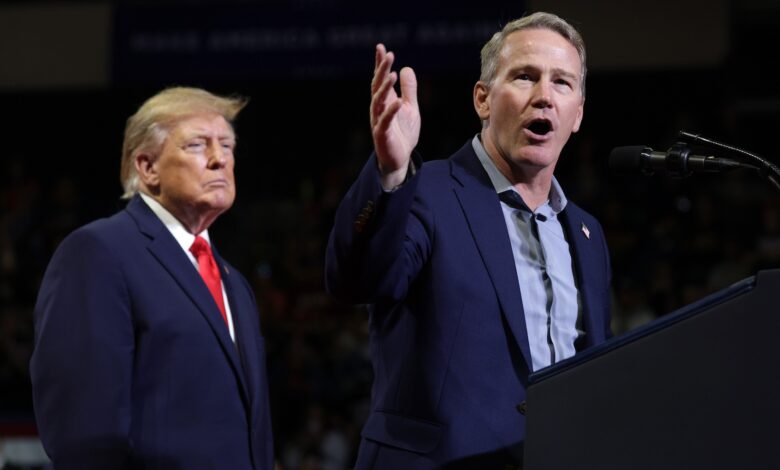
Faced with a sluggish campaign and Brown maintaining an edge in recent polling amid a broader national shift away from the GOP, Husted’s team sought the star power of Donald Trump. While joint campaign appearances with the president successfully elevated Husted’s public profile, the alliance came at a humiliating price, turning the 59-year-old senator into a prominent male target of Trump’s public catcalling and boundary-testing humor.
The dynamic began during an October 12 rally in Youngstown, Ohio, when Trump delivered a rambling monologue describing how he had purportedly examined Husted’s physique, noting his hands and shoulders before uttering an expletive about the candidate’s rear end. Stunned laughter from the audience encouraged Trump to turn the remark into a standard routine. At subsequent rallies across the country, Trump repeatedly praised Husted’s physique, reducing his political profile to a caricature reminiscent of his college football days decades prior.
Political analysts and commentators note that Trump’s behavior reflects a familiar exertion of dominance over high-ranking party officials rather than genuine desire. Observers point to similar public spectacles, such as Trump inviting rapper-turned-MAGA supporter Nicki Minaj to show off her appearance at a Michigan rally, or ridiculing the appearance and wardrobe of Texas Attorney General Ken Paxton, the Republican nominee for that state’s Senate seat. In Paxton’s case, Trump frequently tells crowds that the candidate is unattractive and poorly dressed, despite evidence to the contrary.
Rather than showing discomfort, rally audiences typically react with the same amusement they display toward other provocative rhetoric, signaling a shared enjoyment of dominance displays. For figures like Husted and Paxton, enduring such public degradation is treated as a necessary cost of seeking the political endorsement of a dominant party leader. Critics argue that lacking substantive policy platforms that appeal broadly beyond wealthy donors or corporate interests, modern Republican candidates lean entirely on Trump’s base to survive politically, accepting personal humiliation as the price of admission.