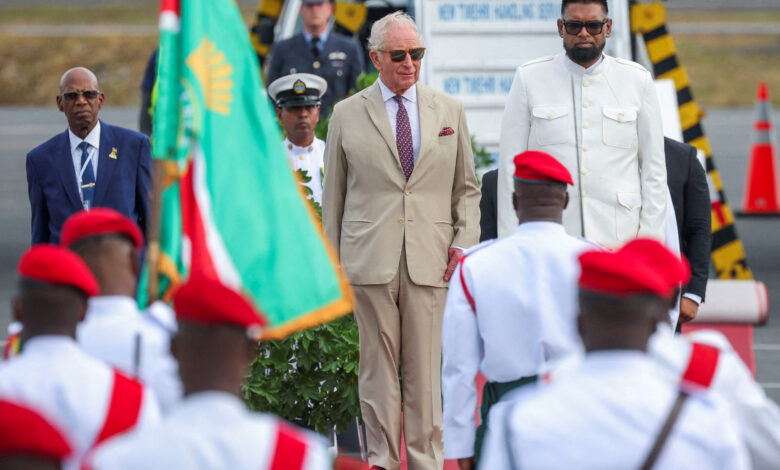
King Charles’ ongoing efforts to address Britain’s historical role in the transatlantic slave trade without issuing a formal apology face a significant political test at the Commonwealth Heads of Government Meeting in Antigua and Barbuda. Since ascending to the throne in 2022, the British monarch has expressed profound sorrow for past suffering, navigating a careful diplomatic line that avoids crossing into an official apology—a boundary London has steadfastly maintained.
Ahead of the summit, which begins on Sunday, Charles spoke in the Bahamas on Tuesday, stating it was “only right that we should acknowledge the great suffering and injustices of the past” and noting that leaders from affected nations would discuss the matter during the gathering. However, regional advocates argue that symbolic language is no longer sufficient. Niambi Hall Campbell-Dean, chair of the Bahamas’ National Reparations Committee, criticized the monarch’s position in a public statement, saying, “We do not need more carefully crafted words about healing. We need action equal with the scale of the harm inflicted.”
Caribbean leaders advocating for restorative justice through the Caribbean Community are expected to press their case during the summit. Between the 15th and 19th centuries, European traders abducted and sold at least 12.5 million Africans into slavery. Britain transported an estimated 3.2 million people across the Atlantic, establishing its position as one of history’s largest slave-trading nations, according to the Transatlantic Slave Trade Database.
Alan Lester, a historian at the University of Sussex whose research focuses on the legacies of empire, observed that opponents of the movement have successfully characterized reparations exclusively as direct monetary payouts, a framework most Western governments reject. In contrast, Caribbean officials frequently structure their demands around systemic remedies, including debt relief, development finance, educational support, public health investments, and climate resilience initiatives designed to address deep-seated inequalities rooted in slavery and colonialism.
Buckingham Palace has consistently ruled out financial compensation. Nevertheless, the institution has faced increased scrutiny regarding its own historical ties. In 2023, the palace announced that King Charles supported independent academic research examining the British monarchy’s historical connections to the slave trade, following investigative reporting into archival documents.
Additional historical findings have further complicated the palace’s position. Independent researcher Desiree Baptiste disclosed that her forthcoming book, “George IV, Empire, and Objects of Prestige,” draws on House of Lords papers and British government records. The documents indicate that profits generated from enslaved labor helped fund furniture and decorative works commissioned by King George IV for royal residences. Buckingham Palace did not immediately respond to a request for comment regarding these findings.
Royal commentator Afua Hagan noted the delicate diplomatic predicament facing the sovereign. “I think King Charles III is in a difficult position because you can express sorrow about something, but an apology goes much further,” Hagan said.