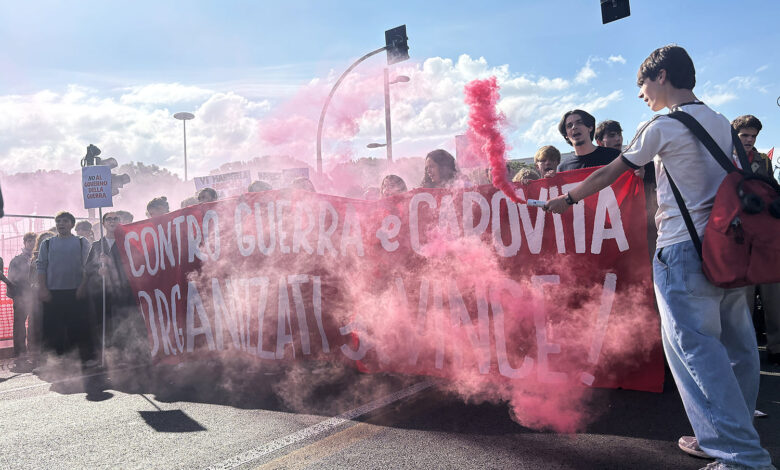
Thousands of workers across Italy are preparing for widespread demonstrations on Friday, bringing public and private sectors to a standstill amid growing public anger over the cost of living and high military spending. Major marches are scheduled in Rome, Milan, and other cities, alongside coordinated blockades at vital shipping hubs including Genoa, Livorno, and Trieste.
The widespread disruption follows a call to action by the Unione Sindacale di Base and other labor unions. The unrest builds upon several weeks of increasingly volatile demonstrations throughout Italy and the wider European continent. Earlier this month, protests turned violent in multiple cities, with masked groups looting stores in Milan and throwing projectiles at police officers, who deployed tear gas and water cannons to disperse the crowds.
The wave of civil unrest has also targeted historic and economic infrastructure. On Saturday, demonstrators stormed Rome’s historic Colosseum. Meanwhile, in southern Italy, frustrated farmers and truck drivers have blockaded major highways and ports to protest surging fuel prices, which have climbed significantly since the outbreak of war in Iran.
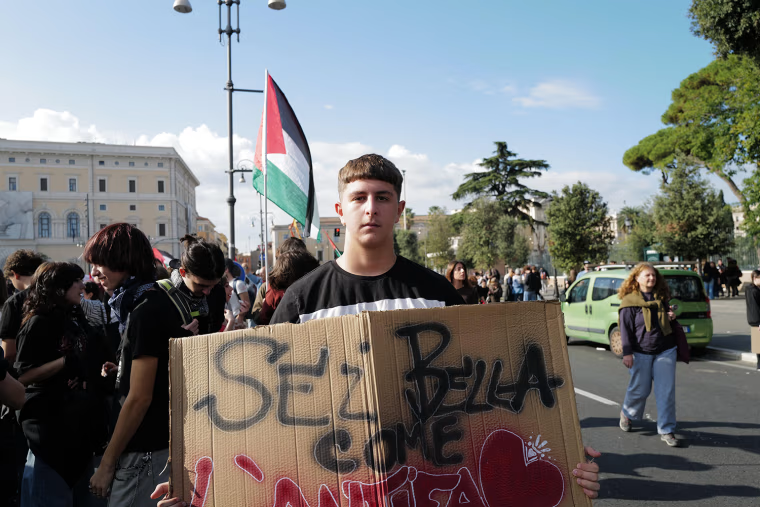
In response to the mounting unrest, Prime Minister Giorgia Meloni’s right-wing government has taken a hardline stance. The administration announced it will deploy 500 army troops alongside local police forces in Milan, with the military presence slated to remain in place through the end of 2026. Meloni, who has consistently prioritized law and order throughout her tenure, stated earlier this month that she held great respect for peaceful demonstrators.
However, the government has simultaneously introduced severe new penalties targeting rioters and vandals, including measures that impose financial liability on parents whose children participate in vandalism and looting. Following the introduction of the legislation, Meloni emphasized the administration’s position on social media, writing that vandalism and theft represent criminality rather than legitimate protest.
The current wave of civil disobedience in Italy shares parallels with broader European movements. Protests appear partially inspired by events in France, where severe rioting erupted after student demonstrations concerning the state of education evolved into broader actions centered on the cost of living and social security. Similar demonstrations have manifested across Europe, including a massive tent encampment occupying a central square in Madrid, thousands marching through Lisbon, and clashes in Brussels where Belgian police deployed tear gas and water cannons against black-clad protesters.