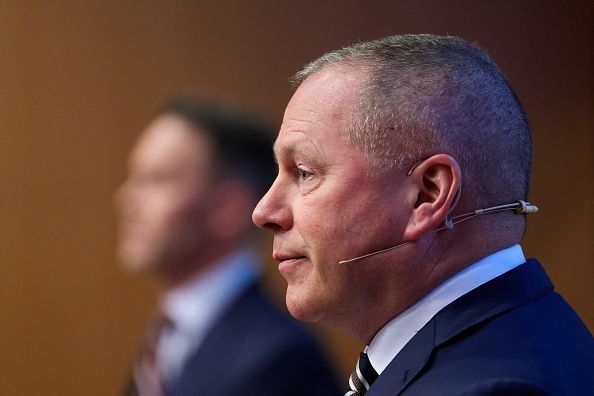
Norway’s sovereign wealth fund is pushing back against proposals to cap individual company or sector holdings as technology stocks claim an increasingly large share of the nation’s savings. In a September submission to the Ministry of Finance, Norges Bank Investment Management CEO Nicolai Tangen and central bank governor Ida Wolden Bache advised against artificial limits, pointing out the severe practical hurdles the massive fund would face if it needed to liquidate assets rapidly during a market crisis.
Since receiving its first capital injection in 1996, the Government Pension Fund Global has grown into the world’s largest sovereign wealth fund, valued at approximately 22 trillion kroner—or more than $2 trillion. Funded by North Sea oil and gas proceeds and managed by NBIM, the fund represents an extraordinary national savings vehicle for a country of just 5.6 million people. However, its immense scale has entangled Norwegian savings deeply in Silicon Valley’s soaring valuations and potential reversals.
Technology investments accounted for roughly 32 percent of the fund’s equity portfolio at midyear, up from about 20 percent five years earlier. Technology now represents approximately 23 percent of the entire fund, compared with roughly 14 percent in 2021. This concentration has been driven largely by market performance rather than aggressive positioning, with tech holdings returning over 25 percent in the first half of the year—nearly twice the overall stock portfolio’s return.
NBIM Deputy CEO Trond Grande explained that the fund operates under strict mandates set by the Ministry of Finance and the Norges Bank Executive Board. “The principal constraint would be the mandate: the benchmark and risk limits set by the Ministry of Finance and the Norges Bank Executive Board define how far we can deviate from the market,” Grande said, adding that management does not consider the fund too big to diversify.

External experts offer varied perspectives on the risks involved. Otaviano Canuto, a former World Bank vice president and IMF executive director, noted that the fund tracks the broad market rather than betting against it, meaning a technology and artificial intelligence drawdown would impact it severely. However, Canuto described Norway as “more of a price-taker than price-maker,” noting that its gradual trading and relatively small flows compared with total turnover in liquid stocks help temper its immediate market impact.
At the same time, a hypothetical AI-disappointment scenario modeled in 2025 estimated a 35 percent decline in the fund’s value, serving as a stress test rather than a firm forecast. The central bank’s submission emphasized that the fund’s true advantage lies in its generational investment horizon, allowing it to withstand turbulence that would force other investors to exit positions. That long-term strategy was tested in the third quarter ending September, which brought a 0.5 percent overall portfolio loss as fixed-income investments fell 3.5 percent while equities gained 0.5 percent.
Even if NBIM chose to reduce its technology exposure, it faces an acute structural dilemma: finding alternative asset classes large enough to move the needle for a $2 trillion portfolio. Grande pointed to a recent 1.2 billion euro commitment to a renewable-energy fund managed by Copenhagen Infrastructure Partners as an example. Despite its immense size by ordinary standards, the commitment amounts to less than one-tenth of one percent of Norway’s portfolio and is unlikely to alter the fund’s overall risk profile materially.
Beyond pure finance, three decades of patient accumulation have endowed Norway with a substantial reservoir of soft power and ethical influence, embodied in its strict screening of tobacco producers, weapons manufacturers, and human rights violators. Kristian Hvilen, head of the Norway office for public affairs firm Rud Pedersen, noted that the fund has given Norwegian soft power a financial dimension, though he cautioned that the portfolio’s returns remain heavily dictated by U.S. technology trends, trade policies, and geopolitical tensions. As emerging petroleum producers look to Norway as a model for long-term wealth management, the fund’s massive footprint ensures that any major shift in its strategy will continue to reverberate across global markets.