A rare humanitarian ceasefire, brokered through an unconventional diplomatic intervention by First Lady Melania Trump, went into effect early Tuesday in the Russian-occupied town of Oleshky. The agreement aims to provide a desperate lifeline to thousands of civilians trapped in the front-line southern Ukrainian town, which international observers and local officials have warned is on the precipice of a total humanitarian collapse.
The pause in hostilities officially commenced at 3 a.m. local time on Tuesday. Both the Ukrainian and Russian militaries confirmed the start of the truce, characterizing it as a necessary step for a coordinated “humanitarian operation.” The White House first announced the agreement on Friday, following months of escalating reports regarding the dire conditions inside the town, located in the Kherson region. The deal mandates a temporary halt to all military actions within Oleshky to facilitate the entry of humanitarian aid and the organized evacuation of civilians through a designated safe passage. No specific expiration date for the truce has been publicly disclosed by either side.
First Lady Melania Trump emerged as the primary mediator for the deal, a rare foray into direct conflict diplomacy. According to official statements, she leveraged existing communication channels she had established during previous efforts to assist Ukrainian children who had been taken by Russia. Describing the situation in Oleshky as being “on the brink of disaster,” the first lady emphasized that the town’s remaining population—largely composed of elderly residents—was in urgent need of medical care, clean water, and food. She noted that residents have been living with limited electricity on roads littered with mines while enduring constant military strikes. In her statement, she asserted that her intervention was the only viable path to ensure the delivery of aid and the evacuation of vulnerable seniors.
The town of Oleshky, which had a pre-war population of approximately 24,000, has been under Russian occupation since the initial weeks of the invasion in early 2022. Recent estimates suggest only about 2,000 people remain, including children. The crisis there has reached a breaking point, with the United Nations Human Rights Monitoring Mission in Ukraine reporting that no food deliveries have reached the town since the end of May. Reports from those who have escaped or have contact with residents describe a population reduced to eating grass and homegrown produce to survive as winter approaches and famine looms. Communication remains difficult due to compromised internet and cellular services in the area.
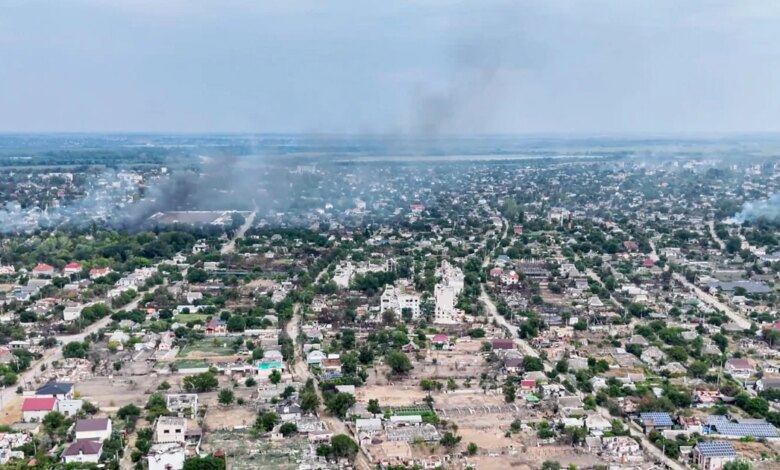
Visual evidence of the devastation has surfaced in recent weeks. Drone footage captured by Ukraine’s 34th Separate Marine Brigade “Borysfen” and geolocated footage shared by Ukrainian human rights ombudsman Dmytro Lubinets show the charred remains of residential buildings and residents attempting to flee on foot, bicycles, and mopeds. Lubinets described the situation as an “impossible choice” for civilians who must decide between the risk of landmines and the certainty of starvation.
The ceasefire comes at a complex moment in the broader conflict. President Donald Trump has recently increased pressure on Ukrainian President Volodymyr Zelenskyy to reach a settlement with Russian President Vladimir Putin. This pressure has coincided with reported friction between Kyiv and Washington, including complaints from Ukraine regarding gaps in intelligence sharing and the slowdown of Starlink satellite services, which are vital for military operations. Additionally, the recent easing of some American sanctions on the Kremlin to allow for global diesel supply has caused alarm in Kyiv and among European allies.

Ukrainian officials remain cautious about the implementation of the Oleshky agreement. President Zelenskyy noted on Sunday that the truce is likely to last several days to allow the Russian side to clear roads of mines, but he expressed concern that the clearing might be a pretext to force civilians toward Russian territory rather than allowing them to choose their destination. He stated that his forces would be verifying the safety of the area as the process unfolds. Meanwhile, both nations continue to trade blame for the crisis; Kyiv accuses Russian forces of using civilians as human shields, while Moscow has alleged that a Ukrainian “siege” and drone strikes have blocked aid.
To ensure the integrity of the operation, the agreement includes a provision for an impartial American media organization to document the humanitarian process. Civilian representatives from both the Ukrainian and Russian sides are expected to enter the town to assess the exact requirements of the remaining residents. The goal is to ensure that the wishes of every family regarding evacuation and assistance are respected.
The Oleshky ceasefire is historically significant as it marks the first time a humanitarian pause in the Ukraine-Russia conflict has been brokered through open American mediation. While previous short-lived truces were announced unilaterally for religious holidays, they were not tied to specific humanitarian operations of this scale. The crisis in the town has garnered international attention beyond the White House, with Pope Leo XIV reportedly raising the matter directly with President Putin and European Parliament Vice President Germany Pina Picierno engaging in a hunger strike to protest the abandonment of Oleshky’s residents.
In Moscow, Kremlin spokesman Dmitry Peskov suggested on Monday that the Oleshky arrangement could serve as a template for future humanitarian efforts in other conflict zones. He specifically pointed to the involvement of the American first lady as a “highly positive” factor in the negotiations. For now, the success of the mission depends on the continued adherence to the ceasefire by both militaries as aid workers begin the task of reaching those trapped behind the front lines.