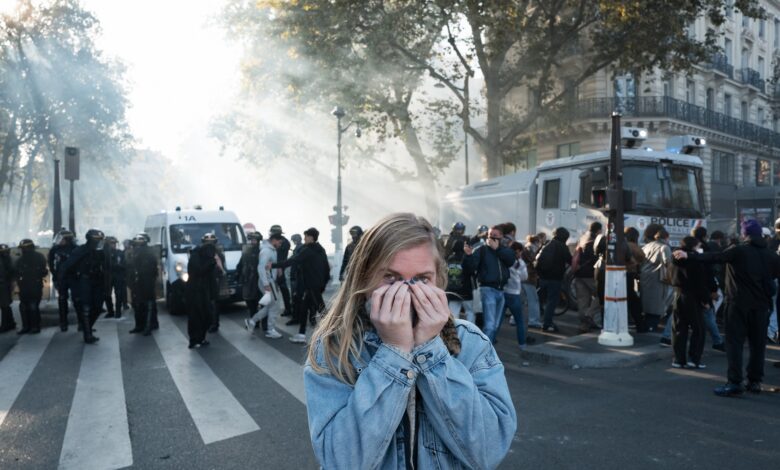
A wave of youth-led unrest is sweeping across Europe and beyond, sparking a period of volatility that observers are struggling to categorize. While it lacks a single unifying manifesto, the movement has mobilized students, labor unions, and ordinary citizens against a backdrop of what many describe as a crisis of liberal democracy. The demonstrations, which began in the northern suburbs of Paris approximately one month ago, have escalated into street battles and organized property destruction in at least seven countries, with new outbreaks occurring almost daily.
In France, the movement reached a fever pitch on Saturday, October 17, when more than 500,000 people marched through the streets. Though high school students were the initial spark, the crowds have grown remarkably diverse, encompassing a broad cross-section of society. French President Emmanuel Macron, now in the final months of a decade-long tenure, has faced intense pressure as the primary target of the protesters’ ire. While he has decried the rhetoric of foreign leaders who claim France is being overrun by radical factions, his administration is increasingly seen as being out of ideas to address the underlying economic malaise.
Across the continent, the proximate causes of the unrest vary by geography but share a common thread of economic desperation. In Spain and Portugal, years of simmering discontent over the cost of living have boiled over, specifically regarding a housing crisis exacerbated by the proliferation of short-term tourist rentals. In Greece, the focus remains on workplace safety and stagnant public sector wages. Meanwhile, in Albania and Serbia, protest movements that were already underway have pivoted to highlight deeply entrenched government corruption.
Thousands of miles away, the phenomenon has found a parallel in India. The Cockroach Janta Party (CJP), or “Voice of the Lazy & Unemployed,” emerged earlier this year as a mix of political satire and social media experiment. By midsummer, it transformed into a mass movement that has significantly challenged the government of Prime Minister Narendra Modi. While not directly connected to the European student strikes, the CJP represents a similar global trend of youth-driven rejection of traditional political authority.
Many political figures have attempted to frame the disorder through the lens of migration and religion. Former U.S. President Donald Trump, along with figures like Elon Musk and Benjamin Netanyahu, has characterized the European protests as the result of open borders. Similarly, German Chancellor Friedrich Merz and Hungarian Prime Minister Péter Magyar have suggested that high rates of migration and a failure to integrate foreign-born residents are the catalysts for the violence. However, evidence from the ground often contradicts this framing. In France, the largest marches have been composed of a wide demographic of local citizens primarily motivated by the rising cost of living and crumbling public services.
The unrest appears to be driven by a highly literate, globally connected generation that views the current political center as captive to billionaires and financial institutions. This generation is grappling with what sociologists call “elite overproduction,” a phenomenon where university graduates find themselves working in low-wage service jobs like baristas, facing a future of diminished expectations. Real wages in many Western nations have remained largely stagnant since the 1970s, while social services have been repeatedly trimmed in the name of austerity.
Geopolitical tensions have only added to this sense of “existential outrage.” The mismanagement of international conflicts, including the wars in Ukraine and Gaza, as well as tensions between the U.S. and Iran, has fueled a collective sense of insecurity. Furthermore, the perceived inaction regarding the climate crisis—often met with regulatory fine-tuning rather than systemic change—has deepened the disillusionment among young people facing successive deadly heat waves.
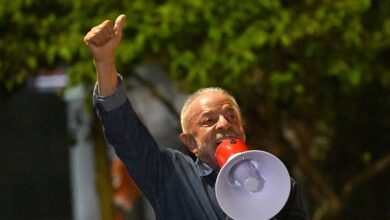
In South America, the political landscape is also shifting. Leftist President Luiz Inácio Lula da Silva recently defeated Flávio Bolsonaro, ending a series of six consecutive right-wing victories across Latin America. The younger Bolsonaro has already called for the results to be annulled, mirroring the political polarization and distrust in democratic processes seen elsewhere.
Former Estonian president Kersti Kaljulaid recently described the situation as a cycle of “intergenerational hopelessness.” While liberal democracy was seen as a dominant economic success for much of the 20th century, the current iteration is facing what some analysts describe as a systemic failure. The rage on the streets is directed not just at high prices, but at the very idea of centrist politics that many feel have failed to provide a viable path forward.
As students in Milan, Marseille, and Mumbai continue their demonstrations, the long-term impact of the 2026 protest wave remains uncertain. While past crises have been survived, the current depth of public disillusionment suggests that the return to the status quo may no longer be an option for a generation that feels the current system has broken its promises.