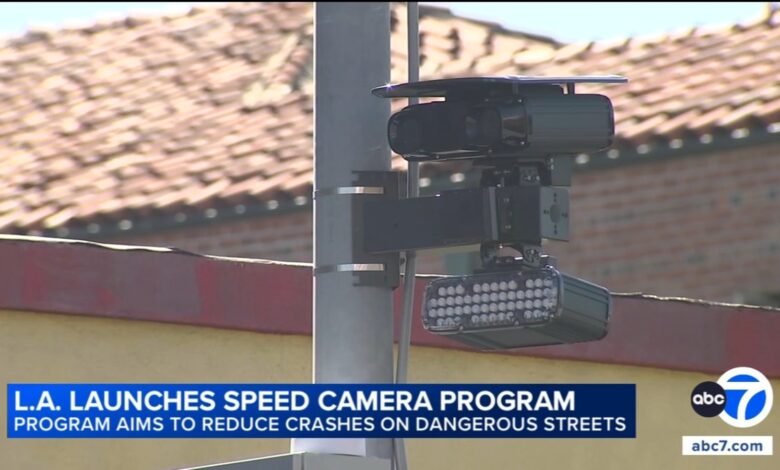
Los Angeles officially activated a new automated speed-safety system on Monday, marking a significant shift in how the city polices speeding on its most dangerous thoroughfares. The program, which utilizes specialized cameras to track and record speeding vehicles, is part of an effort to curb the primary cause of traffic collisions within the city. Officials have indicated that speeding remains the leading factor in the majority of crashes occurring on municipal streets.
The system is programmed to trigger when a vehicle is traveling at least 11 mph over the posted speed limit. To address privacy concerns, the cameras are designed to capture images exclusively of the rear license plates of offending vehicles; they do not record the faces of drivers or passengers. This technological approach is intended to focus purely on vehicle identification for enforcement purposes.
While the system is now active, the city is implementing a staggered rollout. Initially, the program will feature a 60-day grace period during which motorists will receive warnings by mail rather than financial penalties. This introductory phase is intended to build public awareness before active enforcement begins. Once the warning period concludes, drivers traveling 11 to 15 mph over the limit will face a $50 fine. Penalties for more excessive speeds will scale upward, with the maximum fine reaching as high as $500.
Critically for motorists, these violations are categorized as civil penalties rather than traditional traffic citations. This means that while a driver may be required to pay a fine, the violation will not result in points being added to a driver’s Department of Motor Vehicles (DMV) record.
As of the Monday launch, the city has confirmed that cameras are operational at four specific locations across Los Angeles: La Brea Avenue and First Street; Fairfax Avenue and Clinton Street; Melrose Avenue and Hayworth Avenue; and La Cienega Boulevard and Pico Boulevard. The current deployment is only the beginning of a larger infrastructure project, with officials planning to install a total of 125 cameras by the end of the calendar year.
Local business owners near the newly monitored zones have expressed a mixture of hope and caution regarding the new technology. LaKayla Keenan, who operates a beauty salon near one of the camera sites, noted that she regularly witnesses speeding and frequent traffic collisions in the area. While she hopes the presence of the system will force drivers to slow down, she questioned how long it might take for behavior to shift. She suggested that the impact might only be felt once drivers “start to catch on” to the presence of the enforcement technology.
The initiative is being conducted as a five-year pilot program, with cameras strategically placed near schools and along corridors that have a documented history of serious or fatal traffic accidents. By focusing on these high-risk areas, the city aims to evaluate whether automated enforcement can effectively lower average speeds and improve overall roadway safety over the long term.