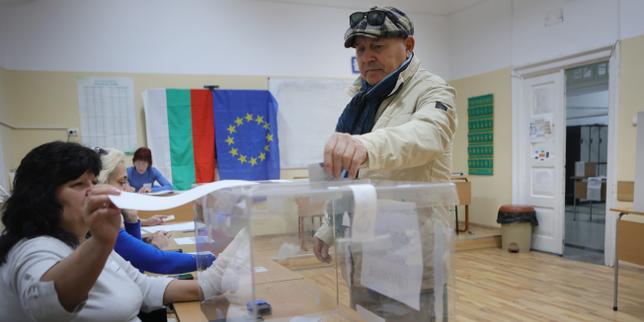
Bulgarians cast ballots on Sunday in a presidential runoff election that presents voters with a stark choice over the nation’s relationship with Russia and its stance on the war in Ukraine. The vote, which opened at 7 a.m. local time, pits incumbent President Iliana Iotova against opposition-backed challenger Andrei Gyurov.
Iotova, 62, a representative of the Bulgarian Socialist Party, has campaigned on a platform favoring dialogue with Moscow to bring the conflict in Ukraine to a close. She faces Gyurov, 50, a former interim prime minister supported by pro-Western opposition forces. In the initial round of voting held a week earlier, Iotova secured 34.7 percent of the vote, leading Gyurov, who captured 32 percent. However, the incumbent’s first-round performance fell short of pre-election polling that had projected her support between 40 and 47 percent.

Political analyst Teodor Slavev attributed Iotova’s lower-than-expected tally to her handling of recent security incidents in the Black Sea, where a series of drone strikes against merchant vessels in October resulted in approximately 30 missing individuals, including 21 off the Bulgarian coast. During a televised debate late Thursday, Iotova reiterated her position that peace can only be achieved through negotiation. Describing herself as a proponent of peace while affirming Bulgaria’s ongoing commitment to NATO membership, she argued that continued financial and military aid to Ukraine only deepens destruction and loss of life on both sides.
Gyurov countered that Moscow must halt its aggression before substantive steps can be taken. Advocating for direct accountability, he criticized Iotova for failing to explicitly name Russia as the source of regional threats, pointing out that Bulgaria remains deeply divided over its historical ties to Moscow. Center-left Prime Minister Rumen Radev, who preceded Iotova as president from 2017 to 2026, shares her view that a ceasefire and peace talks offer the most reliable guarantee against commercial shipping attacks. While Radev summoned the Russian ambassador over the incidents, noting they benefited Russian interests, he declined to formally assign blame directly to Moscow, citing a lack of direct evidence.

If victorious, Iotova would become the first woman elected president by popular vote in the nation of 6.4 million. A former journalist and Member of the European Parliament, she served as vice president alongside Radev starting in 2016 and assumed the presidency in January following Radev’s resignation to participate in legislative elections won by his political camp in April. Beyond foreign policy, Iotova has pledged to address severe poverty within the European Union’s poorest member state.
The first round of the election saw a historically low turnout of 23 percent. Sociologist Boriana Dimitrova noted that the low participation stemmed partly from assumptions that Iotova’s victory was guaranteed, alongside disappointment among supporters of Radev’s Progress Bulgaria party following his legislative success six months prior. The campaign has also been overshadowed by opposition allegations that Radev misused state resources to support Iotova’s candidacy. Although the Electoral Commission dismissed the claims, Gyurov’s campaign announced plans to pursue the matter legally.

Polls across the country are scheduled to close at 8 p.m. local time, with final outcomes resting heavily on overall voter turnout and public weariness with the political establishment.