Germany experienced a tumultuous weekend marked by widespread youth-led demonstrations, violent clashes in major cities, industrial warning strikes by the nation’s largest union, and significant political realigned maneuvers in Berlin.
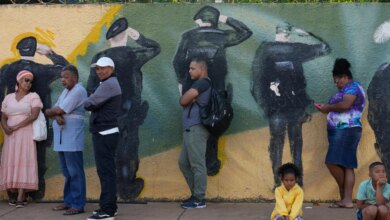
Tens of thousands of young people took to the streets across Germany under the banner of the initiative “Gen Z regelt” to demand better-funded schools, expanded psychotherapy and addiction treatment, relief from rising living costs, and stronger climate protection. Protesters also voiced strong opposition to the possible reintroduction of mandatory military service and the expansion of government surveillance. The group organized rallies in 34 cities, including Berlin, Munich, Cologne, and Frankfurt, with a spokesperson for the initiative claiming a turnout of 100,000 participants.
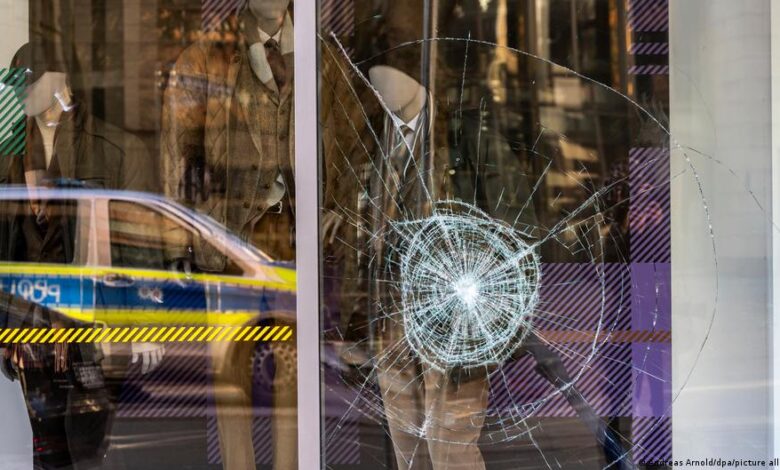
While organizers emphasized that the demonstrations were intended to be peaceful, the aftermath in several urban centers turned violent. In downtown Frankfurt, rioters smashed shop windows, looted merchandise, and attacked police officers, resulting in more than 30 arrests and what local officials described as considerable property damage. Police cordoned off parts of the city center and deployed officers overnight to protect vandalized storefronts. Hesse state Premier Boris Rhein condemned the violence, stating that the perpetrators had placed themselves outside society and vowing a thorough assessment of the aggressors.
Law enforcement and organizers alike distanced the main protest movement from the disturbances. Andreas Rosskopf, chairman of the federal police union, noted that the demonstrations themselves remained largely peaceful and that subsequent riots and looting were instigated by autonomous and masked extremists who used the crowds for cover. A Cologne police spokeswoman similarly suggested that local unrest in her city was more closely tied to Halloween festivities than the youth rallies. Following the weekend events, “Gen Z regelt” announced plans for fresh demonstrations on November 14.
Simultaneously, industrial unrest gripped the manufacturing sector as the IG Metall union launched limited warning strikes at midnight. The walkouts began with approximately 300 night-shift workers holding a rally outside a facility in Andernach, Rhineland-Palatinate, alongside an overnight protest at a mobile communications supplier in Munich. The actions are slated to expand nationwide in the coming week. IG Metall, which represents roughly 3.7 million workers across automotive, mechanical engineering, electronics, and metal production sectors, is demanding a 5% pay increase over 12 months alongside enhanced job and plant security. Union chair Christiane Benner criticized employers’ counteroffer—consisting of a one-time payment next year and a 1.3% step increase in July 2028—as wholly inadequate against the backdrop of national inflation.
In Berlin, political dynamics shifted as the socialist Left Party overwhelmingly voted at a congress in Lichtenberg to approve formal coalition negotiations with the Greens and the Social Democrats. The Left Party emerged victorious in the September 20 state elections with 25.7% of the vote, outpacing Chancellor Friedrich Merz’s conservative Christian Democratic Union, which secured 18.8%. Elif Eralp, the Left Party’s parliamentary group leader and prospective candidate for governing mayor, vowed to press forward despite facing intense pressure and tight security measures surrounding the convention. If successful, the talks will establish Berlin’s first three-party left-leaning coalition and place a Left Party mayor at the helm of the city-state, utilizing a preliminary agreement that features a controversial proposal to transfer 160,000 residential flats into public ownership.
In national political commentary, former Chancellor Angela Merkel weighed in on the upcoming presidential succession, urging that a woman succeed outgoing President Frank-Walter Steinmeier when his term concludes. Noting that no woman has held the federal presidency in the nation’s 77-year history, Merkel stated in a media interview that she knows capable candidates but declined to name individuals. The Federal Convention is scheduled to elect Germany’s next head of state on January 30, with several prominent female politicians from various parties already mentioned in public discussions.