Britain is preparing to inject £120 million, roughly equivalent to $160 million, into its flagship government laboratory dedicated to testing the world’s most powerful artificial intelligence models. The planned financial infusion alone represents more than 10 times the annual operating budget of the primary U.S. federal agency tasked with similar evaluations.
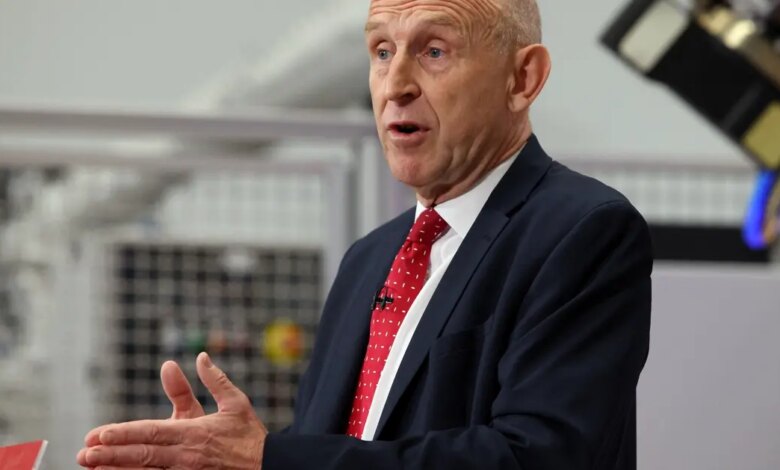
The substantial funding forms a core pillar of a new artificial intelligence package previewed by UK Chancellor of the Exchequer John Healey ahead of his budget presentation to Parliament. The decisive push by British authorities to heavily resource AI security and research directly responds to mounting international concerns over advanced AI capabilities and related cybersecurity vulnerabilities. The approach stands in stark contrast to the strategy in the United States, where federal efforts to evaluate artificial intelligence operate with significantly fewer resources and remain fragmented across various government divisions.
Alongside the £120 million earmarked for the Artificial Intelligence Security Institute, the British government plans to allocate £60 million toward a sovereign artificial intelligence fund designed to support domestic technology companies. An additional £18 million will be directed toward strengthening homegrown semiconductor design, while £10 million per year will fund academic research examining how artificial intelligence is reshaping employment.
A senior UK government spokesperson highlighted the nation’s competitive position, noting that Britain hosts the only trillion-dollar technology sector in the Western world outside of the United States. The official added that the AI Security Institute stands as a global leader in frontier model testing, supported by capital market depth that helps domestic firms scale and grow. The spokesperson maintained that the new budgetary commitments, alongside private investments from U.S. firms such as OpenAI and Anthropic, underscore the UK’s status as a global destination for artificial intelligence enterprise.
Formed in 2023, the British AISI employs more than 100 professionals, including industry alumni from major private-sector labs like OpenAI and Google’s DeepMind, as well as specialists from British intelligence agencies and academic institutions. Healey characterized the comprehensive funding package as a distinctly British approach to artificial intelligence, predicting it will encounter minimal resistance in Parliament, where the ruling Labour Party maintains a substantial majority.
Meanwhile, the parallel U.S. agency operates under a different name and scale. Formerly known as the U.S. AI Safety Institute, the organization was rebranded as the Center for Advancing Innovation and Standards for Super Intelligence to reflect President Donald Trump’s preferred nomenclature. Operating within the Commerce Department’s National Institute of Standards and Technology, the agency functions on an annual budget of approximately $10 million to $15 million.
Established the same year as its British counterpart under the prior administration, the U.S. entity has experienced considerable administrative transition since President Trump returned to office. The organization currently lacks a permanent director following the July resignation of Chris Fall. The Trump administration removed the word safety from the agency’s title in 2025 to emphasize an official policy favoring rapid artificial intelligence acceleration.
Experts note the disparity in institutional muscle. Arthur Tellis, a senior technology fellow at the Institute for Progress, described the British institute as an extremely impressive organization driven by substantial financial backing. Tellis emphasized that while resource enhancements remain critical for the U.S. agency, it also requires empowered, technically competent leadership, a direct line to the White House, and an operational model capable of tracking and shaping frontier development. He cautioned that the current U.S. framework remains too small and distant to exert effective oversight.
Both national bodies rely on voluntary cooperation rather than statutory mandates, maintaining ongoing agreements with leading artificial intelligence laboratories to vet models prior to public release. The American organization positions itself as the primary industrial point of contact within the federal government, though domestic lawmakers and officials are pushing for expanded capabilities.
White House Office of Science and Technology Director Michael Kratsios and various members of Congress have pressed for increased support. A White House spokesperson confirmed that President Trump requested $27 million for the U.S. center in his fiscal year 2027 budget request, representing a 145 percent increase over current operational funding.
Lawmakers argue that current backing remains inadequate for global leadership. Representative Lori Trahan, a Massachusetts Democrat, warned that paltry financial support limits the agency’s capacity to recruit top talent, sustain legislative guardrails, and secure American leadership on global technical standards. Trahan, alongside Representative Jay Obernolte, a Republican from California, previously introduced bipartisan legislation proposing an annual allocation of $100 million for the U.S. center through 2029.
Alternative federal investments pursue different priorities. The Department of Energy recently announced $159 million in awards through its Genesis Mission to support projects focused on artificial intelligence-enabled quantum computing, science, and energy applications. President Trump has also sought to address industry safety through direct engagement, convening major technology executives at the White House to sign a nonbinding Accord on Super Intelligence and establishing a new task force led by Director of National Intelligence Jay Clayton.
A White House official defended the administration’s approach, stating that American models remain the most powerful globally and that the president will ensure continued leadership in innovation. The official added that the U.S. center will maintain a collaborative role in pre-deployment testing and coordinate closely with the broader Super Intelligence Force to accelerate innovation while ensuring responsible deployment.