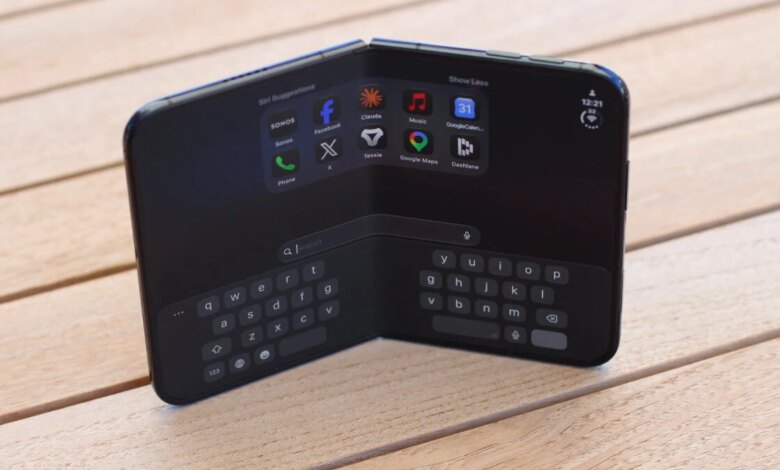
The global launch of Apple’s first foldable device, the iPhone Duo, has been met with significant hardware concerns as early adopters report catastrophic failures of the internal display. Just hours after the device officially hit shelves, multiple users across several continents have documented a major defect: the inner screen cracking from top to bottom directly along the hinge where the device is designed to fold.
While the iPhone Duo was initially received with general praise for its design and concept, the emergence of physical hardware failures has quickly overshadowed minor launch-day complaints. Initial reviews had pointed to subpar FaceTime camera quality and a lack of software optimization for the new form factor. Some early testers also noted that the crease in the inner display becomes increasingly visible over time as the device is folded and unfolded. However, these issues have been relegated to secondary concerns by reports of the display itself splitting apart.
According to photographs and reports surfacing on social media, the defect manifests as a large, vertical crack that follows the entire length of the hinge. The damage appears to be consistent across affected units. In addition to the physical fracture, many users are reporting that the hinge failure triggers a secondary technical fault: a bright white line of malfunctioning pixels that appears on the right-hand side of the inner display, effectively rendering that portion of the screen unusable.
The reports suggest that the defect is not limited to any single manufacturing batch or geographic region. Faulty units have been reported by users in the United States, China, and Australia. The speed at which these failures are occurring is particularly concerning for the longevity of the first-generation foldable. In one documented case from Australia, a user reported that their iPhone Duo display cracked less than six hours after they picked it up from the store. The user estimated that they had folded and unfolded the device fewer than 20 times before the screen split.
Apple’s response to the reported failures appears to vary depending on the service channel. One affected owner in Australia recounted a phone support experience where the company offered an express replacement, but only if a hold for the full retail cost of the phone was placed on their credit card. Furthermore, the support representative could not provide a definitive timeline for when the replacement unit would arrive. The customer subsequently visited a physical Apple Store, where staff apologized for the failure and provided a brand-new replacement unit immediately. The availability of on-site replacements suggests that the company may have anticipated some degree of hardware issues and reserved stock for warranty claims.
Industry analysts and technical observers suggest that Apple is likely collecting these damaged units to conduct a forensic investigation into the manufacturing or design flaw. Such investigations are common for first-generation hardware, which often faces unforeseen stress-test failures in real-world conditions. While it is expected that Apple will honor warranties for those affected by the hinge defect, the reports represent a significant hurdle for the company’s debut in the foldable market. At this stage, it remains unclear how many units are affected or if the issue will lead to a broader recall or a quiet adjustment in the manufacturing process for future production runs.