As the 2026 holiday season approaches, many households are weighing the tradition of live evergreens against the increasing convenience and durability of artificial Christmas trees. While real trees offer a nostalgic scent and support for local farms, they bring significant maintenance challenges, including needle shedding and the need for constant watering. Industry experts suggest that because a high-quality artificial tree is a long-term investment that can last up to twenty years, selecting the right model requires careful attention to technical specifications and lifestyle needs.
To help consumers navigate the market, we have analyzed the current top-rated models and consulted with experts in horticulture, veterinary medicine, and holiday industry standards. Key factors such as tip count, assembly ease, and lighting technology are paramount when selecting a tree that will serve as a centerpiece for years to come.
For many, the appeal of a pre-lit tree lies in avoiding the frustration of untangling string lights. A top choice for compact spaces is a versatile plug-in model available in a wide range of sizes. This design ranges from a modest 4.5-foot version with 763 branch tips up to a massive 15-foot display featuring 5,476 tips. The density of these tips is a critical metric for shoppers; a higher tip count typically indicates a fuller, more realistic appearance. For those seeking a classic aesthetic, the National Tree Company’s North Valley Spruce stands 7.5 feet tall with 1,346 tips and a wide 52-inch base diameter for stability.
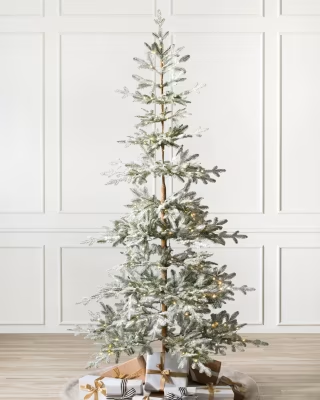
In tighter living quarters or apartments, the Balsam Hill alpine-style tree offers a slim silhouette designed to mimic high-altitude firs. This model features LED fairy lights and is available in six different heights, from 4.5 feet to 12 feet, with the largest version sporting 5,986 tips. Its sparse design is intentional, allowing the faux trunk to be visible through frosted, snow-mimicking foliage. Conversely, households looking for visual texture might prefer pre-flocked trees that come with integrated pine cones and multiple lighting effects, including flashing, fading, and twinkling modes.
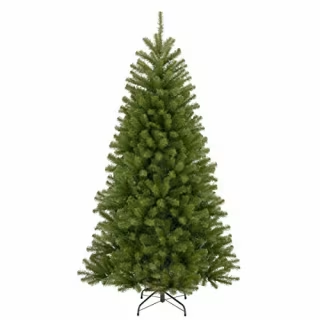
Not all shoppers prefer pre-installed lights. Unlit trees offer a foundation for personalized decorating styles, such as vintage or oversized ornaments. A highly-rated spruce-style unlit option features a three-step setup and is available in heights up to 9 feet with 2,028 tips. For those looking to invest in maximum realism, premium splurge-worthy models offer dense silhouettes, with the 9-foot version boasting 4,692 tips. Smaller tabletop options also exist for centerpieces, such as a 2-foot unlit model with 67 tips and a weighted cement base wrapped in cloth.
Beyond aesthetics, experts warn of health and safety considerations. Dr. Nina Shapiro, a pediatric ear, nose, and throat specialist, notes that while artificial trees avoid pine pollen, they can still trigger allergies due to dust and mold accumulation. Shapiro recommends wiping down both the tree and ornaments with a wet cloth before setup. For pet owners, Dr. Zay Satchu, chief veterinary officer at Bond Vet, cautions that faux needles and decorations can be dangerous if ingested. Even the water in real tree stands can be toxic due to fertilizers, making artificial trees a potentially safer but still risky alternative if pets treat them as toys.
Safety is also a concern for those interested in the retro comeback of aluminum trees. Jami Warner, executive director of the American Christmas Tree Association, warns that aluminum is highly conductive and can pose a fire hazard if traditional electric lights are used. For these metallic trees, Warner suggests using a color wheel or battery-operated LED lights to avoid direct electrical contact with the metal branches.
Regarding environmental impact, Bert Cregg, a professor at Michigan State University, indicates that the difference between real and artificial trees is negligible when viewed over a long lifespan. To maximize sustainability, Warner advises consumers to use their artificial trees for at least a decade. When the time comes to store the tree, keeping it in a sealed bag in a cool, dry place is essential for preventing discoloration. A professional tip for maintaining freshness is to store the tree with a container of baking soda or unused coffee grounds to absorb any storage odors.