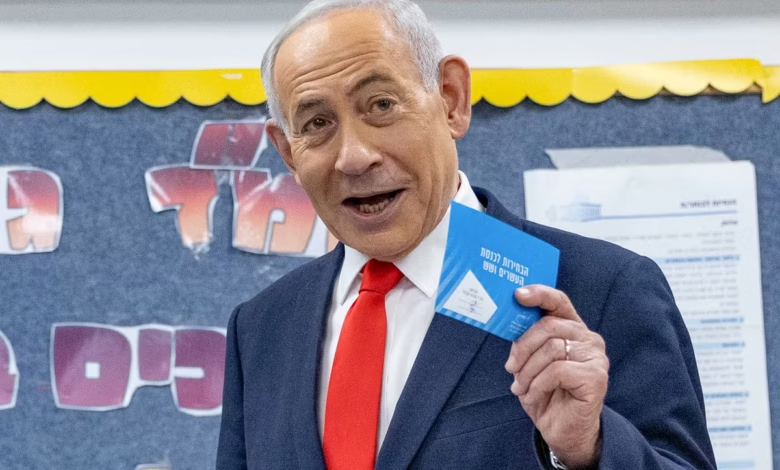
Israel’s first national election since the outbreak of war in October 2023 ended in an apparent deadlock on Tuesday, with exit polls indicating that neither Prime Minister Benjamin Netanyahu nor his main political challenger, former military chief Gadi Eisenkot, secured a parliamentary majority.
The high-stakes legislative vote served as a referendum on Netanyahu’s wartime leadership following the October 7, 2023, Hamas-led attacks and subsequent conflicts in Gaza, Lebanon, and Iran. Exit polls released by major Israeli television networks showed Netanyahu’s right-wing political bloc winning 50 seats in the 120-seat Knesset, while an opposition alliance led by Eisenkot captured 52 to 53 seats. Arab-led parties made a strong showing, projected to win 17 to 18 seats.
Forming a government requires a 61-seat majority in the Knesset. While the significant turnout among Arab voters and strong performance by Arab-led parties could theoretically position them to influence the selection of the next prime minister, both major political blocs have historically refused to form governing partnerships with Arab factions.
Channel 12 exit poll projections for individual parties broke down as follows: Likud at 24 seats, Yashar at 22, B’Yaschad at 12, the Joint List at 11, The Democrats at 9, Yisrael Beytenu at 9, Shas at 8, Ra’am at 7, Otzma Yehudit at 6, Religious Zionism at 6, and United Torah Judaism at 6.
Voters turned out in unprecedented numbers to pass judgment on the nation’s leadership. The Central Elections Committee reported that overall voter turnout reached 74.3 percent by 8 p.m., representing more than 5.4 million participating Israelis. This figure surpassed the 66.3 percent turnout recorded at the same hour during the 2022 election. Within the first seven hours of voting alone, 44.9 percent of eligible citizens had cast ballots, shattering previous participation records as long queues formed outside polling stations nationwide.
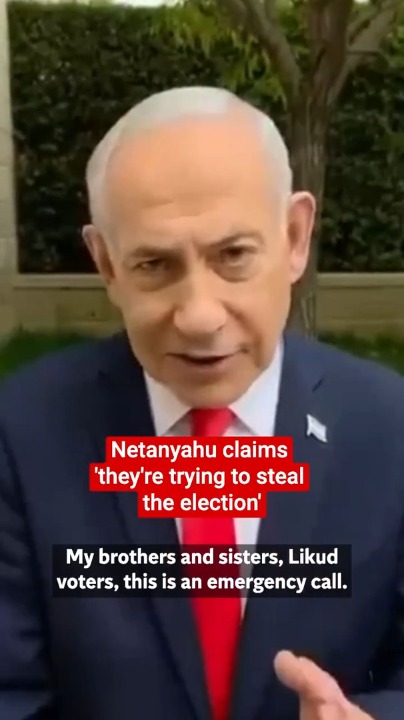
Netanyahu, Israel’s longest-serving leader with 19 years in office, faced a difficult contest as the policies of his right-wing, far-right, and ultra-Orthodox coalition drew domestic division and deepened the country’s international isolation. Campaigning on his security credentials, Netanyahu portrayed himself as the sole leader capable of confronting Israel’s adversaries. As voting progressed, he urged supporters to head to the polls to counter high mobilization among leftist and Arab voters, alleging on social media that opponents were attempting to “steal the election.”

Before polls opened, Netanyahu received a strong public endorsement from U.S. President Donald Trump, who offered “complete and total” support and praised the prime minister for being “strong, brave and brilliant in the face of tremendous opposition.” Trump also warned that if Israel selected leadership other than Netanyahu, the United States would be forced to independently address ongoing conflicts with Iran.
Election officials emphasized that exit polls are subject to potential error and serve only as early indicators. Preliminary results were expected in the hours following the close of polls, while official final results are anticipated in the coming days, likely setting off weeks of political negotiations to forge a governing coalition.