Yankees President Randy Levine Expresses Confidence Major League Baseball Can Avoid Lockout

Major League Baseball faces an uncertain labor horizon as the current collective bargaining agreement between owners and players is set to expire on December 1. With both sides appearing significantly divided over economic proposals—most notably a push for a salary cap—industry observers warn that a failure to reach a new deal could trigger a lockout by owners, potentially disrupting operations similar to a labor dispute from five years ago that delayed the season by one week.
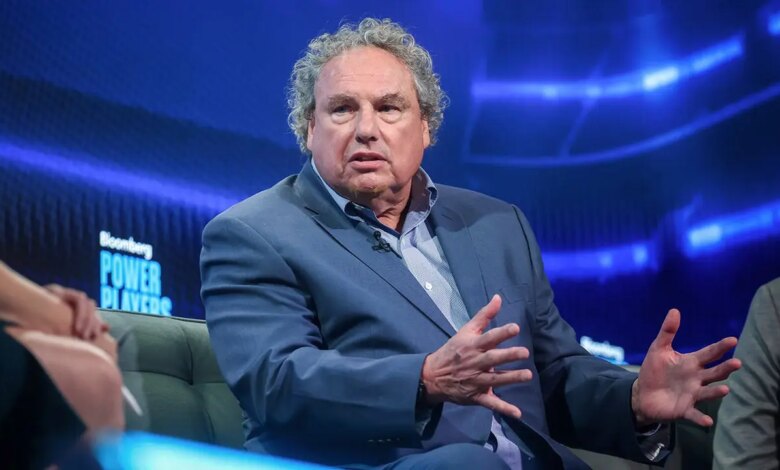
Despite the tense climate, New York Yankees President Randy Levine expressed optimism during an appearance on “The Craig Carton Show,” stating that he is confident a resolution will be achieved before the deadline. Levine characterized the current rhetoric as standard preliminary posturing typical of high-stakes labor negotiations.
“It’s very, very early… They want to reach an agreement. It’s always this way in every labor negotiation I’ve done. It’s always posturing at this point in time, getting your position out,” Levine said. “We have until December. I think they’re really going to work hard, and I’m very hopeful they’ll reach an agreement. I’ve seen circumstances where it looked harder than even this, and this one looks hard, but at the end of the day, I’m confident everyone wants to get a deal.”
Levine emphasized the positive momentum of the sport, noting the strong fan engagement throughout the regular season and playoffs.
Levine’s perspective aligns with that of Yankees owner Hal Steinbrenner, who confirmed his full backing of the owners’ collective bargaining proposals, which include a salary cap. Steinbrenner noted his active involvement as a member of the labor policy committee in shaping the offered terms.
“I’ve said before—let me put it this way, as a member of the labor policy committee—I helped craft, one of many, the proposals that we have given at the bargaining table. And I support those proposals in their entirety. That’s absolutely the case, so that should answer your question,” Steinbrenner told reporters last week.
The debate over economic controls highlights stark disparities in spending across the league. During the 2026 season, the Yankees maintained a $336 million payroll, ranking third in Major League Baseball behind the Los Angeles Dodgers at $422 million and the New York Mets at $338 million. Meanwhile, lower-tier payrolls have stagnated or declined; the Miami Marlins operate on a payroll roughly half of their 2017 figures despite rising league revenues, and the Dodgers have already committed more financial payroll obligation for the 2030 season than 12 teams spent during the current campaign.
Proponents of a cap, including MLB Commissioner Robert D. Manfred, argue that implementing spending limits is necessary to address competitive balance, asserting that it defies human experience to assume low-spending franchises possess the same competitive opportunities as top spenders. Manfred has maintained that owners are simply responding to fan concerns regarding parity.
Conversely, opponents point to on-field results to question the necessity of a cap. The National League-winning Milwaukee Brewers advanced through the postseason with the 11th-smallest payroll, facing the Tampa Bay Rays, who maintain the league’s third-smallest payroll, after defeating the Cleveland Guardians, who ranked 29th in payroll during the American League Division Series.
Major League Baseball has never instituted a salary cap, and the Major League Baseball Players Association remains fiercely opposed to the concept. Interim MLBPA executive director Bruce Meyer sharply criticized the proposal during the All-Star break, calling caps an impediment to competition.
“Salary cap is the ultimate excuse not to compete. It’s the ultimate excuse for an owner to say, ‘Gee, I would like to make the team better, but you know I can’t,'” Meyer said. “Salary caps are bad for fans. Salary caps prevent teams from doing the things that they believe are in their interest to make the team better. Every team in baseball can afford to compete, many are choosing not to. To me, that’s the biggest problem right now.”