Treasury Secretary Scott Bessent Dismisses Risks Linked to Artificial Intelligence Financing

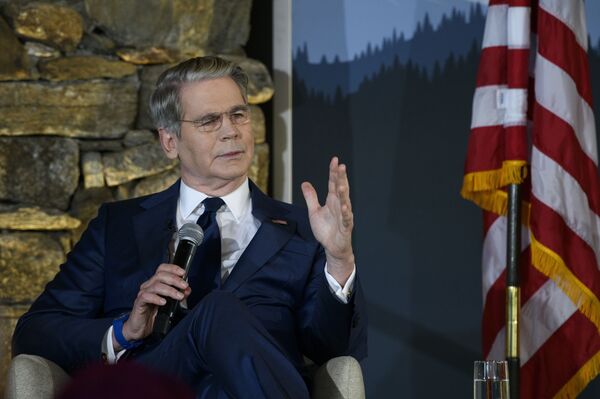
Treasury Secretary Scott Bessent stated that he and his team are actively monitoring the financing landscape behind the massive artificial intelligence infrastructure build-out, downplaying recent market worries as yields on some AI-related debt climb into double digits.
Speaking in a television interview on Wednesday, Bessent addressed questions regarding the resilience of the current tech boom and the hundreds of billions of dollars borrowed to fund it. Market anxiety has centered in part on neoclouds, which rent out AI infrastructure, and major computing providers such as CoreWeave Inc.
“We monitor all of this,” Bessent said during the CNBC interview. “I don’t think it’s problematic at all because we’re seeing that the neoclouds are a small component of the overall ecosystem.”
Despite rising yields on certain sector-related debt, Bessent pointed to continued deal-making activity across the industry. He noted that financing continues to close and highlighted that major technology firms are utilizing alternative methods, pointing to instances such as Meta financing with equity, referencing a stock sale that drew heavy investor demand.
The Treasury Secretary spoke shortly after the Federal Reserve announced its latest interest-rate decision, in which the central bank held rates steady following a rate increase in September. Bessent reiterated both his and President Donald Trump’s confidence in Federal Reserve Chairman Kevin Warsh.
When asked whether future rate increases by the central bank would constitute a policy mistake, Bessent stated that “that’s not necessarily so,” citing robust economic growth. He also renewed his call for policymakers to maintain an “open mind” regarding whether the current energy shock affecting U.S. inflation will prove to be transitory.
Benchmark 10-year Treasury yields remain above 5%, though they have retreated from their highest levels in more than two decades over recent weeks. Bessent connected current yield levels to the central bank’s decision to lower rates starting with a 50 basis point move prior to the 2024 presidential election.
“The 10-year yield never looked back,” Bessent said. “I always had great respect for the bond market, and as Chair Warsh said in the July decision, the bond market has done a lot of tightening for us.”
Many market participants have argued that heavy borrowing by artificial intelligence companies has contributed to strains on Treasuries, with sector firms issuing trillions of dollars in corporate debt to fund rapid expansion.
Addressing broader economic factors, Bessent reiterated his and President Trump’s view that once the United States moves past the conflict involving Iran, global oil markets will be well supplied. He argued that improved oil supplies will help alleviate inflationary pressures and ultimately drive down borrowing costs.