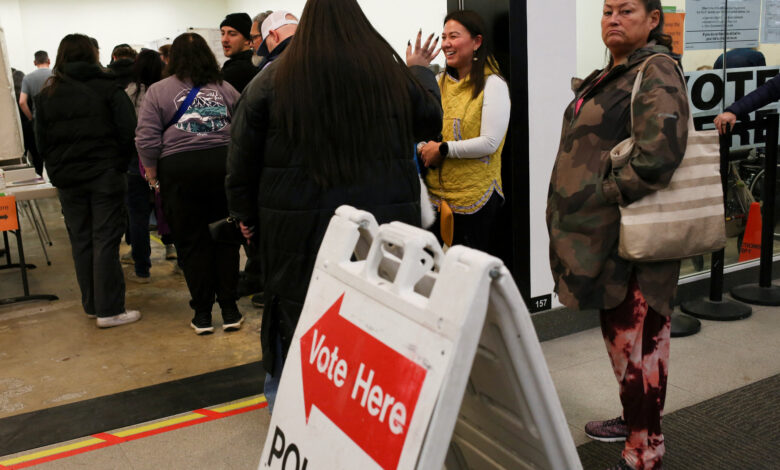
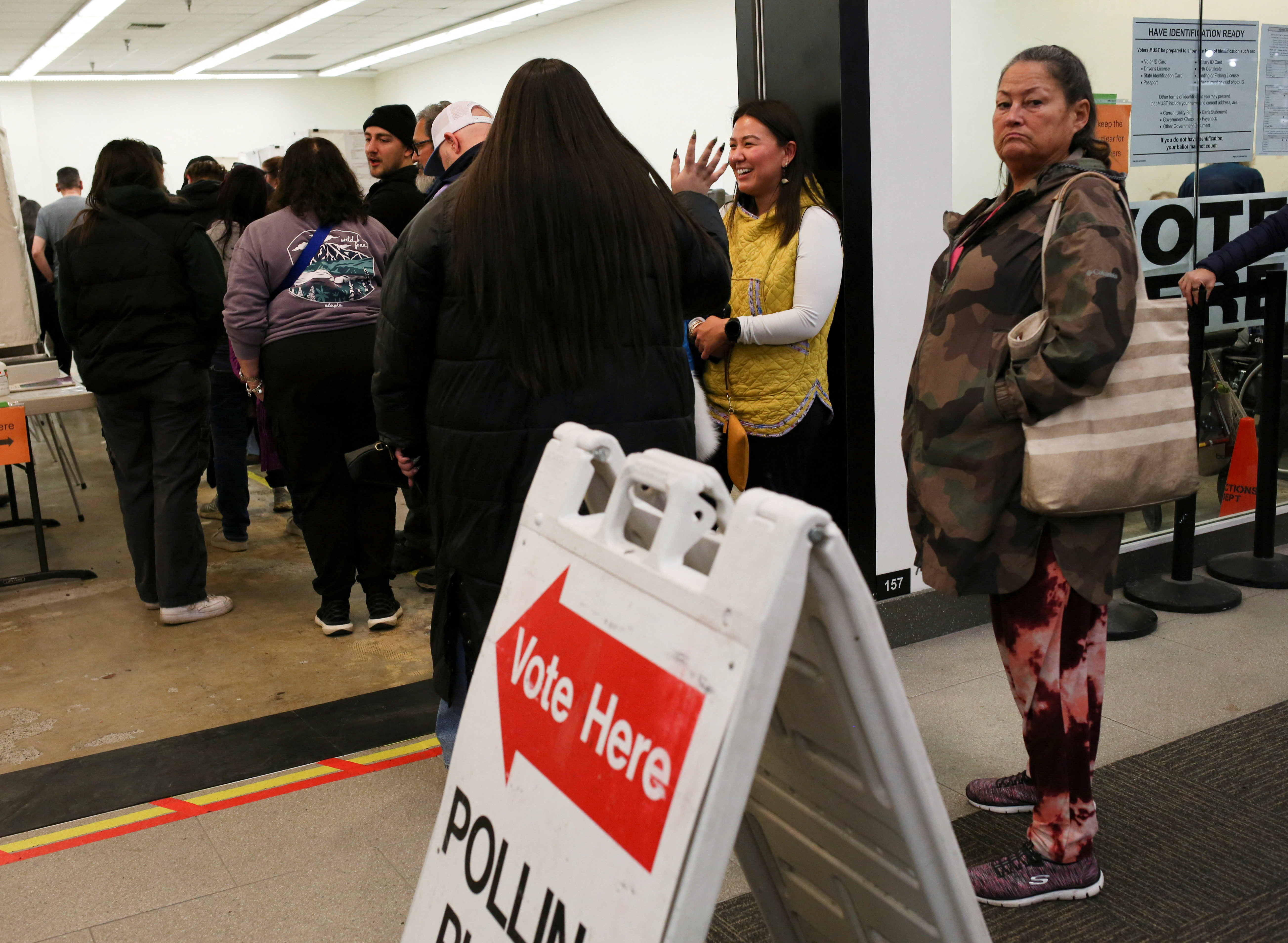
The campaign for control of the United States Congress entered its final weekend under the shadow of escalating federal legal interventions, even as early voter turnout shattered previous midterm participation records with nearly 50 million ballots already cast.
With Tuesday’s elections set to decide control of both the 100-member Senate and all 435 seats in the House of Representatives, the Department of Justice intensified its actions in key battlegrounds. In Alaska, where a tightly contested Senate race could prove decisive for the balance of power, federal prosecutors accelerated a criminal investigation on Friday following reports regarding ballot placement.
The inquiry centers on allegations that aides to Democratic Senate candidate Mary Peltola recruited a retired schoolteacher named Daniel J. Sullivan Jr. from a remote fishing village to enter the race, sharing a name with the Republican incumbent, Dan S. Sullivan. US Attorney Michael Heyman, the top federal prosecutor in Alaska, stated at a Friday press conference that media reporting on the recruitment effort had triggered a surge in FBI resources and an intense escalation of investigative steps. Heyman described the participant as a “sham candidate” but declined to specify potential criminal charges.
Both Peltola and the retired teacher have denied coordination. Nevertheless, the Justice Department—acting on a civil lawsuit prompted by President Donald Trump—filed additional court motions seeking to block Alaska from certifying Senate results if the Republican incumbent loses the close contest on the multi-candidate ballot.
Legal disputes also expanded to California, where the administration filed suit to halt the counting of ballots from more than 20,000 registered voters alleged by officials to be noncitizens. The administration has similarly targeted roughly 30 states and the District of Columbia with demands for unredacted voter rolls. However, a federal judge intervened on Friday, ordering the Justice Department to halt threats of prosecution against California election officials who decline to comply with federal directives on the matter.
Sean Morales-Doyle, director of the voting rights and elections program at the Brennan Center for Justice, compared the federal strategy to tactics from the 2020 presidential cycle. He argued that while the litigation might face long odds in court, the primary objective appears to be cultivating an atmosphere of institutional friction.
“It’s about creating uncertainty, sowing fear, distrust, chaos, hoping that you create the political circumstances in which maybe the lieutenant governor of Alaska does feel pressure to do something that they’re not supposed to do. Maybe the governor does start to question things, too,” Morales-Doyle said.
Despite the legal turbulence surrounding election administration, broader voter sentiment remains largely resilient. A nationwide poll conducted between September 30 and October 5 found that 76% of US voters expressed confidence that their ballots would be counted accurately, with trust levels remaining consistent across both major political parties. Approximately 15% reported a lack of confidence, while the remainder were undecided or did not respond.
As candidates navigate the final days before the vote—with President Trump scheduled to resume campaign rallies in Kansas and Iowa on Sunday following a Saturday pause—voter participation trends continue to surpass historical marks. Data compiled by the University of Florida’s Election Lab indicates that early and mail-in voting has already eclipsed the nearly 46 million ballots cast prior to Election Day during the 2022 midterms.