With three days remaining before the United States midterm elections, Democrats maintain a national advantage in congressional polling as millions of Americans participate in a historic surge of early voting. President Donald Trump has reversed an earlier decision to cancel weekend campaign appearances, confirming he will travel to Kansas and Iowa for rallies as both political parties make their final appeals ahead of Tuesday’s vote.
According to RealClearPolling’s latest national congressional ballot average, Democrats lead Republicans by 8.2 percentage points, standing at 51.4 percent to 43.2 percent. A separate survey published by The Economist and YouGov found that 44 percent of registered voters anticipate a Democratic takeover of the House of Representatives, while 31 percent expect Republicans to retain control. Expectations for the Senate remain tighter, with 39 percent predicting a Democratic majority and 36 percent forecasting a Republican hold.

Kyle Kondik, managing editor of Sabato’s Crystal Ball at the University of Virginia Center for Politics, noted that the generic ballot figures point to divergent outcomes for the two legislative chambers. While a significant Democratic lead on the generic ballot suggests the House is nearly certain to flip, Kondik observed that the Senate contest remains much more competitive and uncertain.
Simultaneously, early voting numbers have broken records. An analysis published by the Associated Press showed that more than 43 million Americans had already cast ballots in person or returned mail-in votes five days before Election Day. That total represents an increase of nearly 10 million compared to the same milestone during the 2022 midterms, with the sharpest rises occurring in states featuring competitive Senate races.

Texas reported more than 6.3 million early votes cast by Wednesday, marking a 50 percent increase over the 4.2 million recorded at the identical point in 2022. In Georgia, early totals surpassed 2.5 million ballots by Friday morning, edging past the 2.3 million from the previous midterm cycle amid long lines at polling locations in Atlanta. States including Maine, Michigan, North Carolina, and Kansas also experienced early turnout spikes exceeding 30 percent over 2022 levels. While high turnout indicates intense voter engagement, election analysts note that early tallies do not reveal specific candidate choices or final outcomes.
On the campaign trail, President Trump altered his weekend itinerary. The White House confirmed that Trump will proceed with rallies in Kansas and Iowa on Sunday, reversing a Thursday announcement that he would skip the live events in favor of roughly 20 telephone campaign sessions. Campaign insiders indicated that advisors view personal appearances as vital for energizing the Republican base, particularly in states where GOP candidates face tough opposition. Trump campaigned in Florida on Friday, cautioning supporters against overconfidence.

In Texas, Republican Senate candidate Ken Paxton and Democratic contender James Talarico concentrated their closing efforts on Houston. Paxton scrapped a planned event in El Paso to focus on Harris County as the early voting window closed. Meanwhile, former President Bill Clinton campaigned for Democrats in Mississippi, urging citizens not to skip the ballot.
Trump’s Sunday schedule includes stops in Iowa to support Republican Senate candidate Ashley Hinson and in Kansas to campaign alongside Senator Roger Marshall. Marshall faces a challenging contest against Democratic challenger Adam Hamilton, a megachurch pastor, with an Emerson College poll placing Hamilton ahead at 49 percent to 45 percent.
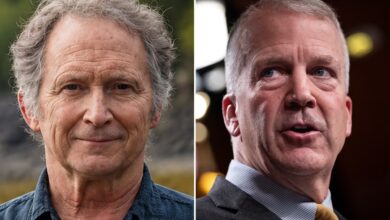
Democrats also stepped up their travel schedules, with Kentucky Governor Andy Beshear joining Ohio gubernatorial candidate Amy Acton at an event, and Democratic Senate nominee Mary Peltola appearing at a rally in Bethel, Alaska. The Alaska race stands as one of several critical toss-ups determining control of the Senate, further complicated by a legal dispute involving two candidates sharing the name Dan Sullivan. While the Department of Justice has intervened in the ballot confusion dispute, Peltola has denied any role in the recruitment of the independent candidate.