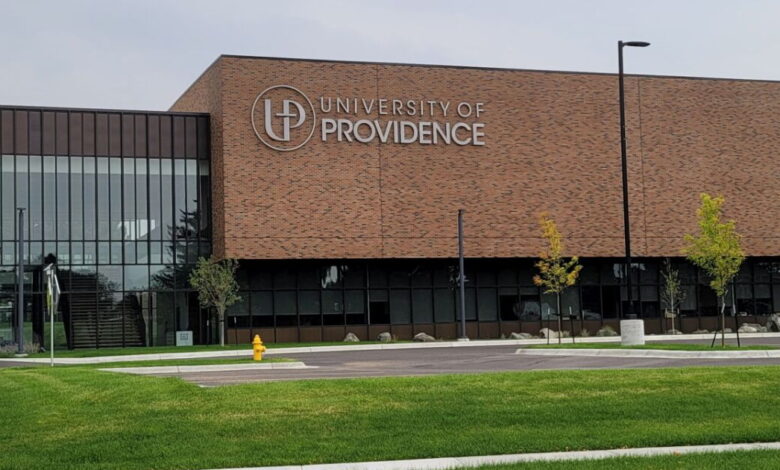
The University of Providence will cease educational operations at the conclusion of the 2026–2027 academic year, following a unanimous vote by its Board of Trustees. The final day of instruction is scheduled for August 20, 2027, though limited academic and administrative work will continue afterward to process final grades, maintain records, and provide student support.
Board chair Terry Cosgrove announced the closure during a Tuesday afternoon press conference, noting that the 8:45 a.m. board vote followed the exhaustion of all viable operating paths. The decision comes after the university declared a state of financial exigency earlier this year. While leadership previously restructured academic programs, trimmed operating expenses, and pursued fresh enrollment and revenue strategies to ease immediate pressures, those measures failed to establish a sustainable long-term model.
Cosgrove stated that negotiations regarding potential merger or acquisition partners continued through the previous week but ultimately did not yield an agreement. He declined to name prospective partners due to nondisclosure agreements. Compounding these financial struggles were accreditation probation related to financial sustainability and the loss of authorization to enroll online students across numerous states. The university remains accredited and carries no debt, but Cosgrove emphasized that low tuition revenue ultimately sealed the institution’s fate.
Founded in 1932 through the collaborative efforts of the Sisters of Providence, the Ursuline Sisters, and the Catholic Bishop of Great Falls, the institution originally opened to expand higher education access when opportunities for women were limited. Known for decades as the College of Great Falls, it was renamed the University of Great Falls in 1995 before adopting its current moniker in 2017 through a partnership with Providence St. Joseph Health. Cosgrove, a 1969 alumnus of the institution, praised the faculty and staff who supported his own education and described the closure as a deeply difficult moment.
The university currently enrolls approximately 430 students, more than 75% of whom participate in athletics across 15 sports teams competing in the Frontier and Cascade Conferences. President Dr. Caroline Goulet stated that Argo athletic teams will complete their current year of competition. University leadership and partner institutions are working to help student-athletes identify opportunities to finish their degrees and continue competing elsewhere.
Goulet emphasized that the primary focus is guiding every enrolled student toward degree completion, whether through graduation before the closure date, direct transfer, or formal teach-out agreements with partner schools. Partner institutions and specific teach-out terms will be announced as agreements are finalized. Students will have access to ongoing campus housing, registration support, and individual counseling from academic advisers, faculty, and financial aid staff.
The Montana University System announced Tuesday that it will collaborate with Providence to assist students seeking to transfer to public campuses with minimal disruption. Clayton Christian, Montana’s commissioner of higher education, urged students to utilize available resources, noting that dedicated transfer support and program details are accessible through the state higher education portal.
The university’s 115 faculty and staff members were informed of the closure Tuesday morning alongside students. Individual employee meetings are scheduled to begin Wednesday, Oct. 28, to outline employment timelines, compensation packages, benefits, and transition responsibilities. The institution is organizing career transition aid, unemployment resources, and mental health support for affected workers.
Deborah Kottel, board faculty representative and interim associate provost who began teaching at the school in 1980, noted that faculty were devastated by the news but remained profoundly moved by students who immediately expressed concern for their teachers’ futures rather than their own.
Future plans for the expansive 68-acre campus remain undetermined. Greg Till, chief people officer for the Providence Health System, indicated that current priorities center entirely on supporting students and employees through the final academic year. Meanwhile, university leaders stated they will work with Providence Ministries to safeguard the institution’s history, archives, traditions, and sacred assets, with additional guidance on alumni transcripts to be released in the coming months.