
Thousands of demonstrators converged on Berlin’s Platz des 18 Maerz near the Brandenburg Gate on a chilly Saturday afternoon, launching a nationwide day of action organized by the youth alliance Gen Z Regelt. By Saturday morning, nearly 180,000 participants had registered across 34 cities, including major hubs such as Frankfurt, Cologne, Munich, and the capital, where roughly 12,000 people had signed up.
The diverse crowd in Berlin featured anti-fascist activists wearing keffiyehs, students in Halloween costumes, and older generations participating in the “omas gegen rechts” movement. While the Berlin demonstration remained largely calm as speakers addressed the crowds, police in the western city of Cologne intervened to contain a march after scuffles broke out between officers and protesters.
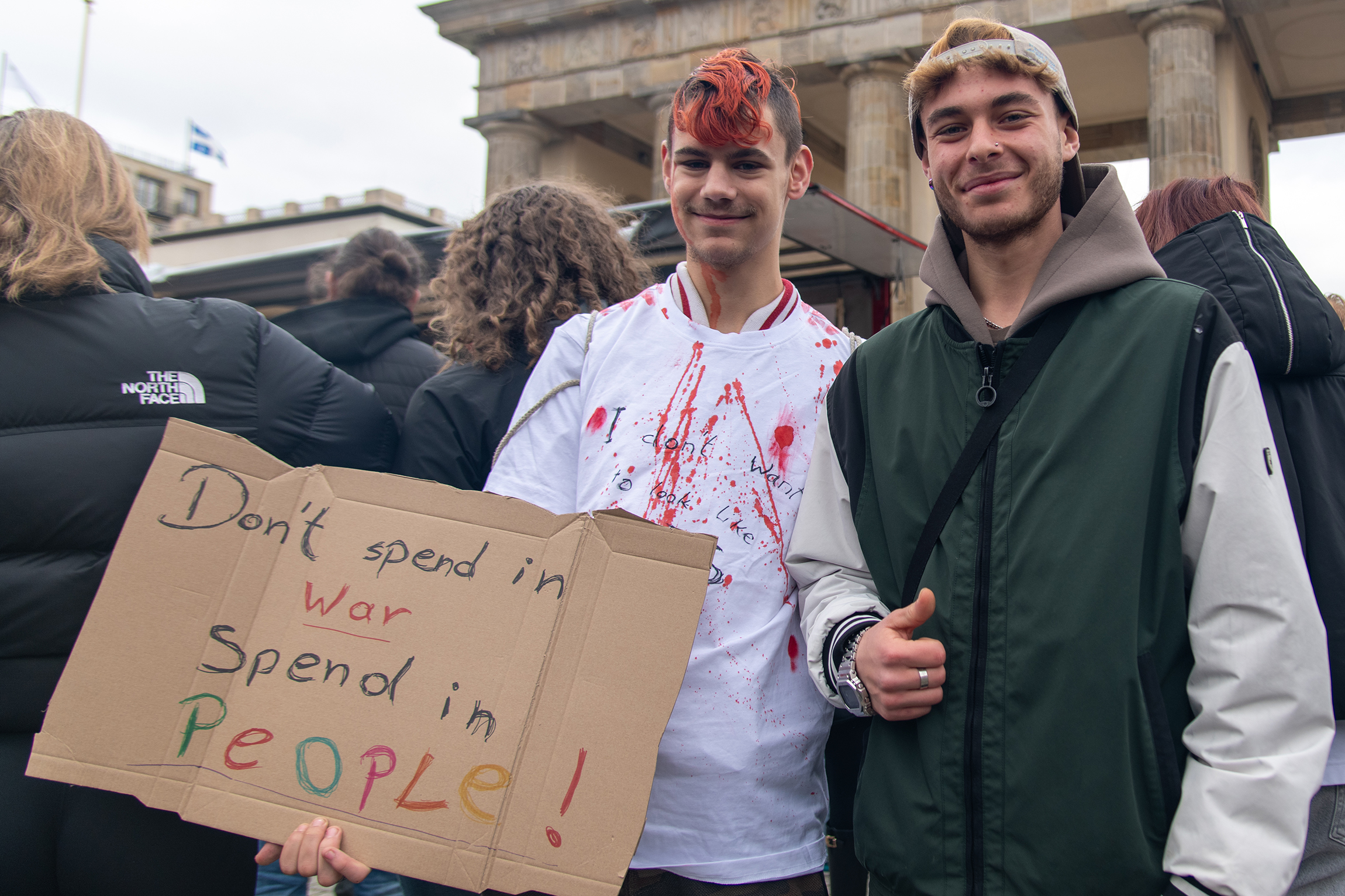
Organizers structured the demonstrations around six primary grievances, focusing heavily on the rising cost of living, cuts to educational funding, and military conscription. Participants expressed deep frustration over government spending priorities, pointing to deteriorating educational infrastructure while billions are channeled into defense.
Veronika Dinter, a 23-year-old political science student who traveled from Hannover, noted that soaring living expenses forced her to take on a part-time job to support her studies. She criticized government leadership over funding reductions for schools and social services, arguing that universities struggle while facilities decay.

Other demonstrators echoed these economic anxieties while connecting local grievances to broader foreign policy concerns. Emma Heymann, a 24-year-old Berlin resident, voiced anger over declining living standards coinciding with expanded military budgets.
The German demonstrations mirror similar youth-led protests observed in recent weeks across several European nations, including France, Belgium, Italy, Spain, and Serbia. Phil Tziartzianis traveled eight hours from Kassel to join his friend Jan Chrominski in Berlin, emphasizing solidarity among peers facing similar economic pressures.

Kilian Hampel, a senior research fellow at the Future of Work Lab at the University of Konstanz, noted that while youth frustration has accumulated over years, cross-border European movements have emboldened young Germans to voice their concerns publicly. He described educational infrastructure complaints as legitimate grievances that warrant official attention.
Ahead of the demonstrations, political figures expressed concern over potential unrest. However, protesters argued that warnings of violence serve to detract from core economic and social demands. Dinter called on law enforcement to avoid confrontational tactics, affirming that participants remain focused on advocating for affordable living, educational investment, and opposition to military expansion.


