For the first time since 2002, international monitors will not observe a U.S. election after the Trump administration informed the Organization for Security and Co-operation in Europe that they are not welcome for the November 2026 midterm elections. While the withdrawal of international oversight is not expected to directly alter the administration of local voting procedures, democracy watchdogs and political researchers warn the move sends troubling signals to both domestic voters and foreign governments regarding democratic norms.
The OSCE previously monitored the 2020 and 2024 U.S. presidential elections, concluding that American democratic institutions demonstrated resilience despite widespread disinformation, aggressive political rhetoric, and unsubstantiated fraud claims. During the 2020 contest, international observers deemed the election “highly competitive and well managed” despite pandemic conditions. Responding to the latest decision, the OSCE called the U.S. stance regrettable, while a White House official defended the move by telling media outlets that American elections will be administered, participated in, and observed exclusively by American citizens.
Jonathan Stonestreet, associate director of the Carter Center’s Democracy Program in Atlanta and a former senior election adviser with the OSCE, noted that impartial international monitors traditionally offer a calm, authoritative voice during contentious elections. When political opponents trade accusations of fraud and malfeasance, credible third-party observers provide clear assessments of what transpired inside polling stations, Mr. Stonestreet explained. By rejecting these monitors, he added, the administration sets a precedent that could encourage peer governments abroad to reject accountability.
The upcoming midterms carry high political stakes, with Democrats forecast to capture control of the House and potentially the Senate for the final two years of President Donald Trump’s term. The electoral landscape has also been marked by intense partisan disputes over voting access. Following Mr. Trump’s directives, several states redrew congressional maps to favor Republicans, prompting Democratic counters in other states. Meanwhile, the Justice Department has demanded sensitive personal data from all 50 states to identify potential noncitizen voters and launched lawsuits against states refusing compliance.
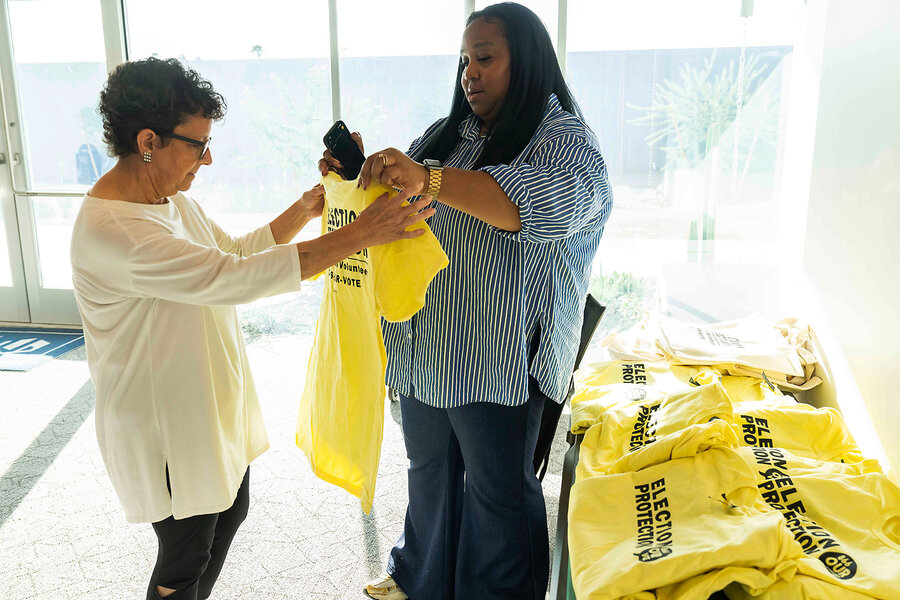
Legal battles surrounding the midterms intensified as the Democratic Party filed a lawsuit against President Trump and the DOJ over demands that states segregate tens of thousands of mail-in ballots until citizenship statuses can be verified. This followed a federal lawsuit filed against California regarding the state’s purging of suspected noncitizens from voter rolls. Additionally, some Republican-led states have moved to reduce the number of polling stations, drawing accusations from Democrats of attempting to suppress turnout in likely Democratic leaning districts.
Charles Stewart, an MIT political science professor and founder of the Election Data and Science Lab, placed the decision within the broader framework of the administration’s skepticism toward postwar international institutions like NATO and the International Criminal Court. While Dr. Stewart doubts the administration’s stance will alter behavior among authoritarian foreign regimes, he expressed concern that the rhetoric could foster distrust among local election officials, some of whom have already voiced online anxieties regarding foreign interference from observers.
Despite partisan friction and administrative battles, election experts maintain that America’s decentralized voting infrastructure—operated by local and state personnel—remains fundamentally robust. Mr. Stonestreet emphasized that the individuals managing elections are ordinary community members, not shadowy forces. An Associated Press investigation following the 2020 election across six battleground states identified fewer than 475 potential fraud cases out of 25 million ballots cast, and federal monitoring agencies declared it the most secure election in U.S. history.
Judith Kelley, a political science professor at Duke University, pointed out that even established democracies benefit from impartial scrutiny, recalling the 2000 Supreme Court intervention in Florida that decided the presidency. Dr. Kelley cautioned that the broader danger of sidelining international monitors lies in the potential erosion of democratic norms, which leaders globally may leverage to weaken electoral integrity within their own borders.