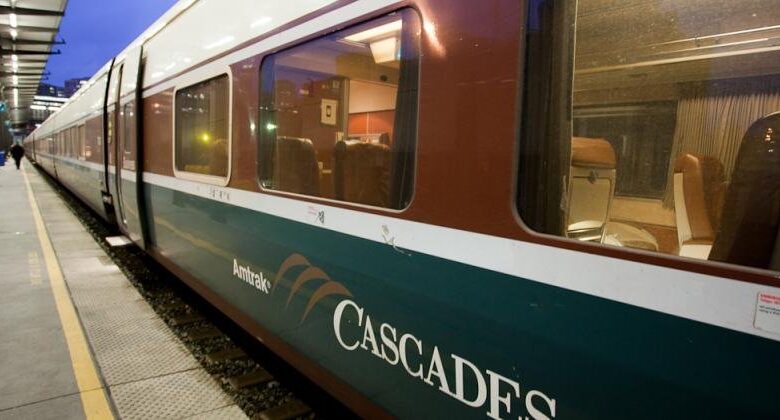
Cross-border travelers on the Amtrak Cascades route between the Pacific Northwest and Vancouver, British Columbia, will experience an unusual scheduling shift this winter. Starting November 1, a one-hour time difference will emerge because Washington and Oregon fall back to Pacific Standard Time while British Columbia remains on permanent daylight saving time.
Because ticket schedules reflect local departure and arrival timestamps, itineraries will display a three-hour duration for southbound trips and a five-hour duration for northbound trips. Despite these ticketing adjustments, the actual transit time remains four hours each way.

British Columbia permanently moved to year-round Pacific Time following widespread public support, creating seasonal winter time zone discrepancies with neighboring U.S. states until standard daylight saving resumes in March. Amtrak Cascades operates two daily roundtrips serving Vancouver’s Pacific Central Station, with one train originating in Seattle and another in Portland, Oregon. Onboard crews will make border-crossing announcements to remind riders to adjust their watches and personal devices.
The time difference will persist through the winter until the United States resumes daylight saving time on the second Sunday of March, at which point Washington, Oregon, and British Columbia will synchronize their clocks once again. Transit officials have not yet indicated whether connecting bus services, regional airlines, or other cross-border ground transport operators plan to adjust published timetables or simply rely on local departure and arrival conventions. Long-term impacts on cross-border commuter freight and trade corridors also remain to be evaluated through this inaugural winter transition.

Transportation and provincial officials noted that adjusting tickets to match local station time is standard industry procedure across time zones. Amtrak Cascades explained in an advisory that tickets will reflect departure times at the city of origin and arrival times for the destination city, similar to what travelers experience when crossing time zones elsewhere. Provincial leaders in British Columbia framed the broader shift as a measure to improve people’s overall health, reduce disruptions for families, simplify scheduling, and provide an extra hour of evening light during the winter months.
British Columbia’s legislature paved the way for the policy change by passing the Interpretation Amendment Act in 2019. Although provincial leaders initially considered pausing implementation to coordinate simultaneously with Washington, Oregon, and California, the province ultimately moved forward unilaterally. Under the new system, B.C. operates permanently at UTC-7, eliminating the seasonal switch between PST and PDT in favor of a single year-round label. Most regional clocks moved ahead in March and will remain in place this November, though exceptions exist within provincial borders: communities in northeastern B.C. like Dawson Creek and Fort St. John stay on year-round Mountain Standard Time, while several southeastern municipalities near the Alberta border, such as Cranbrook and Fernie, observe Mountain Daylight Time year-round. Information for this report was drawn from an Amtrak Cascades travel advisory issued by communications official Janet Matkin and official policy documentation published by the Province of British Columbia.