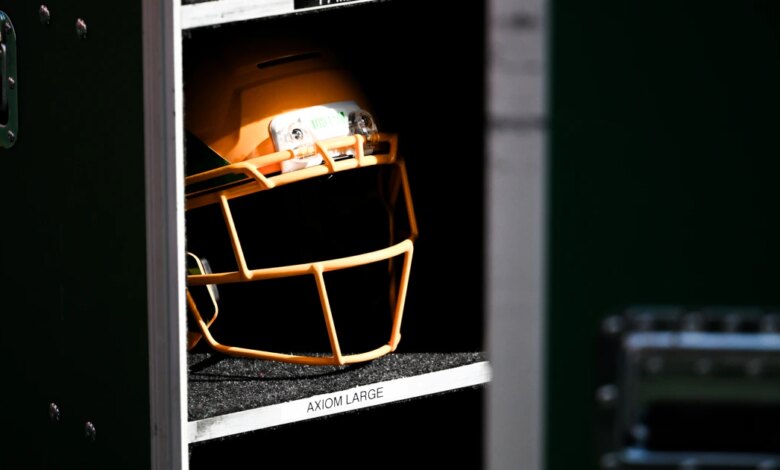
An estimated 75 percent of professional football players who died over a 15-year span showed signs of chronic traumatic encephalopathy, according to a study published Wednesday in JAMA Network Open. The figure represents the highest estimation to date for the neurodegenerative disease among former players, standing at three times the rate of a prior analysis published in August by the same research group, which looked at a five-year span and estimated a 25 percent prevalence.
The research team, led by Boston University Alzheimer’s Disease and CTE Center statistics and data management director Yorghos Tripodis, sought to overcome a persistent obstacle in brain trauma research: selection bias. Past studies have faced criticism because families of athletes who experience cognitive decline are significantly more likely to donate brains to research repositories like the UNITE Brain Bank housed at Boston University. A previous Boston University study found that 99 percent of brains donated by former NFL players exhibited signs of CTE.
To correct for this distortion, researchers combined data from 396 donated brains with national death records for 1,966 other former NFL players who died between 2008 and 2023. By factoring in ages at death alongside estimated rates of mild cognitive impairment and dementia in former players older than 50, the team calculated that families of players with cognitive symptoms were about five times likelier to donate brains than families of asymptomatic players. Using statistical modeling to adjust for that skew, the researchers calculated that among the approximately 2,360 former players who died within the 15-year timeframe, about 1,760, or nearly 75 percent, had CTE. By comparison, only about 1 percent of brains donated to banks in the United States, Austria, and Brazil show signs of the condition.
Despite the high estimated prevalence, researchers emphasized that not everyone with physical signs of CTE experiences cognitive decline or dementia. The study estimated that a smaller proportion of the former players, approximately 27 percent, suffered from dementia. While that dementia can stem from various causes, Tripodis noted that in this specific population, it is very likely that CTE is driving the condition. Tripodis admitted he was surprised by the final figures, stating he had to double-check the calculations, though he acknowledged the figure remains a best estimate because CTE cannot currently be diagnosed in living patients.
Dr. Julian Bailes, chair of the neurosurgery department at Endeavor Health in the Chicago area, who was not involved with the research, explained the physiological mechanism behind the disease. When a head jolts during an impact, the brain can slam into the skull or twist, creating an opportunity for tau proteins to accumulate. With repeated blows, that damage accrues in areas of the brain that regulate behavior and emotions, potentially resulting in memory loss, depression, and violent mood swings. Bailes noted that while CTE shares symptoms with other neurodegenerative disorders like Alzheimer’s and Parkinson’s, it leaves a unique microscopic signature in the brain that requires an autopsy to confirm.
External experts underscored the inherent challenges in quantifying a condition that remains invisible on standard brain scans during life. Dr. Jim Kelly, a professor emeritus of neurology at the University of Colorado Anschutz, noted that the researchers lacked autopsy tissue for roughly five times as many players as they actually examined, and suggested that some autopsies may have revealed only minimal lesions unlikely to trigger behavioral changes or dementia. Nevertheless, Bailes and Tripodis agreed that the findings emphasize the urgent need for methods to diagnose CTE in living patients, as medical intervention remains severely limited without a live diagnosis.
In an emailed statement, an NFL spokesperson said the league continuously strives to make the game safer by implementing strategies aimed at reducing concussions and head impacts. Tripodis maintained that prevention remains the most effective tool in the interim, noting that substantially decreasing the number of brain impacts reduces overall risk. The league has introduced several rule and equipment modifications, including redesigned helmets like the Guardian Cap and the dynamic kickoff rule designed to minimize high-speed collisions.