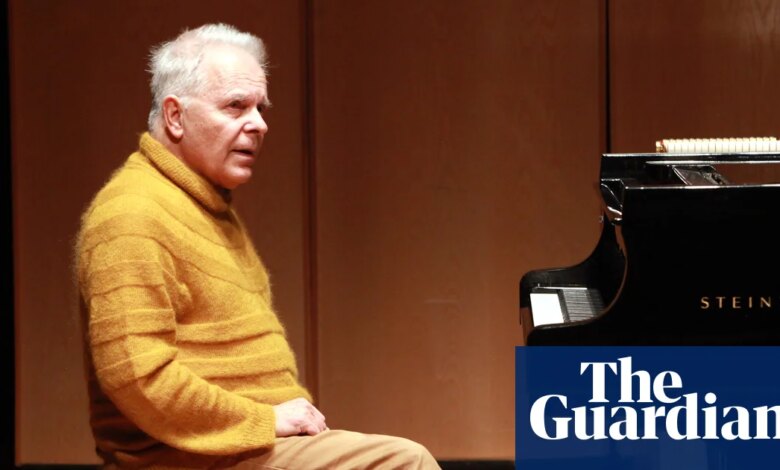
Renowned classical pianist Stephen Kovacevich approached his instrument not with the safety of technical perfection, but with a willingness to risk oblivion for the sake of musical truth. Throughout a career marked by name changes—performing as Stephen Bishop and Bishop-Kovacevich before settling on his final moniker—and shifting artistic partnerships, his core philosophy remained unchanged: true music-making required walking the line between power and vulnerability.
Conversations with Kovacevich were notoriously intense, animated by an encyclopedic passion for historical greats such as Vladimir Horowitz, Sergei Rachmaninov, Chopin, Beethoven, Brahms, Mozart, and Bach. To him, composers and legendary performers were living presences. This same vitality translated directly to his concert stage and recording studio work, most notably in his celebrated concerto collaborations with conductor Colin Davis across repertoires spanning from Bartók to Mozart, as well as an acclaimed 1964 recording of Beethoven’s cello sonatas alongside cellist Jacqueline du Pré in London.
Kovacevich frequently criticized contemporary classical performance for lacking danger and risk-taking. For him, engaging with the white-heat of Beethoven’s sonatas or Brahms’s concertos meant risking emotional and technical scars. Rather than hiding behind flawless execution, he favored the high-stakes struggle of reaching for transcendence, even when individual performances faltered.
His dedication to this volatile artistic path persisted through significant physical challenges later in life. Following a severe stroke in his late 60s, he successfully rehabilitated his technique, overcoming both physical hurdles and performance nerves to deliver breathtakingly intimate interpretations of Schubert and Rachmaninov well into his later years. Beyond the concert hall, his legacy endures in milestone events such as his 70th and 75th birthday celebrations and Wigmore Hall performances, as well as collaborative two-piano concerts with Martha Argerich.