The college football coaching carousel continues to turn, and while the current firing cycle lacks the sheer volume of high-profile departures seen at this time last season—when Penn State, Florida, and LSU jettisoned their head coaches—attention is shifting toward several marquee Power 4 programs where leaders face mounting pressure.
Heading into the season, Florida State appeared to be a prime candidate for a coaching change, but new university leadership has signaled that a move in 2026 is unlikely. Attention has instead turned to other major programs where underwhelming results, unmet expectations, and difficult schedules have put coaches under intense scrutiny.
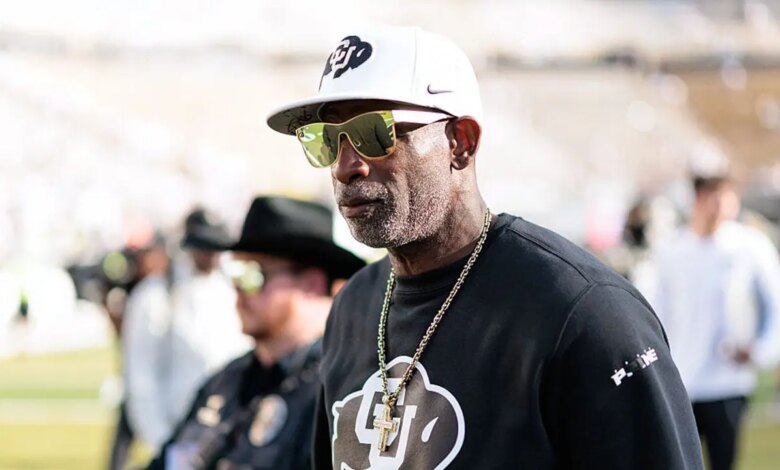
At the top of the list for potential instability is the Colorado Buffaloes program under head coach Deion Sanders. Following a promising nine-win 2024 campaign that ended with a top-25 ranking and a Heisman Trophy for Travis Hunter, the program has experienced a sharp decline. Colorado finished the 2025 season at 3-9, accompanied by a five-game losing streak, and opened the 2026 campaign with a 2-5 record, bringing Sanders’ overall tenure mark to 18-25.
Beyond on-field struggles, questions have surrounded recruiting output and program direction. Analysts note that the Buffaloes effectively need to win out to reach a bowl game, facing remaining matchups against Houston, Cincinnati, and UCF. With a salary reported at $10 million annually, maintaining a single postseason appearance across four seasons presents a significant hurdle for program patience.

Meanwhile, the USC Trojans under head coach Lincoln Riley represent another high-profile situation to watch. Entering the year with expectations of contending for a College Football Playoff berth backed by a top-ranked recruiting class, the Trojans have accumulated two losses.
Riley’s tenure in Los Angeles, which began in 2022, has yet to produce a playoff appearance or a top-ten finish. Pressure could intensify immediately as USC prepares to host the second-ranked Ohio State Buckeyes at the Los Angeles Memorial Coliseum, where the visitors enter as a touchdown favorite despite playing without starting quarterback Julian Sayin. Another defeat would severely damage postseason aspirations and could prompt action from the university administration.

Further down the list, the Clemson Tigers face their own set of offensive struggles and a 4-3 record following a recent loss to Virginia Tech. While mathematical paths exist for Clemson to reach the ACC Championship Game, the scenario requires winning out alongside losses by SMU, Wake Forest, and Virginia Tech, compounded by a closing schedule that includes Florida State, a 5-2 Duke squad, and South Carolina.
Despite these challenges, head coach Dabo Swinney’s position appears relatively secure compared to programs facing more immediate crises. Backed by substantial institutional equity built during previous national championship contention years, Swinney’s job is not considered in immediate jeopardy unless the team fails to secure a bowl game appearance, which could introduce pressure heading into the 2027 season.