Tennessee Lawmaker Pushes Tough-on-Crime Laws Ahead of Congressional Bid in Redrawn District

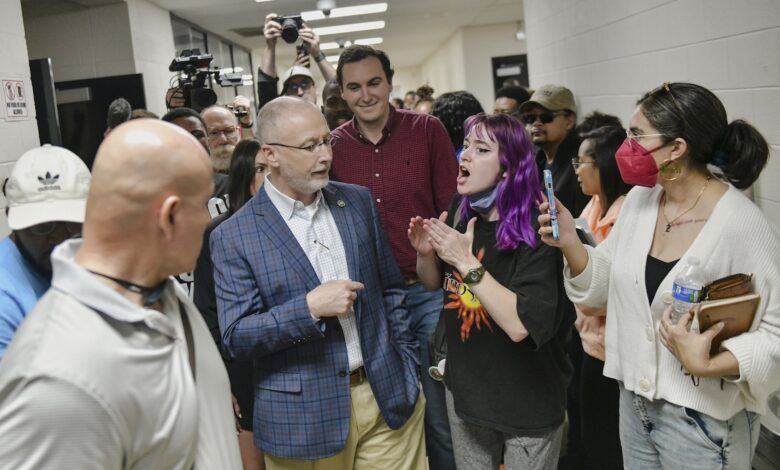
As Tennessee Republicans redesigned the state’s congressional map this spring to split Memphis into three districts, state Senator Brent Taylor quickly signaled his electoral ambitions. On May 7, the same day the new map won approval, Taylor announced his candidacy for the redrawn Ninth Congressional District. For more than four decades, the seat had served as Tennessee’s sole majority-Black district centered on Memphis; the newly configured district stretches across half the state and is majority white.
Taylor, a 58-year-old white Republican and former funeral home business owner who has loaned his congressional campaign $1.5 million, is heavily favored to win. The district’s redrawing followed an April U.S. Supreme Court ruling that made challenging alleged gerrymandering more difficult. Taylor’s opponent is state Representative Justin J. Pearson, a 31-year-old Black Democrat who has advocated for addressing the root causes of crime through education and economic investment rather than an exclusive focus on incarceration. Pearson gained national prominence during protests over gun control and a local oil pipeline project, and he has outraised Taylor in campaign donations.
During his nearly four years in the state Senate, Taylor has established a legislative record that directly affects the voters in his prospective congressional constituency. Backed by a Republican supermajority, he has pushed through half a dozen preemption laws designed to override the authority of local officials in Memphis, a Democratic-led city where violent crime has long been a central issue. While proponents argue the measures are necessary to bolster public safety, critics and criminal justice experts contend that the laws disproportionately target minority communities and undermine local self-governance.
One major legislative push focused on police traffic stops. Following the January 2023 beating death of Tyré Nichols by Memphis police officers, the City Council unanimously passed an ordinance prohibiting police from using minor traffic infractions as a pretext to investigate unrelated crimes. Research indicates that such stops are disproportionately used against Black motorists. In response, Taylor and state Representative John Gillespie sponsored legislation prohibiting local governments from restricting law enforcement traffic stops, effectively overturning the Memphis ordinance. Despite pleas from Nichols’ mother, RowVaughn Wells, the bill passed. Governor Bill Lee signed the measure, asserting that while officers need enforcement tools, they must be held accountable. Eight months later, the U.S. Department of Justice released an investigation finding that Memphis police traffic enforcement unlawfully discriminated against Black residents and used excessive force, though those findings were later retracted after President Donald Trump took office in 2025.
Taylor also targeted the authority of Shelby County District Attorney Steve Mulroy, the first Democrat elected to the post in 25 years. Arguing that Mulroy’s reform-oriented policies exacerbated crime, Taylor sponsored a 2023 law transferring review power over certain death penalty cases from local prosecutors to the state attorney general. Following the 2025 deployment of a federal and state law enforcement task force to Memphis by the Trump administration, Taylor advanced additional measures. One law authorized the state attorney general to review every case processed by Mulroy’s office and allowed the state Supreme Court to appoint a temporary prosecutor if Mulroy declined to pursue specific categories of crime. A second law required Mulroy’s office to report plea deals or dismissed felony charges tied to task force arrests to state and federal authorities within ten business days. Mulroy has filed a lawsuit challenging both laws as unconstitutional and burdensome, noting that his office handles more than 40,000 defendants annually.
In 2023, Taylor also dismantled a bipartisan bail reform agreement in Shelby County. In August 2022, local officials and advocates had agreed on a new bail order incorporating an “ability to pay” calculator to prevent the detention of impoverished defendants who could not afford bond. Taylor co-sponsored legislation prohibiting judges from considering a defendant’s financial condition during bail decisions. Former Shelby County General Sessions Judge Bill Anderson, who resigned in May 2025 after clashing with Taylor over the issue, stated that the law tied judges’ hands and increased median bail amounts, disproportionately impacting low-income Black residents. Taylor declined to be interviewed for this report.