The extreme complexity of the Artemis III mission is rooted partly in strategic decisions made by NASA in 2021 and 2023, and partly in the fundamental limits of known rocket technology. If engineering physics were perfect—and engineering physics are never perfect—a lunar crew could utilize just a single spacecraft to travel to the moon, descend to the surface, blast back off, and return safely home. However, a single spacecraft capable of performing all of those demanding jobs while remaining robust enough to withstand reentry into the Earth’s atmosphere would simply become far too heavy to successfully execute a lunar landing and subsequent liftoff.
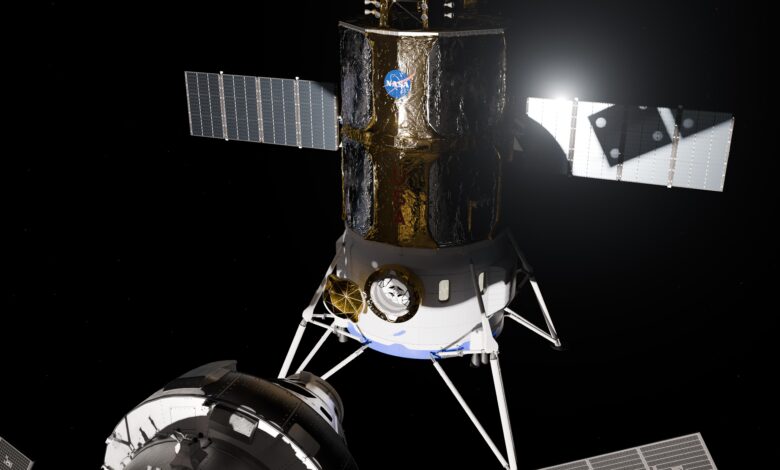
Consequently, much like the approach taken during the historic Apollo program, the mission’s workload must be divided between two distinct vessels. The architecture requires one lightweight ship dedicated to performing the landing and liftoff, and an orbiting mothership responsible for bringing the crew back home once lunar exploration concludes. During the Apollo era, the space agency selected Grumman Aircraft Engineering to construct its squat, four-legged, 23-foot-tall lunar module. That vessel featured a simple design with a low center of gravity, which ensured a stable foothold on the lunar surface. Grumman signed that contract in 1962 and successfully delivered the hardware in time for Apollo 9 and the subsequent lunar landing missions that followed.
In contrast, NASA’s modern trajectory took a different turn when it awarded a contract for a crewed lunar spacecraft in 2021 to SpaceX, selecting the company’s Starship lander for the monumental task. That specific decision regarding the lunar lander architecture has drawn significant scrutiny and debate among aerospace observers, setting the stage for one of the most technically demanding flights in the history of human space exploration.