Assessing Global Biodiversity Goals Amid Financial Shortfalls and Competing Crises

For more than three decades, the International Convention on Biodiversity has convened governments and civil society organizations to safeguard the earth’s ecosystems. The current gathering in Armenia, running from Oct. 19 to 30, 2026, offers a sober evaluation of ongoing restoration and conservation efforts worldwide.
The framework relies on 23 distinct targets established during a prior session, which include extending formal conservation protections to 30 percent of the world’s land and water areas, repairing degraded environments, and rebuilding threatened species populations while working alongside Indigenous and long-term inhabitants.
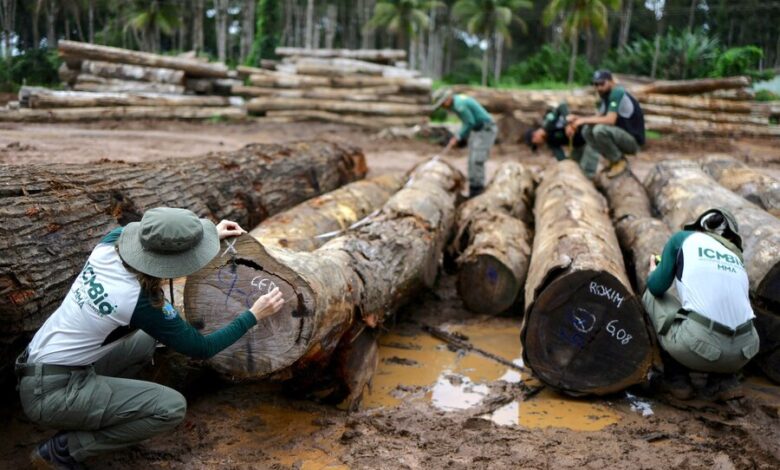
According to data from the International Institute for Sustainable Development, 90 percent of nations have formulated national biodiversity goals, with implementation currently underway across all targets. Observers note that technology transfers and scientific cooperation are advancing, pointing to positive developments such as reduced deforestation rates in the Amazon alongside notable population recoveries for species like the Central Asian saiga antelope and the California condor.
Despite these achievements, delegates face a massive funding shortfall. Experts estimate that roughly $200 billion is required annually to adequately support biodiversity initiatives. In response, conference attendees have strongly advocated for an additional target: a $500 billion reduction in state subsidies directed toward agricultural and business practices deemed harmful to natural ecosystems.
Steven Guilbeault, Canada’s former environmental minister and an architect of the 23 biodiversity targets, observed that global conditions have shifted significantly since the framework was adopted in 2022. Amid ongoing international conflicts, extreme weather events, and tightening public budgets, political leaders increasingly view environmental protection as a secondary priority.
Rejecting that perspective, Guilbeault argued that nature remains foundational to national prosperity and economic security, emphasizing the vital role of Indigenous communities who inhabit the lands slated for preservation and restoration.
Community involvement remains central to the implementation phase of the 2030 agenda. Lucy Mulenkei, a Kenyan delegate attending the talks, stressed that top-down government regulations alone are insufficient. True progress requires local execution, noting that without genuine partnership and meaningful inclusion, the 2030 nature goals will remain out of reach.
Beyond resource management and economic arguments, advocates also emphasize the intrinsic value of undisturbed environments. The discussions echo the perspective of late American novelist and environmentalist Wallace Stegner, who championed the wilderness idea as an intangible yet vital spiritual and cultural resource.