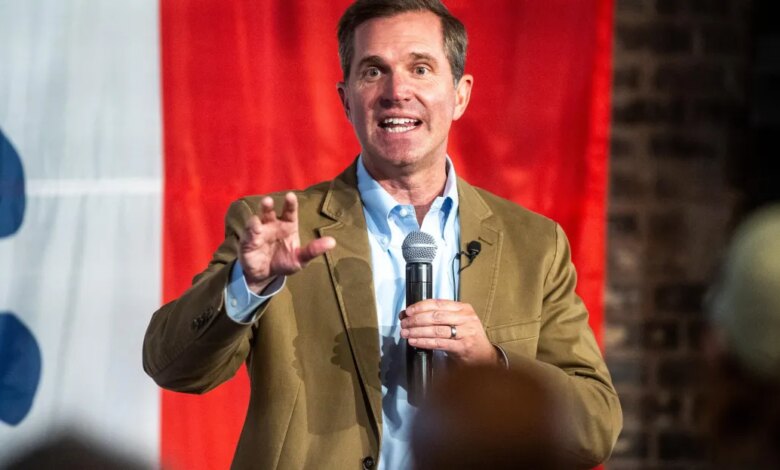
Kentucky Governor Andy Beshear is pressing for a broader national conversation on early childhood education, drawing on his administration’s recent efforts to expand state preschool access despite legislative hurdles. While voluntary preschool has existed in Kentucky since 1991, current state-funded programs reach only about a quarter of 4-year-olds. According to the governor, more than half of Kentucky children enter kindergarten already behind their peers.
Faced with opposition from Republican legislative leadership regarding budget appropriations, Beshear utilized flexible federal workforce training funds, specifically Workforce Innovation and Opportunity Act resources, to establish five regional pre-K pilot programs. These initiatives have created 3,000 new seats since May. Among the locations is Robertson County, the state’s smallest county, which previously lacked any childcare options and required families to drive 40 minutes to an hour in either direction for basic services.
Beshear contends that early childhood education enjoys strong bipartisan support among voters, noting that polling indicates high approval among Republicans when the issue is divorced from partisan politics. He contrasted the legislative resistance he faces with the previous Republican administration, arguing that current opposition stems primarily from political friction rather than substantive disagreement over the value of early learning.
Shifting to national policy, the Kentucky Democrat advocated for a practical approach to federal programs, suggesting that Congress should enact legislation to ensure every state provides universal pre-K for 4-year-olds. He argued that such an initiative could incorporate approximately 70,000 additional workers into Kentucky’s workforce alone, generating sufficient tax revenue to offset public expenditures.
Addressing broader federal childcare proposals, Beshear emphasized the need for surgical interventions that tackle specific structural challenges, such as childcare deserts, rather than broad measures that might destabilize existing private, public, and nonprofit systems. He criticized past federal efforts for lacking urgency and argued that policymakers should accept incremental progress rather than waiting for flawless legislation.
Beshear also discussed broader economic management, suggesting that while the federal government overshot its economic stimulus targets during the COVID-19 pandemic, strategic investments in workforce-expanding sectors like childcare remain economically viable. He emphasized that future federal policy must balance deficit reduction with targeted investments that enhance workforce participation and support working families.