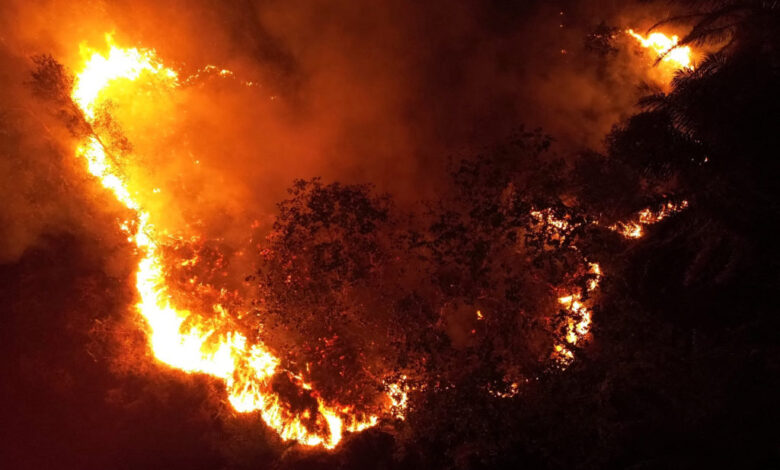
Indonesia is currently confronting its most destructive wildfire season in over a decade, a crisis intensified by the El Niño weather pattern. The blazes, many of which have been deliberately set to clear land for agricultural expansion including palm oil plantations, have generated a dense, toxic haze that has forced the closure of more than 12,000 schools nationwide and drifted across international borders.
While recent rainfall provided a brief measure of relief, the region’s official rainy season is not anticipated until next month. In Central Kalimantan, where children have been forced out of classrooms for weeks, educator and photographer Natanael Undas has turned to social media to capture the unfolding disaster. Speaking from an empty classroom at the Golden Christian Middle School in Palangkaraya, Undas described a transformed landscape where the environment has been severely compromised.
“It is a kind of rain forest and then a lot of native trees. We got a lot of fruits. We got a lot of tree for timber. But now the sky, it turns yellow. It turns like hell,” Undas said. He noted that the last clear blue sky was observed in August, after which the persistent haze moved into the city as fires advanced closer.
The educational impact on the region’s youth has been profound. Undas expressed deep concern over the loss of instructional hours and learning experiences for his students, noting that children outside during morning hours often mistake the yellow skies for an ordinary school holiday, playing without protective masks.
Undas emphasized that the catastrophe is entirely anthropogenic. “This fire is not natural disaster at all. It is manmade disaster,” he stated, pointing to the deliberate land-clearing practices that ignited the crisis.
Although a brief downpour occurred recently, lasting only between 17 and 25 minutes, the precipitation offered little lasting relief from the poisoned atmosphere. Undas recounted trying to catch the scent of wet foliage during the short storm, only to find the air remained heavily contaminated with smoke. Local children are increasingly suffering from respiratory complications, prompting urgent concerns from educators regarding the long-term health and welfare of the younger generation as communities wait for the arrival of the wet season.