While artificial intelligence tools face strict restrictions and widespread skepticism in many Western classrooms, families and educators across Africa are increasingly welcoming educational technology as a vital lifeline. Rather than expressing anxiety over the proliferation of automated learning assistants, many parents view artificial intelligence as a practical pathway to give their children a competitive advantage in an evolving global economy.
This reception contrasts sharply with attitudes in other regions, such as the United States, where public opinion remains deeply divided. Recent data from a February survey conducted by the Pew Research Center indicates that roughly four in ten American adults believe artificial intelligence will ultimately exert a negative impact on society. In response to these concerns, two of the largest school districts in the United States have recently implemented strict limitations on student use of artificial intelligence tools.
In contrast, developers and educational leaders operating in sub-Saharan Africa report overwhelming enthusiasm from families. According to Shabnam Aggarwal, chief technology officer at Rising Academies, a Sierra Leone-based education network, informing parents in countries like Ghana that their children are utilizing artificial intelligence at school typically elicits an overwhelmingly positive response.
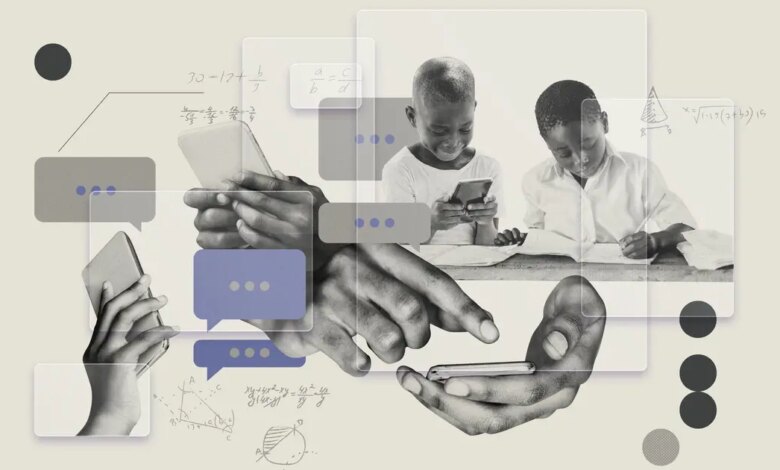
Rising Academies developed an interactive educational tool named Rori, which is specifically engineered to deliver math and other subject lessons directly to students via WhatsApp. The software dynamically adjusts its difficulty level based on each student’s responses, communicates in natural language, and is optimized to operate smoothly in regions characterized by low internet connectivity.
The rapid adoption of tools like Rori is driven in large part by systemic educational challenges, most notably a severe continent-wide teacher shortage. While educators across the region work diligently under difficult conditions, they frequently lack the institutional support, resources, and specialized training necessary to meet the diverse needs of their students.
Empirical data suggests these technological interventions are yielding measurable academic benefits. An eight-month study involving 500 students, conducted in 2023 by researchers from Oxford University and the Abdul Latif Jameel Poverty Action Lab (J-PAL), evaluated the impact of the software. The findings revealed that students who utilized Rori for two 30-minute sessions per week outperformed a control group by a margin roughly equivalent to an additional full year of academic study.
Building on these promising results, Rori is currently expanding its reach into government-run school systems across Sierra Leone, Liberia, Rwanda, and Ghana. Similar educational experiments are emerging across the continent as well. In Nigeria, a separate 2025 study demonstrated that student access to Microsoft Copilot significantly aided learners in acquiring and improving their English language skills.