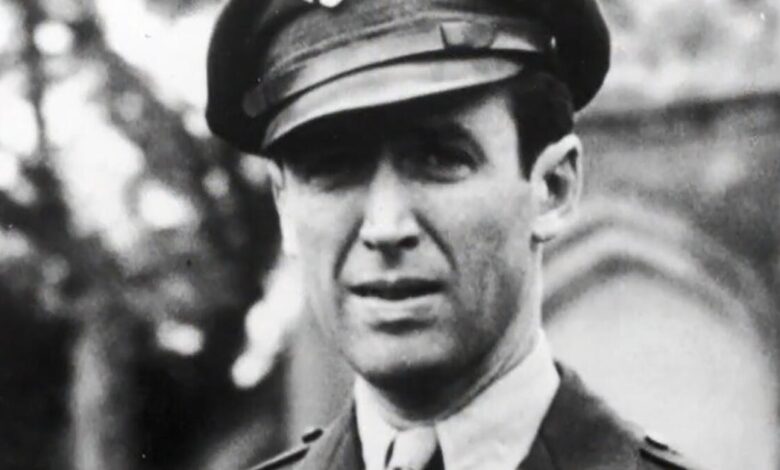
Long before he anchored holiday television screens as George Bailey, James Stewart was the definition of Hollywood royalty. He had captured the awkward innocence of an idealistic politician in “Mr. Smith Goes to Washington,” played opposite an invisible six-foot rabbit in “Harvey,” and delivered layered, haunting performances for Alfred Hitchcock in “Rear Window” and “Vertigo.” In 1941, fresh off an Academy Award win for “The Philadelphia Story,” Stewart stepped away from the summit of the film industry. While he could have spent the conflict safely making recruitment films stateside, the already-accomplished pilot chose a more dangerous path and enlisted in the Army Air Corps.
Securing a combat assignment proved difficult. Military leaders feared that losing an Oscar-winning icon to enemy action would deal a devastating psychological blow to the American public and troop morale. Janie McKirgan, curator at the Jimmy Stewart Museum in his hometown of Indiana, Pennsylvania, noted that it took considerable persistence for the actor to find commanders willing to take the risk. Stewart eventually prevailed, flying 20 combat missions over Germany. He lost comrades and witnessed combat horrors that he, like many veterans of his generation, refused to discuss with his family.
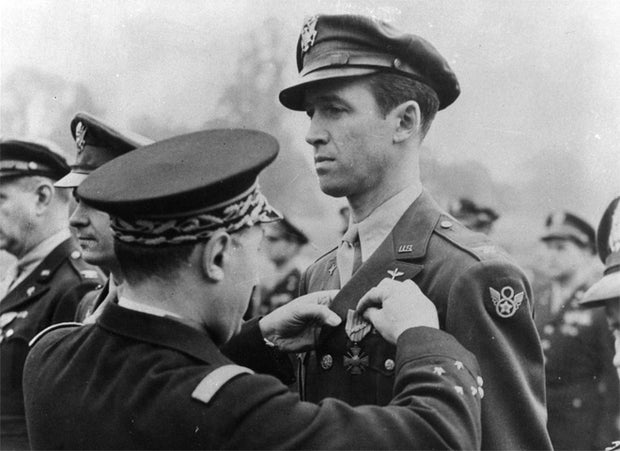
His wartime struggle to fly despite his celebrity is the subject of a biographical film titled “Jimmy,” starring K.J. Apa as the actor and Max Casella as director Frank Capra. Apa admitted he was unaware of Stewart’s military background prior to the project, expressing astonishment at the sheer courage required for the actor to walk away from Hollywood at the peak of his career. Casella noted that the production aimed to capture the untold chapter of the actor’s life.
Following the war, Stewart returned home profoundly changed. His twin daughters, Kelly Stewart Harcourt, who served as an executive producer on the film, and her sister discovered a personal diary in his nightstand after his death in 1997. Harcourt shared entries from the journal publicly for the first time, detailing the grim reality of aerial warfare. One entry read, “This was a terrible day. We lost 13 crews out of the group on the mission today. Only half of them came back.” The emotional whiplash of combat was captured in another entry written after a mission where everyone returned safely: “It’s strange that this could practically cancel out the loss of all those boys, but I guess that’s the way things have to be in this god-damn, stupid, lousy, dirty war.”
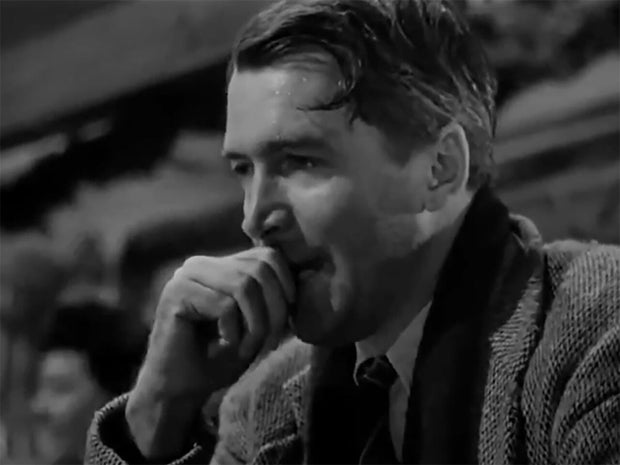
Harcourt noted that her father suffered from what would today be diagnosed as post-traumatic stress disorder, experiencing nightmares, depression, and severe anxiety upon his return. Doubting whether he even wanted to act again, Stewart famously remarked that he was merely an out-of-work actor and pilot unsure of his future.
That inner turmoil intersected with cinematic history when director Frank Capra cast him in the 1946 holiday classic “It’s a Wonderful Life.” For decades, film historians have speculated whether the raw desperation Stewart brought to George Bailey—a man pushed to the brink of despair—was fueled by his wartime trauma. Harcourt believes those unresolved emotional scars found their way onto the screen, asserting that such a powerful performance required genuine anguish.
While “It’s a Wonderful Life” initially underperformed at the box office before becoming a timeless classic, Stewart went on to star in more than 50 subsequent films. Yet, despite his cinematic legacy, those close to him maintained he remained most proud of his military service. In 1983, a tribute at the Kennedy Center brought the veteran actor near tears when cadets from the U.S. Air Force Academy honored his legacy.