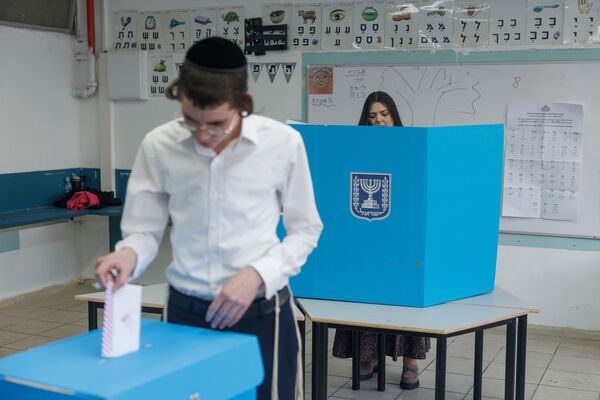
Israeli Prime Minister Benjamin Netanyahu and opposition leader Gadi Eisenkot are locked in a dead heat following the country’s first national election since the October 7, 2023, Hamas attacks. The contest has set the stage for a tense period of negotiations over who will form the next government.
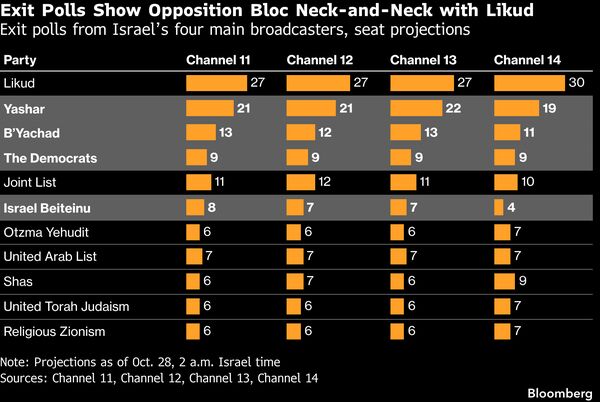
Two exit polls published after voting closed late Tuesday indicated that Netanyahu’s religious right-wing alliance and Eisenkot’s centrist bloc are both on track to secure 51 of Israel’s 120 parliamentary seats. A third exit poll showed Netanyahu slightly ahead after earlier pointing to an Eisenkot lead. Both contenders fell well short of the 61-seat majority required to govern outright, raising the prospect of protracted coalition talks or even a repeat election within months.
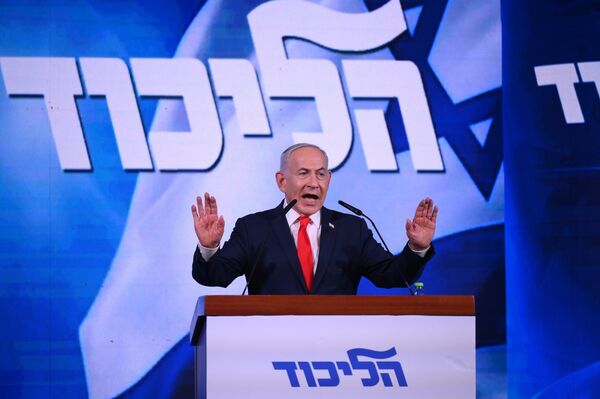
Despite the impasse, both leaders projected confidence to their supporters early Wednesday. Netanyahu, 77, took the stage in Jerusalem at approximately 3:15 a.m., declaring that his rightist bloc had secured a clear and decisive majority. Surrounded by members of his Likud party, Netanyahu highlighted his relationship with U.S. President Donald Trump and suggested that renewed military action against Iran could be imminent.
Eisenkot, a 66-year-old former general, addressed supporters earlier in the evening, labeling Netanyahu’s outgoing administration a coalition of failure that had lost the public trust. Claiming that voters had chosen change, Eisenkot argued that heading to a second round of voting would be a mistake.
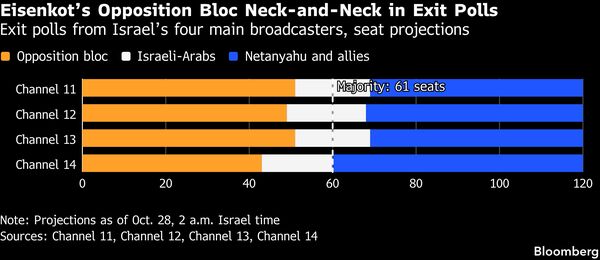
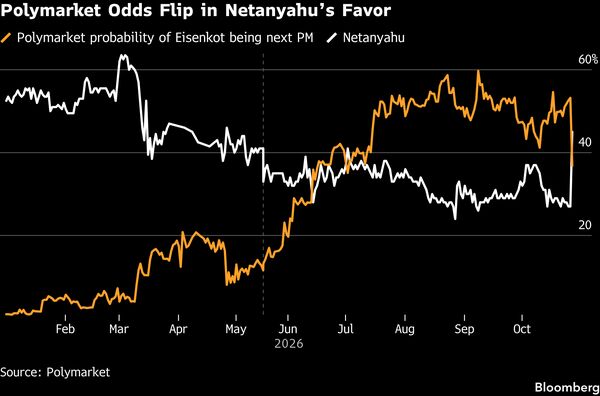
While official vote counting continues, Netanyahu’s Likud party is expected to remain the largest single faction in the Knesset, though it likely captured fewer seats than in the 2022 election. Eisenkot’s Yashar party stands in second place. Prediction markets that previously favored Eisenkot shifted sharply in the early hours of Wednesday, with Polymarket placing Netanyahu’s odds at 55% and Eisenkot’s at 27%.
Israel’s two Arab parties emerged as potential kingmakers, outperforming expectations by forecasting a combined 18 seats. Both factions have signaled a willingness to back Eisenkot in an effort to unseat Netanyahu, whose policies they argue pose an existential threat.
Voter turnout reached nearly 78% before polls closed at 10 p.m., according to the central elections committee, reflecting intense engagement after three years of near-constant conflict across Gaza, Lebanon, and Syria. Yair Golan, leader of the leftist Democrats Party within Eisenkot’s bloc, claimed the public had effectively fired the Netanyahu government.
The formation of a new government is expected to take days or weeks. In the interim, Netanyahu remains prime minister, positioning him to potentially join U.S. President Donald Trump in renewed strikes against Iran following upcoming midterms. Trump previously endorsed Netanyahu, stating the incumbent has what it takes to finish the conflict with the Islamic Republic.
Eisenkot has campaigned as a more modest alternative while maintaining a hard line on national security. He has argued that Iran’s nuclear program must be contained, by military force if necessary, but views regime change in Tehran as unachievable.
Under Israeli law, President Isaac Herzog will nominate a presumptive prime minister based on final vote tallies and party recommendations, as no party has ever won an outright majority.
Beyond national security, voters weighed critical domestic issues, including military conscription for ultra-Orthodox young men, judicial reform, transparency, and government corruption. For Palestinians in Gaza and the West Bank, where settler violence has surged, analysts expect little immediate change under either leader, as both have ruled out a two-state solution. Meanwhile, the incoming government will face significant economic hurdles, including a soaring defense budget, rising sovereign debt, and a high cost of living.